

5GAA Annual Report Charts Global Path for C-V2X Deployment
The 5G Automotive Association has released its annual report for 2023, highlighting significant strides made towards global deployment of cellular vehicle-to-everything (C-V2X) technology and connected mobility solutions. The report details the association’s achievements across key areas, all working towards a more connected and automated transportation ecosystem.
Strong Membership and Global Reach
5GAA grew to 126 members in 2023, including leading names from the automotive (11 out of the top 15 carmakers), mobile network operator (8 out of the top 10 MNOs), and smartphone vendor industries (2 top vendors). This diverse membership fosters strong cross-industry collaboration with a global footprint.
Beyond membership, 5GAA actively maintained partnerships with over 40 organisations, including standards development organisations, public administrations, and certification bodies. Notably, 2023 saw the signing of a cooperation agreement with ITS America and renewed Memoranda of Understanding with ITS Korea and 5G Forum.
Recognising the varying pace of V2X deployment across regions, 5GAA continued to expand its reach. In addition to existing regional regulatory-focused sub-groups, a dedicated taskforce was established for India, a promising V2X market. The association also continued to advocate for a scalable and federated approach to managing road traffic information.
Contributing to Standards
Standardisation has been a core focus of the 5GAA since its early days. In 2023, the association and its members participated in 3GPP Release-19 discussions, providing critical automotive industry input as a Market Representation Partner (MRP). This cooperation aims to ensure that C-V2X technology development aligns with global needs. Additionally, 5GAA contributed to regional standardisation efforts by giving input to bodies like ETSI, SAE, and C-SAE.
In Conversation with Policymakers
The association actively engages with policymakers and regulatory bodies around the world. In Europe, 5GAA issued a joint statement with leading European carmakers urging the deployment of 5G-V2X technology in Europe. The association also welcomed positive developments such as FCC waivers for C-V2X deployment in the US, Korea’s selection of C-V2X direct communication as its technology of choice, and Japan’s consideration of using the upper 30 MHz in the 5.9 GHz band for V2X direct communications.
These engagements play a vital role in establishing sufficient regulatory support for the mass adoption of C-V2X technology.
Two Succesful Workshops
Throughout 2023, 5GAA hosted workshops with key stakeholders to identify challenges and advance technology innovation. In The Hague, Netherlands, a workshop focused on C-V2X mass market deployment in real-life traffic. Similarly, a high-level conference, “The Future of Connected Mobility in South Korea,” was held in Seoul. Discussions centered on how connected mobility and ITS can advance road safety and automated driving in the Korean transport ecosystem.
Technical Progress
In 2023, 5GAA maintained a strong work program. The association successfully completed 12 work items, launched 28 new ones for development in 2024, and published 18 technical reports. Key areas of focus included Day 1 V2X services, Automated Valet Parking (AVP) solutions, and interoperability testing for Vulnerable Road User (VRU) protection, with a series of live demonstrations in Mcity, Michigan.
Looking Ahead
5GAA has developed a solid strategic roadmap for its activities in 2024. Over the next months, the association will focus on:
- Prioritising the execution and implementation of readily available or “Day 1” technology and services;
- Accelerating the wide-scale deployment of Day 1 V2X services over mobile network communications;
- Developing an end-to-end AVP service implementation and continuing to advance interoperability among members’ VRUs solutions;
- Tackling technical or political hurdles that prevent the mass roll-out of LTE-V2X direct communications in targeted markets, while laying the groundwork for 5G-V2X direct;
- Chartering a transition path or mitigation measures to ensure continuity of legacy services; and
- Continuing to investigate the potential of emerging technologies like positioning-as-a-service (PaaS), non-terrestrial networks (NTNs), and integrated sensing and communication for V2X applications.
The 5GAA 2023 annual report underscores the association’s vital role in shaping the future of mobility. By fostering collaboration amongst key stakeholders and driving industry progress, 5GAA paves the way for a safer, more efficient, and automated transportation ecosystem.
Creating Trust in Connected and Automated Vehicles
Connected and Automated Vehicles (CAVs) create a complex, dynamic network, where the safety and behaviour of each ‘node’ or vehicle directly affects the efficiency and safety of the entire system. These systems are vulnerable to untrustworthy actors for various reasons. Therefore, a method to assess and quantify the trustworthiness of shared data is necessary. This will establish trust between cooperating nodes, enabling them to work in collaboration.
This 5GAA white paper proposes a framework for trust assessment within CAVs. By first defining key terms related to trust and trustworthiness, it establishes a foundation for building trust between these vehicles. It then creates a taxonomy for classifying different trust relationships.
Furthermore, the paper details a list of trustworthiness properties crucial for Cooperative Intelligent Transport Systems (C-ITS) and CAVs. These properties serve as the foundation for real-time trust assessments. The paper emphasises the importance of verifiable evidence supporting these assessments, even when dealing with inherent uncertainties within the evidence itself.
Find the full document here.

Element
Vehicular Antenna Test Methodology
The rise of connected vehicles and vehicle-to-vehicle communication necessitates a unified measurement procedure for their communication antennas. This would streamline development and ensure consistent conformity assessments across regions.
The 5GAA alliance, fostering collaboration between the automotive and telecom sectors, has developed a methodology specifically for testing vehicular communication antennas (those permanently mounted on vehicles). This methodology can act as a commonly agreed test procedure for antenna communication subsystems, improving the accuracy of conformity assurance procedures for these critical systems.
In essence, this methodology serves as a tool to optimise antenna testing and provide validation measures that account for the unique form factors and characteristics of each vehicle.
Read 5GAA’s technical report here.
This document is an updated version of the Vehicular Antenna Test Methodology technical report published by 5GAA in 2021, available here.
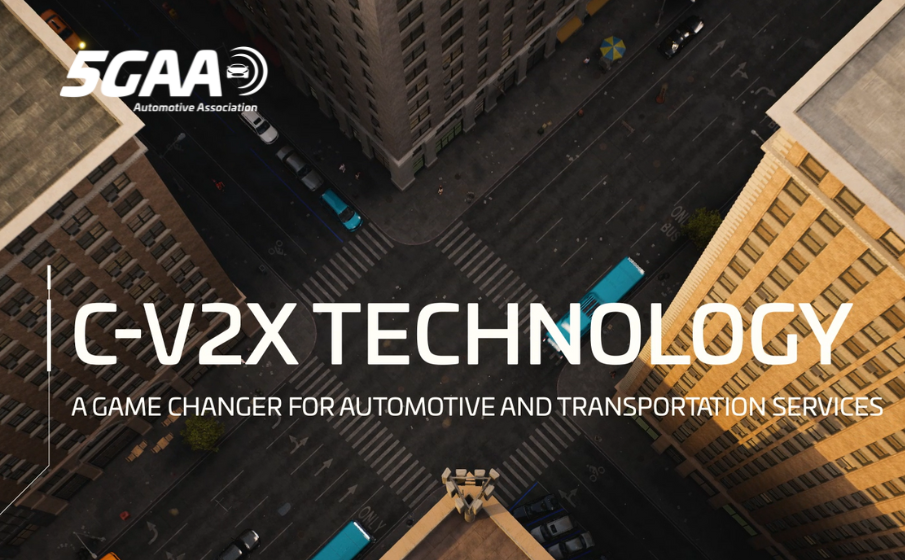
Real-world use cases demonstrate game-changing C-V2X technology
Cellular vehicle-to-everything (C-V2X) technology is a game-changer for automotive and transportation safety and services, helping to make mobility smarter, safer and more sustainable for all road users, including pedestrians.
C-V2X relies on both mobile and direct communications to enable seamless communication between vehicles, road infrastructure, and other road users, unlocking a wide range of life-saving, fuel-saving and time-saving applications. From real-time collision warnings and lane merge assistance to enhanced traffic management, pedestrian safety and automated valet parking, the C-V2X use cases shown in the video demonstrate the transformative power of connected vehicles and road infrastructure. Whether navigating urban environments or cruising along highways or country roads, C-V2X empowers smarter, safer, and more efficient journeys.
Vehicle manufacturers and road and traffic infrastructure managers are already investing in the tech that is turning these visions into reality world-wide.
Uniting the automotive, technology and communications industries in common cause, the 5G Automotive Association (5GAA) is helping to drive the development and deployment of C-V2X technology as it evolves.
2024: Updated List of C-V2X Devices
Disclaimer: This list reflects the status as of 2024. For the most up-to-date overview of 5GAA members’ C-V2X technology devices and solutions, please visit the 5GAA Marketplace.
The 5GAA is proud to present the first-of-its-kind update to our comprehensive overview of cellular vehicle-to-everything (C-V2X) devices! Since our initial report in 2021, the C-V2X landscape has continued to evolve rapidly. This new edition reflects this progress, providing a fresh look at the devices currently available on the market or nearing release. This information is especially valuable for those in the transportation industry, infrastructure development, and road safety initiatives.
The report, compiled through extensive research of publicly available information, provides a clear picture of the evolving C-V2X device landscape. It highlights various types of available devices and those on the horizon. Please note that, in its current from, the document excludes factory-installed telematics/V2X boxes directly contracted by automakers.
Find the list here.

Intel

Kontron
5.9 GHz band configuration for road-ITS deployment in Europe
The 5G Automotive Association (5GAA) has developed this position paper to reflect the automotive and connectivity industries agreement on spectrum allocation for ITS services in the 5.9 GHz band in Europe. This position builds upon findings in the 5GAA Roadmap and its study for C-V2X spectrum needs and believes that the possibility of using 20 MHz wide channels will be instrumental for the deployment of advanced connected and automated mobility use cases.
This 5GAA position paper also takes into account the updates from ETSI and CEPT and proposes a deployment band configuration for road-ITS in the 5.9 GHz band. The key elements explored in the paper are related to channelisation based on Release 1 and Release 2 C-ITS specifications, proposals for specific technologies mapping to different C-ITS services and the possibility to deploy 20 MHz channels for ETSI Release 2 specifications.
Read the position paper here.
5GAA, Partner Associations Issue Statement on US Department of Commerce’s Inquiry into Connected Vehicles
WASHINGTON D.C., March 7, 2024 – Our organizations, representing the full breadth of the U.S. transportation stakeholder community, fully share the Biden Administration’s commitment to ensuring that connected vehicle technologies operate in a way that is safe and secure, and which protects users’ privacy. We applaud the Department of Commerce and Bureau of Industry and Security for recognizing the many benefits of connected vehicles and noting that its recent Advanced Notice of Proposed Rulemaking does not intend to imply that lifesaving technologies such as vehicle-to-everything (V2X) communications are unsafe for use in the United States. According to the latest estimates from the National Highway Traffic Safety Administration, 42,795 people died in motor vehicle traffic crashes in 2022. We continue to face a national crisis of traffic deaths on U.S. roadways, and we firmly believe that V2X technologies, which allow communication between vehicles, infrastructure, and other road users including pedestrians and bicyclists, can dramatically reduce crashes and resulting fatalities. V2X technology can also help advance climate and sustainability goals by increasing traffic flow and efficiency. We reaffirm our continued support for the rapid, widespread deployment of V2X technologies.
We note that all V2X systems have been designed from the outset with privacy and security in mind, and that V2X has been deployed for a wide variety of use cases in states across the country without incident. Our members have worked closely with U.S. Department of Transportation (USDOT) for several years to proactively develop a robust message security solution for V2X communications. This collaboration has produced a security system that ensures V2X safety messages contain no personal or equipment-identifying information and that utilizes encryption and certificate management methods to limit data collection and prevent unauthorized vehicle manipulation. Privacy and security are also key pillars of our members’ ongoing collaboration with USDOT on the development of a National V2X Deployment Plan. We also note that the supply chain for connected vehicle technology, including V2X direct, is mature, geographically diverse, and not dependent on any particular region or country.
The United States is currently a leader in V2X innovation, but risks falling behind if the government hampers broadscale deployment. We urge the Department of Commerce to work closely with transportation stakeholders to ensure that any resulting regulations that address national security risks are narrowly tailored to minimize unintended consequences or significantly disrupt industry efforts to deploy lifesaving safety technologies.
We look forward to working collaboratively with all stakeholders on this matter to ensure the safe and effective deployment of V2X technologies.
Participating associations: 5G Automotive Association (5GAA), Institute of Transportation Engineers (ITE), Intelligent Transportation Society of America (ITS America), National Electrical Manufacturers Association (NEMA).
Download the joint statement here.
About 5GAA
The 5G Automotive Association (5GAA) is a global, cross-industry organization of over 120 members, including leading global automakers, Tier-1 suppliers, mobile operators, semiconductor companies, and test equipment vendors. 5GAA members work together to develop end-to-end solutions for future mobility and transport services. 5GAA is committed to helping define and develop the next generation of connected mobility, automated vehicles, and intelligent transport solutions based on C-V2X. For more information, visit our website.
Media Contact
John F. Kwant
Executive Director, Americas, 5GAA
john.kwant@5gaa.org