
Revolutionising the Future of Mobility: 5GAA Unveils Annual Report
This comprehensive document highlights the remarkable progress and achievements made by 5GAA throughout the year, shedding light on the groundbreaking solutions and advancements shaping the future of mobility and transportation.
With a remarkable membership base comprising over 120 influential players, including major automotive manufacturers, Tier-1 suppliers, communication system providers, mobile operators, and infrastructure vendors, 5GAA has become a driving force behind developing end-to-end solutions for future mobility.
Since our inception in September 2016, we have rapidly expanded, attracting 13 of the top 15 global automakers, major telecommunications companies, and the world’s leading wireless infrastructure providers.
The annual report showcases the relentless dedication of 5GAA in supporting the establishment of cellular vehicle-to-everything (C-V2X) technology in the market. By fostering cross-industry alignment and collaboration, 5GAA has paved the way for revolutionary advancements in connected and automated driving.
The report provides valuable insights into the progress made in deploying LTE-V2X technology while positioning 5G-V2X as the next phase of the C-V2X evolution.
Through our 2030 visionary roadmap, we have outlined our strategic plans for the future, setting a clear direction for the global introduction of advanced use cases for connected and automated driving. The roadmap, regularly updated to reflect the latest industry developments, serves as a vital instrument to align the efforts of automakers, network operators, and equipment providers globally. It presents a consolidated view of the transformative potential of 5G-V2X technology and its impact on improving road safety, enhancing traffic efficiency, and reducing emissions.
Furthermore, the annual report emphasises the pivotal role of international dialogue and collaboration within the ecosystem. By facilitating regular meetings between 5GAA members and road operators, the organisation fosters the exchange of views, experiences, and best practices related to 5G technology and the infrastructure required to build a truly connected ecosystem.
As the world witnesses the growing number of network-connected vehicles and the integration of LTE-V2X direct communications, the annual report underscores the critical importance of leveraging existing developments and paving the way for 5G-V2X.
This future-ready technology represents the next frontier of direct automotive connectivity and catalyses the widespread adoption of automated driving.
With our commitment to innovation, collaboration, and shaping the future of mobility, 5GAA’s annual report sets the stage for an exciting future. By pushing boundaries and revolutionising the automotive industry, we continue to redefine what is possible in connected and automated driving.
Read our annual report here, and delve deeper into the association`s achievements.
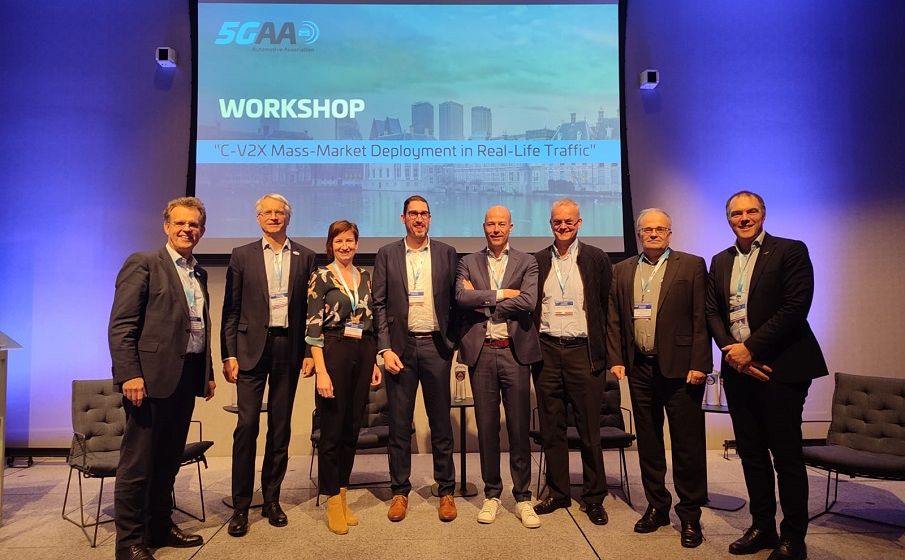
5GAA and partners discuss C-V2X mass-market deployment in The Hague
On February 9, to conclude its first meeting week of 2023, the 5G Automotive Association held a workshop on “C-V2X Mass Market Deployment in Real-Life Traffic”. Over two sessions, speakers examined connected mobility for road management in The Netherlands and Flanders and the benefits of connected mobility services for end-users.
Continuing a tradition established last year in Atlanta (US) and Málaga (Spain), the 5G Automotive Association capped off its meeting week in The Hague —the first of four to be held in 2023 — with a workshop for members and guests.
The workshop, which took place on the morning of February 9 at the Marriott Hotel in the Dutch capital, gathered delegates and partners for two different sessions featuring representatives from member organisations, public stakeholders, and road operators. 5GAA Director General Johannes Springer was responsible for welcoming attendees, while Vice Chair Uwe Puetzschler delivered the closing speech with an outlook of what is coming for 5G-V2X.
During the first session, participants got an overview of the Netherlands’ and Flanders’ Connected Mobility Roadmaps from Wim Vandenberghe, Senior Advisor for ITS and CCAM at the Dutch Ministry of Infrastructure and Water Management, and Erika Decorte, Program Manager at the Flanders Authority for Roads and Traffic. Menno Malta, CEO of Monotch, wrapped up the session by delving into the C-ITS ecosystem deployment and architecture.
The second session, on the other hand, explored how end-users are leveraging connecting mobility services. René Spaan, Project Leader for Smart Mobility in the City of Helmond (Netherlands, presented use cases in urban settings. Participants also got to learn more about C-V2X services for emergency vehicles thanks to Gerard Berendschot, Manager of Quality and Policy at the Netherlands’ Ambulance Care. Finally, 5GAA delegate Andreas Schaller, Head of V2X Technology at Bosch, introduced the audience to the wrong-way driving application.
After the workshop, the 5GAA Board hosted a close-door roundtable with nine road operators, who received a presentation about the association’s new C-V2X roadmap and engaged in some interactive discussions to dive into their priorities, needs, and expectations. This roundtable followed on 5GAA’s recent release of its “Conclusions and Recommendations for Communications Service Providers Supporting Road Operator Priorities and Expectations”, available here, and a technical report on “Road Operator Use Case Modelling and Analysis.”

5GAA in Málaga: Symposium & Live Demos
In October 2022, sixteen members of the 5G Automotive Association gathered at the DEKRA facilities in Málaga to showcase ready-to-deploy C-V2X technology and what the future has in store for connected and automated mobility. Prominent members and partners of the 5GAA including 5GCroCo, Anritsu, Autotalks, Commsignia, Continental, Deutsche Telekom, Ericsson, Huawei, Intel, Keysight, Molex, Nokia, Rohde & Schwarz, Stellantis, Vodafone and Omniair demonstrated the current state of C-V2X and a wide range of applications for VRU (Vulnerable Road Users) protection, through a range of indoor and outdoor demos. The over 200 attendees included road operators, journalists from national and international media, and 5GAA delegates.

Road Operator Use Case Modelling and Analysis
The 5GAA work item BRIDGE aims to determine how Communications Service Providers (CSPs) can support the C-ITS/V2X expectation of Road Operators in the near future to encourage and accelerate the deployment of C-ITS use cases on the road.
Following on from a series of discussions with European Road Operator strategists, a set of four exemplary C-ITS use cases was identified with a view to understanding what might be required from CSPs to achieve the above-mentioned objective. Additionally, a set of possible network requirements were defined and short-listed. Modelling showed that all of the use cases can be delivered on existing mobile networks today, assuming network coverage is sufficient for Road Operator requirements.
Find out the rest on this 5GAA Technical Report.
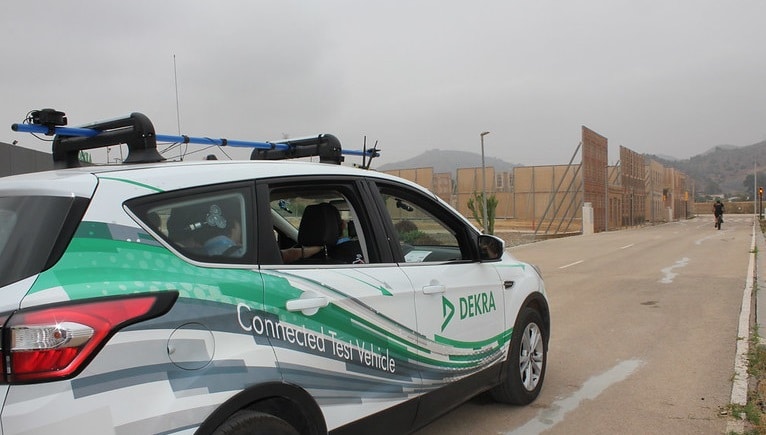
5GAA Demonstrated C-V2X Technology Applications and Safety Benefits for Road Users last October in Málaga, Spain
Malaga, 20 October 2022 – C-V2X technology revolutionizes the mobility ecosystem and how drivers interact with the world, making smart cars a reality today. These cars communicate with their surrounding infrastructure, be it other cars or vulnerable road users, while providing a better driving experience. 5GAA is at the forefront of redefining transportation, by providing real-time, reliable, and actionable information flows to enable safety, mobility, and environmental applications.
Sixteen 5GAA members gathered in Malaga on October 20 to showcase ready-to-deploy C-V2X technology and what the future has in store for the industry and vulnerable road user protection. Prominent members and partners of the 5GAA including 5GCroCo, Anritsu, Autotalks, Commsignia, Continental, Deutsche Telekom, Ericsson, Huawei, Intel, Keysight, Molex, Nokia, Rohde & Schwarz, Stellantis, Vodafone and Omniair demonstrated the current state of C-V2X and a wide range of applications for VRU (Vulnerable Road Users) protection, through a range of indoor and outdoor demos. The over 200 attendees included road operators, journalists from national and international media, and 5GAA delegates.
“C-V2X continues to drive the automotive transformation – and is now the new reality,” says 5GAA Chairman, Christoph Voigt. “Our key asset, the C-V2X technology, became an important part of the worldwide V2X ecosystem. The live demonstrations we have seen here, in Malaga, show us repeatedly that C-V2X is ready for a future where we can use our current infrastructure to improve protection for vulnerable road users.”
Using both direct and mobile network communications, the open-road demonstrations displayed the extensive capabilities of today’s C-V2X technology. To name a few:
- Protecting vulnerable road users and increasing the safety of cyclists on the road by alerting them of a collision
- Enabling smart intersections to enhance VRU safety by sending awareness messages to C-V2X-enabled cyclists
- Warning road users of traffic incidents between connected vehicles
The demonstrations were held at the DEKRA Test Track, a private field-testing area dedicated to connected & automated driving in Málaga, Spain. The test track reproduces multiple traffic situations using different V2X communications systems and networks, as well as traffic elements like traffic signs, traffic lights, road cones, pedestrians’ simulators that allow setting up various test cases. Located in a restricted area of 51.000 m2 (about twice the area of a parking space) with roundabouts, straight and curved roads, intersections, traffic lights and signalling, this connected & automated driving test track is a state-of-the-art facility that researches, develops, tests, and certifies the mobility of the future.
Together with our members, 5GAA has embraced digital transformation and is creating opportunities for transportation innovation. Its goal is to develop end-to-end solutions for future mobility that improve traffic efficiency, driving comfort and road safety to ensure a secure and sustainable transportation ecosystem.
Federal Funding Opportunity for Wireless Technology: Safe Streets and Roads for All (SS4A) Grant Program
Through September 15, 2022, a Notice of Funding Opportunity (NOFO) from the U.S. Department of Transportation (USDOT) will be open for Safe Streets and Roads for All (SS4A) grants in FY22. It’s an opportunity for companies to apply for a part of $1 billion per year in FY22-26 grants to prevent roadway deaths and serious injuries.
The timing is fortuitous. Newly released traffic crash estimates from the National Highway Traffic Safety Administration (NHTSA) show that traffic fatality rates in 2021 are the highest since 2005. NHTSA projects a final tally of 42,915 lives lost during 2021 in traffic crashes nationwide.
Making transportation safer and more equitable
To support its goals, the SS4A program funds activities that will help lower fatalities on U.S. roads and highways. The program is also an opportunity to fund regional, local and Tribal initiatives aimed at making transportation equitable for all road users.
Equity is an important element in underserved communities, which are disproportionately affected by fatalities among vulnerable road users (VRUs). These users include pedestrians, cyclists and the growing number people using micro-mobility options such as e-bikes and scooters.
Underserved communities also have higher vehicular traffic volumes, trucking routes and major arterial roads. They are characterized by intersections that are unsafe or impassable by foot or bike, and an overall lower level and quality of walking and cycling infrastructure. NHTSA’s projections for 2021 show alarming increases in fatalities for pedestrians (13 percent), motorcyclists (9 percent) and bicyclists (5 percent), making the SS4A funding opportunity even more fortuitous for VRUs.
Applying C-V2X technology to prevent road fatalities
Many roadway deaths are preventable. Cellular-vehicle-to-everything (C-V2X) is a wireless technology that allows vehicles to communicate directly with each other (V2V), with roadside infrastructure (V2I) and potentially with pedestrians (V2P). C-V2X supports information sharing to facilitate applications that enhance safety for all road users.
NHTSA believes that safety applications supported by V2V and V2I could eliminate or mitigate the severity of up to 80 percent of non-impaired crashes. Also, connected vehicle technology is on the National Transportation Safety Board’s Most Wanted List of transportation safety improvements.
The following use cases illustrate the immediate impact of safety applications that use C-V2X technology:
- Red-light violation warning (RLVW)
More than half of all fatal and injury crashes happen at intersections (source). The most common cause of all urban crashes, drivers running red lights result in an average of seven fatalities and more than 1,000 injuries per day at signalized intersections across the country (source).

- Intersection movement assist (IMA)
Similar to RLVW, IMA safety applications can alert other drivers when someone is running a red light so they can take action to stop before entering the intersection. - Spot weather warnings
Inclement weather, which can result in road hazards such as icy patches on highways, are not easily detected by LIDAR sensors. Infrastructure-to-vehicle (I2V) applications can send a warning to approaching vehicles, reducing the potential for sharp drops in speed that can result in road incidents. - Traffic signal pre-emption
Aimed at shortening emergency response times to help save lives, this use case allows vehicles like ambulances and fire trucks to remotely trigger a green light. Related V2V applications share this information with nearby vehicles so drivers can take action to move out of the way, reducing congestion along the route to improve safety for first responders and road users alike. - School zone safety
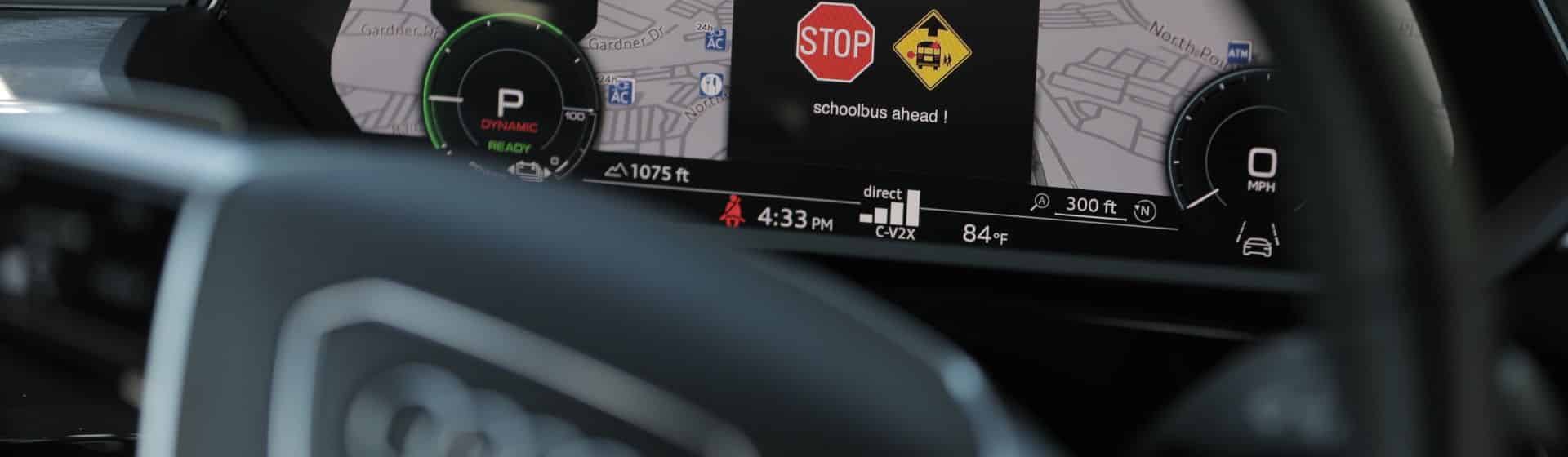
C-V2X alerts drivers when they are entering an active school zone and notifies them of the reduced speed limit. Future applications might include automatically slowing vehicles as they approach an active school zone.
See more use cases below.
What you can’t see can hurt you, and C-V2X plays a critical safety role because it allows the vehicle to see more than the driver can see. Regular sensors keep vehicles safe in immediate surroundings; C-V2X provides more robust signaling to help vehicles see around blind corners and many other types of obstructions. It connects vehicles and roadside infrastructure that are not in each other’s line of sight and allows them to share information about traffic conditions.
How C-V2X fits with SS4A
SS4A accepts both Action Plan Grants and Implementation Grants, with the latter drawing upon the foundation of the former. The program calls out four selection criteria:
- Safety impact
- Equity, engagement, collaboration
- Effective practices and strategies
- Climate and sustainability, and economic competitiveness
Two notable considerations are project readiness and funds to underserved communities.
USDOT lists several sample activities for Implementation Grants that align closely with C-V2X, including these:
- Deploying advanced transportation technologies, such as the installation of connected intersection-based safety solutions and vehicle-to-infrastructure advisory speed limit systems (e.g., intelligent speed assistance — see above)
- Evaluating and improving the safety of intersections by considering innovative design changes, improved delineation, and advanced warning
- Creating safe routes to school and public transit services through multiple activities that lead to people safely walking and biking in underserved communities.
- Promoting the adoption of innovative technologies or strategies for the safety and protection of VRUs in high-traffic areas where commercial motor vehicles (CMVs), pedestrians, bicyclists, and motorcyclists interact.
Next steps
As part of the Bipartisan Infrastructure Law, SS4A is a discretionary program with $5 billion in appropriated funds over the next 5 years. A related opportunity opening up in late 2022 is the $500 million Strengthening Mobility and Revolutionizing Transportation (SMART) Grants from USDOT. Both SS4A and SMART provide a path to federal funding to build novel uses of C-V2X and 5G technologies into the nation’s infrastructure. To provide more visibility for industry stakeholders, USDOT has published a full list of funding opportunities with anticipated dates for 2022.
Applications built around C-V2X can help make intersections safer and reduce fatalities due to speeding in the use cases shown above, as well as in these:
- At-grade rail crossings — alerting emergency vehicles that a rail crossing is closed, enabling early rerouting and avoiding delays in life-saving calls
- Pedestrian crossings — detecting when a VRU is in the crosswalk ahead and warning approaching drivers to proceed with caution
- Incident clearance and response — sending alerts to drivers as they approach an emergency vehicle stopped in or along the roadway ahead, thereby helping to prevent secondary crashes
- Wrong-way driving — detecting drivers who go the wrong way on on-ramps and highways, then alerting the driver, nearby drivers, and law enforcement
These applications can also help make transportation equitable in underserved communities, fulfilling another important goal of SS4A.
Find out how to apply for SS4A grants here and in the USDOT’s “Safe Streets and Roads for All” webinar series.
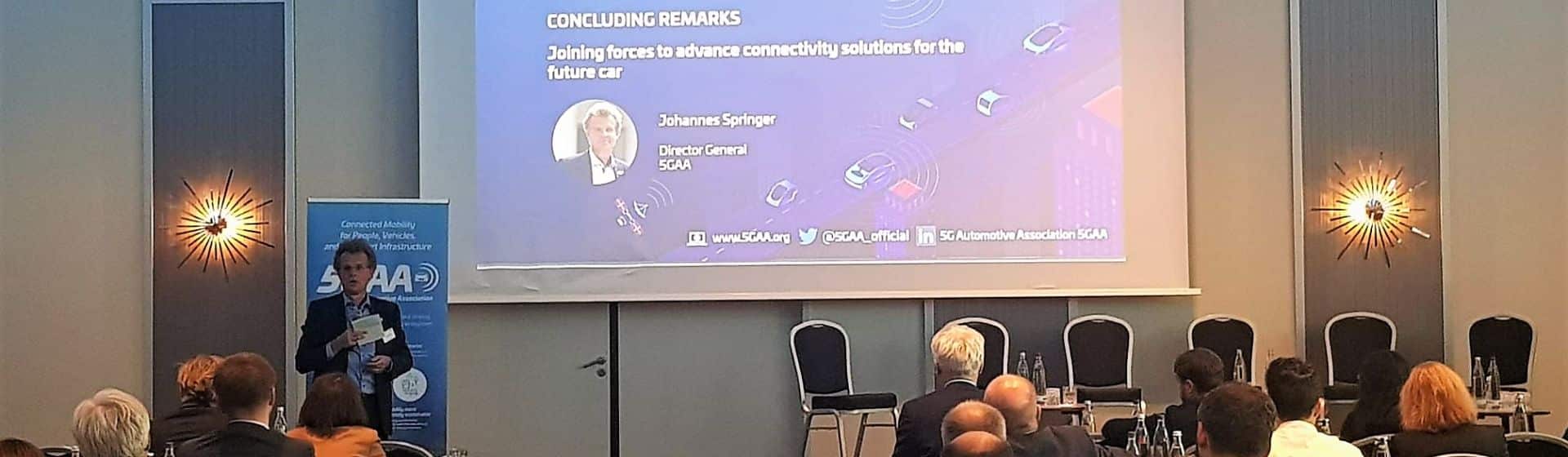
5GAA discusses the role of non-terrestrial networks in the connectivity of the car of the future
Ubiquitous connectivity is an essential prerequisite to achieving a full-scale digital transformation of the automotive sector. Connectivity challenges and how the seamless integration of terrestrial and non-terrestrial network solutions can foster high-capacity global connectivity were at the heart of the Connectivity for the Car of the Future Symposium, hosted by the 5G Automotive Association (5GAA).
Berlin (Germany), 16 May 2022. The 5G Automotive Association (5GAA) and the European Space Agency discussed the crucial role of ubiquitous connectivity and the opportunities for space technologies to offer future solutions for the automotive sector during its “Connectivity for the Car of the Future Symposium.”
Today, over 200 million connected vehicles worldwide are equipped with applications sharing hazard and traffic warnings on the road. The automotive sector is undergoing a significant transformation: from a focus on vehicle performance to a focus on a fully digital, tailor-made digital experience, and customers increasingly expect a fully connected car. Ubiquitous connectivity is an essential prerequisite to achieving a full-scale digital transformation of the automotive sector. Ensuring the network’s reliability can be a challenge, particularly in rural or remote areas that still experience no or poor band coverage, and non-terrestrial networks can have a crucial role in deploying hybrid connectivity solutions for the car of the future.
To explore the connectivity challenges and how space solutions can support the car industry in connected mobility, the 5G Automotive Association organised a Symposium in collaboration with the European Space Agency (ESA). What does the future car look like? Which connectivity and business models are needed to enable? What is the place of space in the mix? These were some of the questions addressed by industry representatives of car manufacturers, connectivity providers, mobile network operators, satellite connectivity providers and decision-makers.
Satellite connectivity can complement terrestrial solutions in white spots and in case of outages and congestion. In this sense, Europe must accelerate the development of assets and capacities in this field to compete globally, provide the appropriate solutions for the automotive sector and fill in any potential gaps. Therefore, it is essential to ensure that all the stakeholders and their respective innovative roadmaps are aligned, as highlighted by Joseph Aschbacher, Director-General of ESA, in his welcome messagefor the event. As such, the car industry will be able to make the most of cutting-edge developments in the connectivity domain.
“We are pleased to collaborate with 5GAA to promote and build the connected car ecosystem of the future. Vehicles are rapidly becoming fully connected devices and drive investments into new-generation connectivity. Satellites and space-based technologies are key assets to complete terrestrial networks, build smart and hybrid systems and offer ubiquitous, secure, and sustainable connectivity. We look forward to continuing this intense exchange with the automotive value chain to join forces and build a truly European connected car architecture,” added Elodie Viau, Director, Telecommunications and Integrated Applications Directorate, ESA.
During the Symposium, car manufacturers and tier-1 suppliers discussed the mobility-related technology innovations, opportunities, requirements, and challenges, highlighting the crucial role of ubiquitous connectivity for the automotive sector and the increasing number of use-cases already developed by the automotive industry for both private and commercial vehicles.
Including non-terrestrial connectivity in the mix will bring many benefits, such as extending high connectivity to rural areas at a comparatively low cost and enabling digital services and autonomous driving applications. However, space solutions need to be integrated with the existing terrestrial solutions, as they will not replace them. In addition, the seamless integration of antennas technology on the car, and the smooth handover between the networks, are just some of the challenges that still need to be addressed. Therefore, speakers pointed out that these solutions need to be included in the 3GPP standardisation system, which is currently the integrational connectivity path, defining the terrestrial connectivity requirements.
Finally, all the stakeholders engaged in a lively discussion to map how the whole ecosystem can work together to address the connectivity challenges and develop targeted R&D, demonstrators and pilots and expand them into mature business models and strategic partnerships. Indeed, to enable cross-border coordination and integration of terrestrial and satellite connectivity solutions, the cooperation and alignment of various players and investments will be essential. In this area, ESA aims to provide the European automotive sector with the necessary support and expertise to maximise its positive social, economic and environmental impact and develop competitive car connectivity solutions.
“Use cases and requirements are already there, and ubiquitous connectivity will enable their full-scale deployment. Satellite solutions can play a crucial role in achieving this,” concluded Johannes Springer, Director General, 5GAA. “It is crucial to ensure the greatest alignment and cooperation between all the stakeholders involved. Let’s continue working together to bring the 3GPP standards to the satellite solutions and seamlessly integrate them with the terrestrial networks to provide solutions for the car of the future.”
Below the presentations showcased during the first session of the event:
Andreas Schaller, V2X Technology Strategy, Robert Bosch Mobility Solutions
Olaf Eckart, Senior Expert Cooperations R&D, Industry Customers, BMW
Jörg Plechinger, Head of Mobile Connectivity Plattform / Car2X, AUDI AG
Susanne Schulz, Head of Department Cooperative, Connected and Automated Mobility, Autobahn GmbH


Join the 5GAA
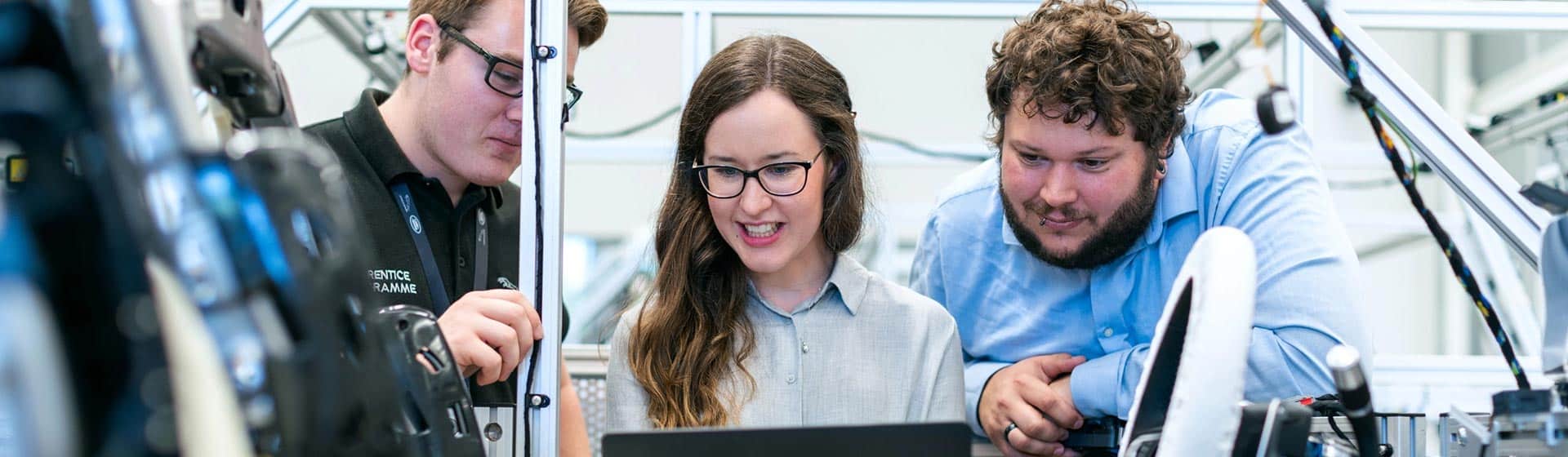
The 5G Automotive Association (5GAA) is a global association with over +100 member companies from the automotive and telecommunications industries. Partners who are active in the broader telecommunications and automotive ecosystem, such as universities, research bodies, associations, and public authorities also joined the ecosystem. Each of the 5GAA members bring added value to the 5GAA mission through their contributions and visionary mindset. Together, the key partners foster collaboration and exchange to path the way towards the new mobility era.
What our members say

Building a representative membership and driving impactful partnerships
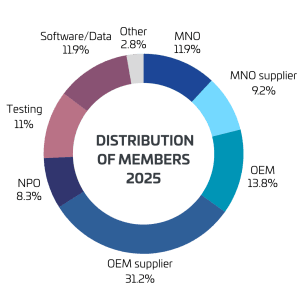
5GAA gathers over 115 member companies from the automotive and telecommunications industries. The association has also welcomed partners who are active in the broader telecommunications and automotive ecosystem, such as universities, research bodies, associations, and public authorities.
Global footprint
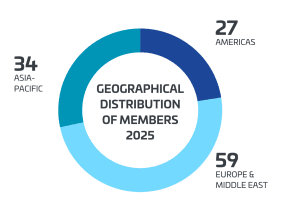
Shaping the new mobility globally, powering locally
Map members

Join the community
PLATINUM Members
Full leadership and strategic influence: Guaranteed Board seat, decision-making, authority, and top-tier access to all 5GAA activities and events.
(Currently limited to 12 members, including 8 founding members).
GOLD Members
Strategic influence: Eligible for Board election, priority to events & demonstrations, active, participation in strategy, Working Groups, and
regional activities.
GENERAL Members
Focused participation: contribute to Working Groups & Work Items, vote at the General
Assembly and access to core 5GAA activities.
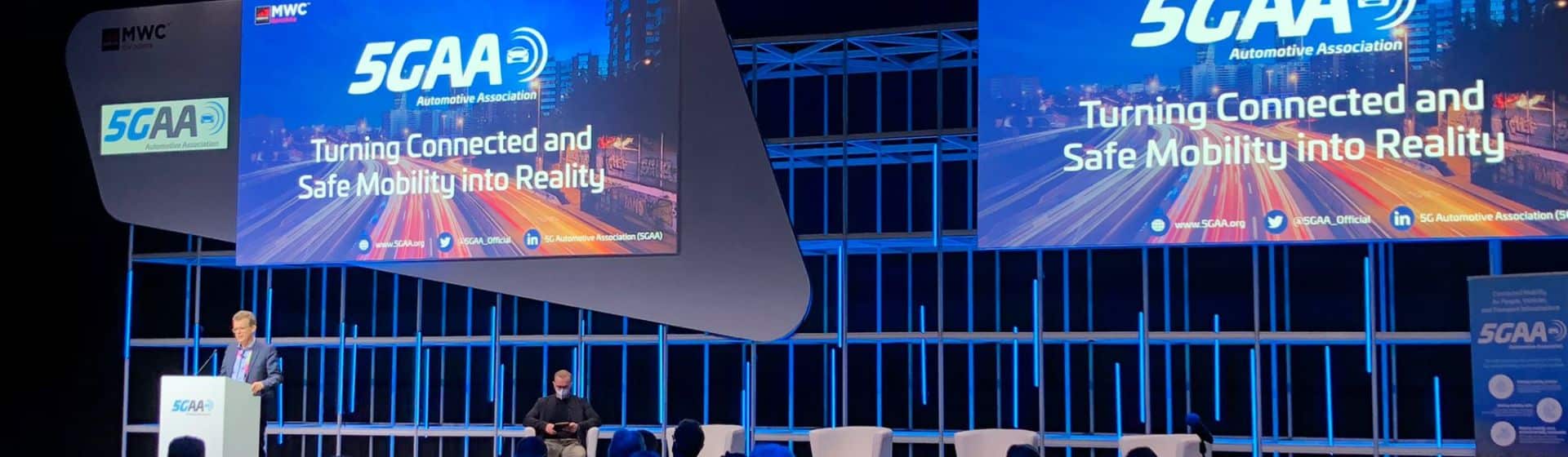
5GAA discusses how C-V2X turns Connected and Safe Mobility into Reality at Mobile World Congress 2022 in Barcelona
Barcelona, 3 March 2022 – The 5G Automotive Association (5GAA), alongside its members, disclosed the latest global deployments of C-V2X technology, highlighting how 5G data will deeply transform the mobility system by making it safer and more efficient at GSMA’s Mobile World Congress 2022 in Barcelona on Wednesday 2 March 2022.
The 5G Automotive Association was back this year at Barcelona’s edition of the Mobile World Congress, the world’s leading exhibition for the connectivity industry, to disclose the cellular technology shaping the future of mobility alongside its member.
Today, connected driving is a reality. Over 200 million connected vehicles are equipped with C-V2X applications sharing hazard and traffic warnings on the road. Applied to the automotive sector, 5G is upgrading revolutionary in-car connectivity, allowing seamless and cooperative communication between vehicles, infrastructure, and surroundings.
On 2nd March, 5GAA experts and member spokespersons shared their views on how the deployment of C-V2X technologies is turning connected and safe mobility into reality from now and in the next few years. Moreover, the association had the pleasure to have Peter Stuckmann, Head of Unit, Future Connectivity Systems, DG CONNECT, European Commission, addressing the participants and highlighting the crucial role of investments in 5G and infrastructures to foster the European green and digital transition.
As noted by Johannes Springer, 5GAA Director-General, the association that celebrates its 5th Anniversary has been working intensely to bridge the gap between automotive, technology, and telecom industries and promote the 5G-V2X (vehicle-to-everything) technology as a comprehensive and integrated platform for connected vehicles, embracing digital transformations as opportunities for mobility innovations.
The conference, moderated by Freddie Holmes, Special Correspondent at Automotive World, offered an overview on the broad-scale improvements that connected mobility can bring to the global automotive system, starting with a first session on the 5G-V2X deployment landscape in different regions, such as Europe, China, and the US. Speakers underlined the need for increased ecosystem cooperation and cross-border projects to ensure reliable access to 5G networks to all users. The second session focused on the safety aspects and benefits brought by the technology, including protecting vulnerable road users.
The event concluded with an insightful panel discussion on mobility data, with the participation of representatives from the entire ecosystem value chain. Panellists discussed how smart cities and infrastructure could help make data-driven decisions that inform how we pave the path for the future of mobility and the crucial role of data standardisation and reliability and new business models to foster investments.
The event welcomed, in person or through virtual messages, high-level representatives of 5GAA’s member companies Deutsche Telekom, Verizon, China Mobile, Harman, Continental, Telefonica, Qualcomm, BMW, Huawei, Intel , ZTE, Stellantis.
In addition,5GAA hosted a Press & Industry guided tour across the booths of key member companies to share their latest C-V2X technology developments with journalists and industry analysts, focusing on road safety and digital infrastructures.
Companies featured in the tour included:
- Deutsche Telekom presented the Automated Valet Parking in a 5G network use case, in partnership with BMW and Valeo, which delivers high reliability and stable latency to ensure the necessary safety requirements. Moreover, the company presented its Mobility Connect solutions, offering drivers 5G seamless connectivity solutions
- ZTE Corporation showcased its 5G-V2X products and solutions, including 5G-V2X module, OBU, RSU, V2X cloud platform and other cases
- Qualcomm presented its Snapdragon Digital Chassis Platform: a set of technology solutions for building connected and intelligent vehicles that are safer, customisable, immersive and continually upgradeable, and Auto Connectivity Platform to support ubiquitous connectivity in and around the vehicle
- Intel with its Superdemo, developed with its partners Capgemini and Advantech for their 5G Road Side Unit solution for Smart City & Transportation use cases focusing on vulnerable users protection Digital Twin infrastructure for sustainable cities
- Rohde & Schwarz showcased its 5G and C-V2X solutions for development in the laboratory and verification in the field to ensure the performance and reliability of critical automotive communications
- Anritsu presented a joint demonstration in partnership with dSPACE. The demonstration showed the use of 5G Network Slicing in an Advanced Intersection Collision Warning (AICW) use case, using Hardware In the Loop (HIL) test and simulation system to provide a realistic sensor simulation to an OBU that is being tested
We would like to thank all our participants, member companies and speakers, for making it such an insightful event, clearly demonstrated the added value of ecosystem cooperation for the future of the transportation system.
Download the agenda of the event here.
For additional information, please get in touch at marcom@5gaa.org.
Please find the video contribution from Ramaswamy Iyer, Senior Vice-President and Head of Connectivity SBU, Harman that unfortunately, we have not been able to show during the conference due to technical problems.


Privacy policy
The 5GAA – 5G Automotive Association e.V. (5GAA) places great importance on the protection of your personal data and is committed to comply with all applicable data protection laws and regulations.
The following Privacy Notice will provide you with information about the personal data we collect, process and use when you visit 5GAA’s website, become a member of the association, otherwise use our services or when we interact or communicate with you in any other way. Please note that if you use services provided by third parties, only the Privacy Notice of these third parties shall apply to the personal data processed via these services.
1. Who is responsible for the processing of your personal data?
The responsible data controller, that means the entity deciding why and how to process your personal data, is:
5GAA – 5G Automotive Association e.V.
Lindwurmstr. 25,
80337 Munich (Germany)
Tel.: + 49 89 54 90 96 80
Fax: + 49 89 54 90 96 85
secretariat@5gaa.org
5GAA is a global, cross-industry organization of companies from the automotive, technology, and telecommunications industries (ICT), working together to develop end-to-end solutions for future mobility and transportation services.
2. What personal data do we collect?
We collect information from you when you use our website, complete our “Contact us” form, apply to join the association or to cooperate with us in any other way, are a member of the association, join or participate in our working groups, register for an event or otherwise interact with us. We may also receive information on you from our member companies and institutions that you are associated with (for example as an employee).
The personal data we collect might include your title, first name, surname, gender, date of birth, address, email address, phone number, IP address, and information regarding what pages are accessed and when.
We may also collect information relating to your employment, including where you are currently employed, your job title, areas of interest/expertise and your job function if this is relevant to your interaction with us. In applications for some categories of membership we ask you to identify a reference by providing their name and address. Please make sure that you have obtained the consent of the reference prior to providing the contact details.
We may also collect your personal data (e.g. name, email address, organisation, function, other relevant contact data), in particular with respect to your function as policymaker or representative of the media or of a public authority, from publicly available sources or within the scope of our business activities from our external sources.
3. For which purposes do we process your personal data?
We process your personal data for the following purposes:
- Processing your application, in particular for a membership with 5GAA;
- Administering your membership, that means where we have to process your personal data to perform our relationship with you;
- Handling your requests and reacting to other interactions initiated by you;
- Processing your invitations for 5GAA or associated events to facilitate your attendance;
- Compiling statistics, insights and analyses of attendance and success of our events;
- Coordinating the activities of 5GAA, and, in particular, its working groups;
- Enabling 5GAA members, their delegates and other working group participants to communicate (e.g. via email) and to cooperate with you with regard to your working group activities or mutual interests;
- Seeking your views or comments in the context of 5GAA’s activities;
- Sending you communications which you have requested or that may be of interest to you, including newsletters, press releases, position papers, information about events and other activities of the association; requests for feedback on our events;
- Monitoring compliance with our terms and policies, for example, to prevent or detect fraud or other crimes;
- For billing purposes, where necessary.
4. Who has access to your personal data?
To support us with the administration of your membership and the coordination of our activities (such as hosting and organizing events), our service provider MCI Deutschland GmbH will access and process your personal data on our behalf.
In addition, we will disclose your personal data to our third-party service providers, agents, subcontractors and other associated organizations for the purposes of completing tasks and providing services to you on our behalf. These service providers include, for example, fulfilment providers for delivery of our digital content and newsletters; member service agencies; hosts, organizers and sponsors of our events; organizations that host our website or databases; and providers of online surveys. We may also disclose your personal data to legal consultants or similar third parties where this is necessary for our legitimate interests, for example for the prevention or detection of fraud or other crimes. However, when we share your personal data with third parties, we disclose only the personal information that is necessary to deliver the services and we have contracts that require them to keep your information secure and not to use it for their own purposes.
If you subscribe to a mailing list of a working group, we may disclose your personal data, in particular your name, the name of the organisation that you are representing, your job title and your email address to other delegates or participants of the same or similar working groups.
Where we are required by applicable laws, we will also disclose your personal data to law enforcement, government authorities or courts.
We will not sell or rent your information to third parties unless you have given your express consent for us to do so where required by law.
5. On which legal basis do we process your personal data?
We will process your personal data on the following legal bases under Article 6 of the EU General Data Protection Regulation:
- Application and membership necessity: Where the processing of your personal data is necessary to manage your application and administer your membership or any other association with 5GAA;
- Legitimate business purposes: Where the processing is necessary for our legitimate interests (such as to protect us from harm by preventing or detecting illegal activities, fraud or similar threats; to represent our interests publicly or among experts, in particular by reaching out to and communicate with media representatives, policymakers, public authorities and other associations or organizations; to exercise or defend against legal claims; to enhance the benefit of a 5GAA membership by enabling networking and cooperation activities amongst our members, their delegates and other stakeholders; to improve our future events and better meet the interests of our members by compiling statistics, insights and analyses of attendance at our events; or to analyze our website usage and services), unless we determine in a case-by-case assessment that our interests are overridden by your interests or rights;
- Legal obligation: To comply with legal obligations to which we are subject (for example, where we are requested by a court to disclose your data);
- Consent: This is where you have given us explicit permission to process personal data for a given purpose, as required under applicable data protection laws and regulations. For example, we will ask for your consent to receiving newsletters when you sign up on our website.
6. Where will your personal data be processed?
Your personal data will be processed both inside the European Union (“EU”) and the European Economic Area (EEA) and outside by the parties specified in Section 4 above.
Please note that EU / EEA Member States and other countries all have different laws regarding the protection of personal data. If we transfer your personal data from your own country to another country, the laws and rules that protect your personal data in the country to which your information is transferred to can be different (or less protective) from those in the country in which you live.
If we transfer any of your personal data outside the EU or EEA, we will, to the extent that this is required by applicable data protection laws and regulations, ensure that the recipient of the personal data provides for an adequate level of data protection, in particular, by implementing safeguards such as standard contractual clauses approved by the European Commission or by relying on an adequacy decision by the European Commission. Further information can be found here: https://ec.europa.eu/info/law/law-topic/data-protection/data-transfers-outside-eu_en.
7. Cookies
In order for this site to work properly, we sometimes place small data files called cookies on your device.
What are cookies?
A cookie is a small text file saved on your computer or mobile device by a website when you visit https://5gaa.org/. The cookie enables the website to remember your actions and preferences such as login, language, font size and other display preferences to keep you from having to reenter them on every visit to the website or when browsing from page to page.
How do we use cookies?
A number of the pages on our website use cookies to remember:
- Your display preferences, such as contrast and colour settings or font size.
- Whether or not you have already replied to a survey popup that asks you if the content was helpful or not so that you won’t be asked over and over again.
- Whether or not you have agreed to our use of cookies on this site.
In addition, some embedded videos in our pages use a cookie to anonymously gather statistics on how you got there and what videos you viewed. Although enabling these cookies is not strictly necessary for the website to work, it will provide you with a better browsing experience. Cookies can be deleted or blocked, but some features of this site may not work as intended should you do so. The cookie-related information is not used to identify you personally and the pattern data is fully under our control. The cookies on this website are not used for any purpose other than those described here.
How to control cookies
You can block and/or delete cookies as you wish using your browser settings. You can delete all cookies that are already on your computer and you can set your browser to prevent them from being placed. By doing this you may have to manually adjust some preferences every time you visit https://5gaa.org/ and some services and functionalities may not work.
8. How do we protect your personal data?
5GAA maintains appropriate technical and organizational security measures designed to protect your personal data against accidental, unlawful or unauthorized destruction, loss, alteration, access, disclosure or use.
Non-sensitive details (your email address etc.) are transmitted normally over the Internet, and this can never be guaranteed to be 100% secure. As a result, while we strive to protect your personal data, we cannot guarantee the security of any information you transmit to us, and you do so at your own risk. Once we receive your personal data, we make our best effort to ensure its security on our systems. Where we have given (or where you have chosen) a password which enables you to access certain parts of our website, you are responsible for keeping this password confidential. We ask you not to share your password with anyone.
9. How long do we store your personal data?
We will not retain your personal data longer than necessary to fulfil the purposes the data was collected for or to fulfil our legal obligations. Afterwards, we will delete your personal data.
If you wish to receive further specific information on the applicable retention periods, please contact us under the contact details mentioned in Section 11.
10. What are your rights in respect of your personal data?
To the extent permitted by applicable data protection laws and regulations, you have the right to access your personal data that we hold on you, to update or correct your data so that it is always accurate and to request the deletion of your personal data if it is no longer needed for the purposes above. Furthermore, you have the right to restrict the processing of your data in certain circumstances (for example, where you have contested the accuracy of your data, for the period enabling us to verify its accuracy) and to obtain a copy of your personal data (including in an electronic, machine-readable format).
Moreover, you have the right to withdraw your consent at any time where your personal data is processed with your consent, without affecting the lawfulness of processing based on consent before its withdrawal.
You also have a right to object to the processing of your personal data:
In the event and to the extent that we process your personal data based on our legitimate interests as mentioned above, you have the right to object to the processing on specific grounds relating to your particular situation. In such case we will no longer process your personal data unless we have compelling legitimate grounds for the processing which override your interests, rights and freedoms or for the establishment, exercise or defense of legal claims.
In the event and to the extent that we process your personal data for direct marketing purposes, you have the right to object at any time to processing of your personal data for such marketing.
Please note that legal exceptions (such as mandatory retention periods or rights of third parties) may limit your rights.
To exercise your rights, please reach out to us via the contact details mentioned in Section 11.
You also have the right to lodge a complaint with a competent data protection supervisory authority.
11. How can you contact us?
We welcome any queries and complaints you may have regarding how we process your personal data via e-mail to secretariat@5gaa.org or in written form to 5GAA – 5G Automotive Association e.V. – Head Office, Lindwurmstr. 25, 80337 Munich (Germany).
12. How often do we update this privacy notice?
This privacy notice will be updated to reflect changes either regarding the way in which we process your personal data or changes to data protection legislation. We will bring any significant changes to your attention by updating this information and making it available on our website. To make sure that you keep up to date, we suggest that you revisit this notice from time to time. In addition, we will examine whether in individual cases there is an obligation to provide other notification in the event of any changes to this information and in this case, we will comply with the existing notification obligation.
This Privacy Notice was last updated in January 2021.