
Moving toward Federated MEC Demos/Trials (global MEC)
This document is focusing on the MEC live trials and related public demonstrations of selected automotive use cases in multi-MNO multi-OEM environments, carried out in various regions of the world.
The report explores technical, regulatory and business constraints around deployment of multi-MNO MEC scenarios under different conditions and meeting auto OEM requirements
Read the report here.
5GAA online session on Global MEC technology
5G Automotive Association is pleased to invite you to our online session, “Global MEC technology to support automotive services“, taking place on April 4th from 4:00 to 5:30 PM (CET).
The 5GAA approach to MEC (Multi-access Edge Computing) technology for automotive services follows car industry needs to consider multi-operator, multiple car maker, and multi-vendor scenarios.
In order to support global MEC deployments, 5GAA started working since 2019 on this area by targeting live trials to easily demonstrate MEC applications and use cases in those scenarios of interest (MEC4AUTO approach).
This webinar will provide a comprehensive overview of the many recent activities in this field, including architectural insights inspired by live trials implementations with 5G networks, interoperability and testing aspects, business and market considerations, but also technology aspects, standardization impacts, usage of edge predictive analytics, network slicing and cybersecurity aspects for the targeted scenarios.
Attendants of the webinar will get an updated view of real-life issues related to global MEC deployments, both from technical and business perspectives, together with an anticipation of future 5GAA activities in this field.
Watch the recording here.
Download the presentation here.
Accelerate the understanding and adoption of VRU protection services enabled by C-V2X
The 5GAA work item VRU-PRO aims to increase our understanding of the implementations of Vulnerable Road Users (VRU) use cases based on recommendations highlighted in 5GAA’s VRU White Paper published in 2020.
During a set of activities carried out between 2020 and 2021, participating 5GAA members were divided in groups, which focused on targeted proof-of-concepts, demos and deployment activities. The outcome of these activities demonstrated how diverse approaches using V2X can increase safety for pedestrian, roadworkers, cyclists, e-bikes, mopeds, e-scooters and other powered two-wheelers. The learnings acquired are already feeding concrete plans to scale up deployment in different parts of the world.
5GAA’s next steps on VRU will focus on large-scale demos on interoperability of VRU solutions and applications, and in-depth studies on VRU Awareness Messaging (VAM) and Personal Safety Messaging (PSM) standardisation.
Find out the rest on this 5GAA Technical Report.
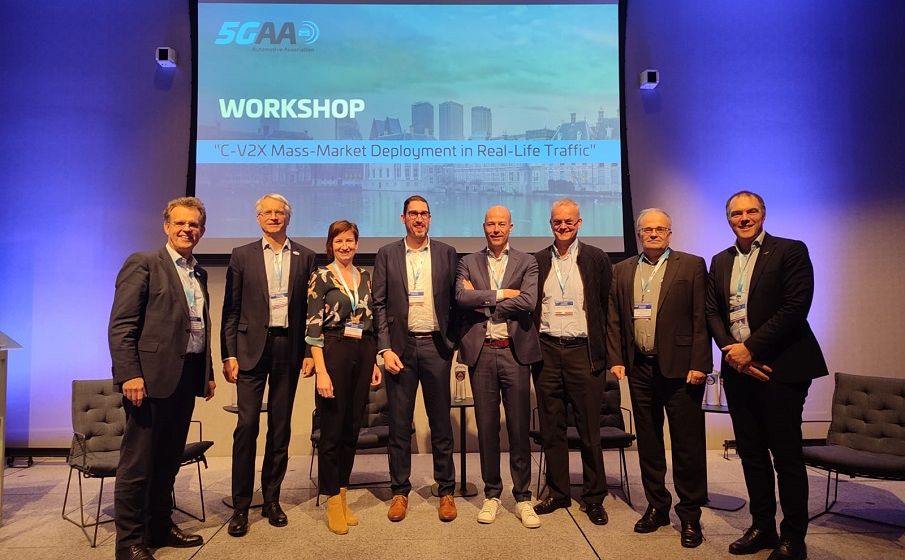
5GAA and partners discuss C-V2X mass-market deployment in The Hague
On February 9, to conclude its first meeting week of 2023, the 5G Automotive Association held a workshop on “C-V2X Mass Market Deployment in Real-Life Traffic”. Over two sessions, speakers examined connected mobility for road management in The Netherlands and Flanders and the benefits of connected mobility services for end-users.
Continuing a tradition established last year in Atlanta (US) and Málaga (Spain), the 5G Automotive Association capped off its meeting week in The Hague —the first of four to be held in 2023 — with a workshop for members and guests.
The workshop, which took place on the morning of February 9 at the Marriott Hotel in the Dutch capital, gathered delegates and partners for two different sessions featuring representatives from member organisations, public stakeholders, and road operators. 5GAA Director General Johannes Springer was responsible for welcoming attendees, while Vice Chair Uwe Puetzschler delivered the closing speech with an outlook of what is coming for 5G-V2X.
During the first session, participants got an overview of the Netherlands’ and Flanders’ Connected Mobility Roadmaps from Wim Vandenberghe, Senior Advisor for ITS and CCAM at the Dutch Ministry of Infrastructure and Water Management, and Erika Decorte, Program Manager at the Flanders Authority for Roads and Traffic. Menno Malta, CEO of Monotch, wrapped up the session by delving into the C-ITS ecosystem deployment and architecture.
The second session, on the other hand, explored how end-users are leveraging connecting mobility services. René Spaan, Project Leader for Smart Mobility in the City of Helmond (Netherlands, presented use cases in urban settings. Participants also got to learn more about C-V2X services for emergency vehicles thanks to Gerard Berendschot, Manager of Quality and Policy at the Netherlands’ Ambulance Care. Finally, 5GAA delegate Andreas Schaller, Head of V2X Technology at Bosch, introduced the audience to the wrong-way driving application.
After the workshop, the 5GAA Board hosted a close-door roundtable with nine road operators, who received a presentation about the association’s new C-V2X roadmap and engaged in some interactive discussions to dive into their priorities, needs, and expectations. This roundtable followed on 5GAA’s recent release of its “Conclusions and Recommendations for Communications Service Providers Supporting Road Operator Priorities and Expectations”, available here, and a technical report on “Road Operator Use Case Modelling and Analysis.”
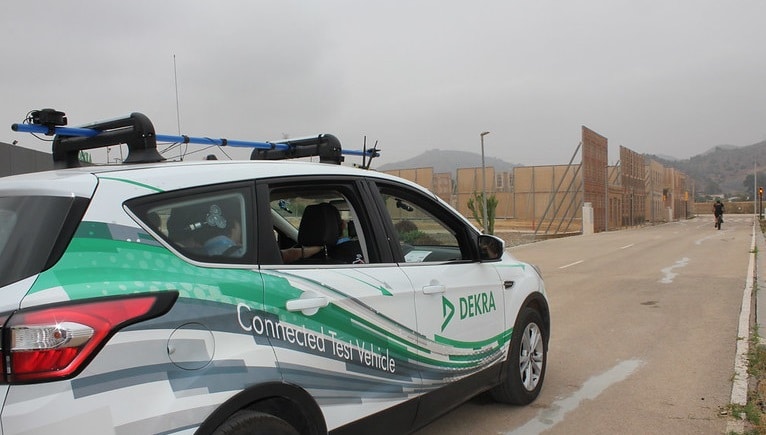
5GAA Demonstrated C-V2X Technology Applications and Safety Benefits for Road Users last October in Málaga, Spain
Malaga, 20 October 2022 – C-V2X technology revolutionizes the mobility ecosystem and how drivers interact with the world, making smart cars a reality today. These cars communicate with their surrounding infrastructure, be it other cars or vulnerable road users, while providing a better driving experience. 5GAA is at the forefront of redefining transportation, by providing real-time, reliable, and actionable information flows to enable safety, mobility, and environmental applications.
Sixteen 5GAA members gathered in Malaga on October 20 to showcase ready-to-deploy C-V2X technology and what the future has in store for the industry and vulnerable road user protection. Prominent members and partners of the 5GAA including 5GCroCo, Anritsu, Autotalks, Commsignia, Continental, Deutsche Telekom, Ericsson, Huawei, Intel, Keysight, Molex, Nokia, Rohde & Schwarz, Stellantis, Vodafone and Omniair demonstrated the current state of C-V2X and a wide range of applications for VRU (Vulnerable Road Users) protection, through a range of indoor and outdoor demos. The over 200 attendees included road operators, journalists from national and international media, and 5GAA delegates.
“C-V2X continues to drive the automotive transformation – and is now the new reality,” says 5GAA Chairman, Christoph Voigt. “Our key asset, the C-V2X technology, became an important part of the worldwide V2X ecosystem. The live demonstrations we have seen here, in Malaga, show us repeatedly that C-V2X is ready for a future where we can use our current infrastructure to improve protection for vulnerable road users.”
Using both direct and mobile network communications, the open-road demonstrations displayed the extensive capabilities of today’s C-V2X technology. To name a few:
- Protecting vulnerable road users and increasing the safety of cyclists on the road by alerting them of a collision
- Enabling smart intersections to enhance VRU safety by sending awareness messages to C-V2X-enabled cyclists
- Warning road users of traffic incidents between connected vehicles
The demonstrations were held at the DEKRA Test Track, a private field-testing area dedicated to connected & automated driving in Málaga, Spain. The test track reproduces multiple traffic situations using different V2X communications systems and networks, as well as traffic elements like traffic signs, traffic lights, road cones, pedestrians’ simulators that allow setting up various test cases. Located in a restricted area of 51.000 m2 (about twice the area of a parking space) with roundabouts, straight and curved roads, intersections, traffic lights and signalling, this connected & automated driving test track is a state-of-the-art facility that researches, develops, tests, and certifies the mobility of the future.
Together with our members, 5GAA has embraced digital transformation and is creating opportunities for transportation innovation. Its goal is to develop end-to-end solutions for future mobility that improve traffic efficiency, driving comfort and road safety to ensure a secure and sustainable transportation ecosystem.

5GAA and 6G-IA sign a Memorandum of Understanding
Brussels (BELGIUM), 11 August 2022 – The 5G Automotive Association and the 6G Smart Networks and Services Industry Association (6G-IA) have recently signed a Memorandum of Understanding (MoU) as a result of their mutual interest in strengthening the liaison between EU-funded projects on V2X and Connected and Automated Driving (CAD) with the relevant industry players, along with their wish to ensure the successful exploitation of V2X and CAD EU-funded project results.
The 6G-IA is the voice of European Industry and Research for next-generation networks and services. Its primary objective is to contribute to Europe’s leadership on 5G, 5G evolution and SNS/6G research. This aim brings together a global industry community of telecoms and digital actors, such as operators, manufacturers, research institutes, associations, universities, verticals and SMEs. The 6G-IA carries out a wide range of activities in strategic areas, including standardisation, frequency spectrum, R&D projects, technology skills, collaboration with key vertical industry sectors —notably for the development of trials— and international cooperation. It represents the private sector in both the 5G Public Private Partnership (5G-PPP) and the Smart Networks and Services Joint Undertaking (SNS JU), where the European Commission represents the public side.
5GAA, on the other hand, is a global cross-industry organisation of companies from the automotive, technology, and telecommunications industries (ICT). The association’s objectives are to develop, test and promote cellular technology-based communications solutions, initiate their standardisation, and accelerate their commercial availability and global market penetration to address society’s connected mobility and road safety needs.
Under this MoU, both parties agreed to cooperate for the benefit of the connected and automated mobility sector and society as a whole.
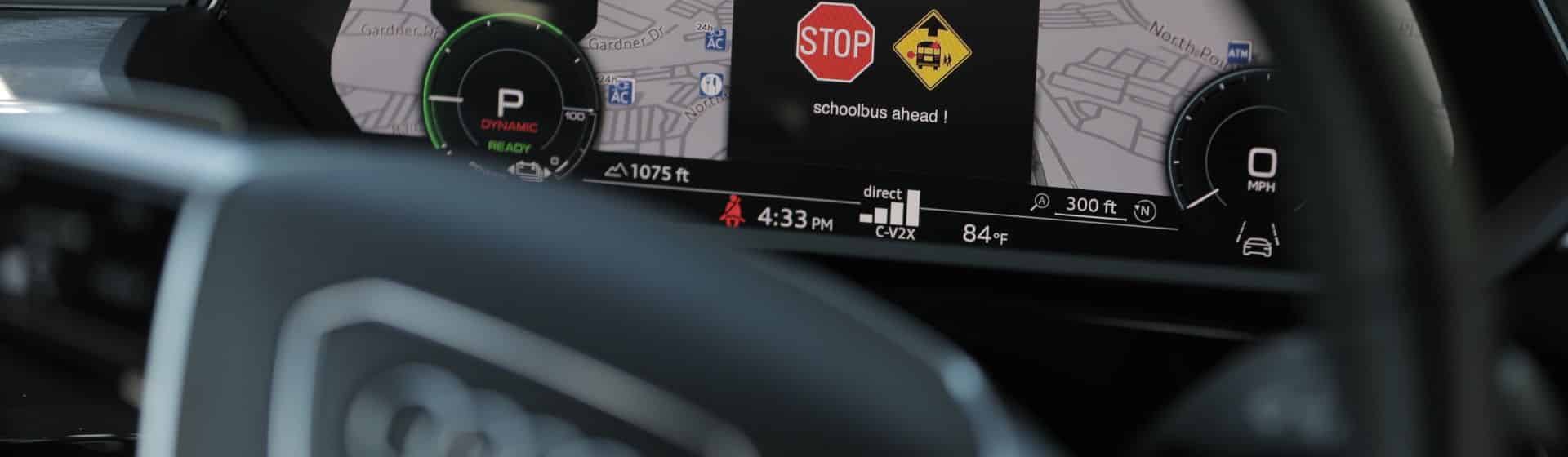
Federal Funding Opportunity for Wireless Technology: Safe Streets and Roads for All (SS4A) Grant Program
Through September 15, 2022, a Notice of Funding Opportunity (NOFO) from the U.S. Department of Transportation (USDOT) will be open for Safe Streets and Roads for All (SS4A) grants in FY22. It’s an opportunity for companies to apply for a part of $1 billion per year in FY22-26 grants to prevent roadway deaths and serious injuries.
The timing is fortuitous. Newly released traffic crash estimates from the National Highway Traffic Safety Administration (NHTSA) show that traffic fatality rates in 2021 are the highest since 2005. NHTSA projects a final tally of 42,915 lives lost during 2021 in traffic crashes nationwide.
Making transportation safer and more equitable
To support its goals, the SS4A program funds activities that will help lower fatalities on U.S. roads and highways. The program is also an opportunity to fund regional, local and Tribal initiatives aimed at making transportation equitable for all road users.
Equity is an important element in underserved communities, which are disproportionately affected by fatalities among vulnerable road users (VRUs). These users include pedestrians, cyclists and the growing number people using micro-mobility options such as e-bikes and scooters.
Underserved communities also have higher vehicular traffic volumes, trucking routes and major arterial roads. They are characterized by intersections that are unsafe or impassable by foot or bike, and an overall lower level and quality of walking and cycling infrastructure. NHTSA’s projections for 2021 show alarming increases in fatalities for pedestrians (13 percent), motorcyclists (9 percent) and bicyclists (5 percent), making the SS4A funding opportunity even more fortuitous for VRUs.
Applying C-V2X technology to prevent road fatalities
Many roadway deaths are preventable. Cellular-vehicle-to-everything (C-V2X) is a wireless technology that allows vehicles to communicate directly with each other (V2V), with roadside infrastructure (V2I) and potentially with pedestrians (V2P). C-V2X supports information sharing to facilitate applications that enhance safety for all road users.
NHTSA believes that safety applications supported by V2V and V2I could eliminate or mitigate the severity of up to 80 percent of non-impaired crashes. Also, connected vehicle technology is on the National Transportation Safety Board’s Most Wanted List of transportation safety improvements.
The following use cases illustrate the immediate impact of safety applications that use C-V2X technology:
- Red-light violation warning (RLVW)
More than half of all fatal and injury crashes happen at intersections (source). The most common cause of all urban crashes, drivers running red lights result in an average of seven fatalities and more than 1,000 injuries per day at signalized intersections across the country (source).

- Intersection movement assist (IMA)
Similar to RLVW, IMA safety applications can alert other drivers when someone is running a red light so they can take action to stop before entering the intersection. - Spot weather warnings
Inclement weather, which can result in road hazards such as icy patches on highways, are not easily detected by LIDAR sensors. Infrastructure-to-vehicle (I2V) applications can send a warning to approaching vehicles, reducing the potential for sharp drops in speed that can result in road incidents. - Traffic signal pre-emption
Aimed at shortening emergency response times to help save lives, this use case allows vehicles like ambulances and fire trucks to remotely trigger a green light. Related V2V applications share this information with nearby vehicles so drivers can take action to move out of the way, reducing congestion along the route to improve safety for first responders and road users alike. - School zone safety
C-V2X alerts drivers when they are entering an active school zone and notifies them of the reduced speed limit. Future applications might include automatically slowing vehicles as they approach an active school zone.
See more use cases below.
What you can’t see can hurt you, and C-V2X plays a critical safety role because it allows the vehicle to see more than the driver can see. Regular sensors keep vehicles safe in immediate surroundings; C-V2X provides more robust signaling to help vehicles see around blind corners and many other types of obstructions. It connects vehicles and roadside infrastructure that are not in each other’s line of sight and allows them to share information about traffic conditions.
How C-V2X fits with SS4A
SS4A accepts both Action Plan Grants and Implementation Grants, with the latter drawing upon the foundation of the former. The program calls out four selection criteria:
- Safety impact
- Equity, engagement, collaboration
- Effective practices and strategies
- Climate and sustainability, and economic competitiveness
Two notable considerations are project readiness and funds to underserved communities.
USDOT lists several sample activities for Implementation Grants that align closely with C-V2X, including these:
- Deploying advanced transportation technologies, such as the installation of connected intersection-based safety solutions and vehicle-to-infrastructure advisory speed limit systems (e.g., intelligent speed assistance — see above)
- Evaluating and improving the safety of intersections by considering innovative design changes, improved delineation, and advanced warning
- Creating safe routes to school and public transit services through multiple activities that lead to people safely walking and biking in underserved communities.
- Promoting the adoption of innovative technologies or strategies for the safety and protection of VRUs in high-traffic areas where commercial motor vehicles (CMVs), pedestrians, bicyclists, and motorcyclists interact.
Next steps
As part of the Bipartisan Infrastructure Law, SS4A is a discretionary program with $5 billion in appropriated funds over the next 5 years. A related opportunity opening up in late 2022 is the $500 million Strengthening Mobility and Revolutionizing Transportation (SMART) Grants from USDOT. Both SS4A and SMART provide a path to federal funding to build novel uses of C-V2X and 5G technologies into the nation’s infrastructure. To provide more visibility for industry stakeholders, USDOT has published a full list of funding opportunities with anticipated dates for 2022.
Applications built around C-V2X can help make intersections safer and reduce fatalities due to speeding in the use cases shown above, as well as in these:
- At-grade rail crossings — alerting emergency vehicles that a rail crossing is closed, enabling early rerouting and avoiding delays in life-saving calls
- Pedestrian crossings — detecting when a VRU is in the crosswalk ahead and warning approaching drivers to proceed with caution
- Incident clearance and response — sending alerts to drivers as they approach an emergency vehicle stopped in or along the roadway ahead, thereby helping to prevent secondary crashes
- Wrong-way driving — detecting drivers who go the wrong way on on-ramps and highways, then alerting the driver, nearby drivers, and law enforcement
These applications can also help make transportation equitable in underserved communities, fulfilling another important goal of SS4A.
Find out how to apply for SS4A grants here and in the USDOT’s “Safe Streets and Roads for All” webinar series.
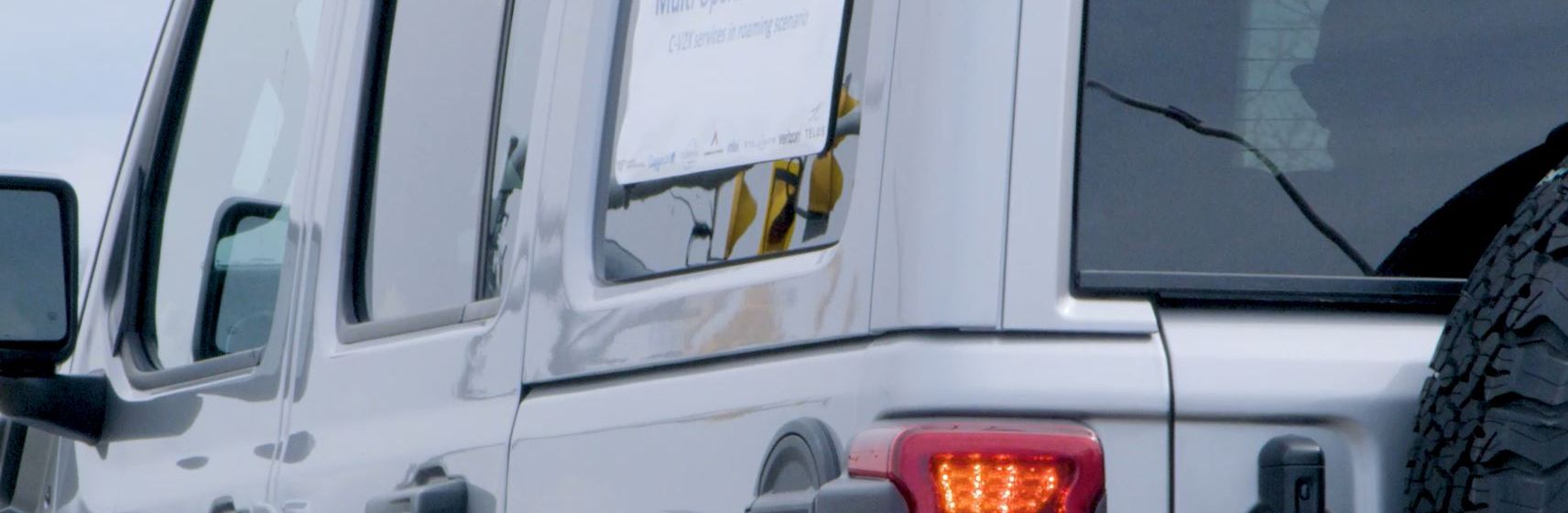
Live Trial of 5G Connected Car Concept in Blacksburg, Virginia | Video
Last March, the Commonwealth of Virginia held a live trial of a new driver and pedestrian safety concept that allows near-real-time notification of roadway hazards through 5G and edge technologies. The trial was one of the three conducted internationally by a historic public-private collaboration, organised by the 5G Automotive Association (5GAA) and eight member companies representing leading technology companies from around the globe. A related European live trial was conducted in 2021 in the city of Turin, Italy. The North American live trial, on the other hand, was conducted on the Virginia Smart Road operated by the Virginia Tech Transportation Institute in Blacksburg, VA. It was the first of its kind in North America.
To find out more, you can now watch this video explaining the tested concept:
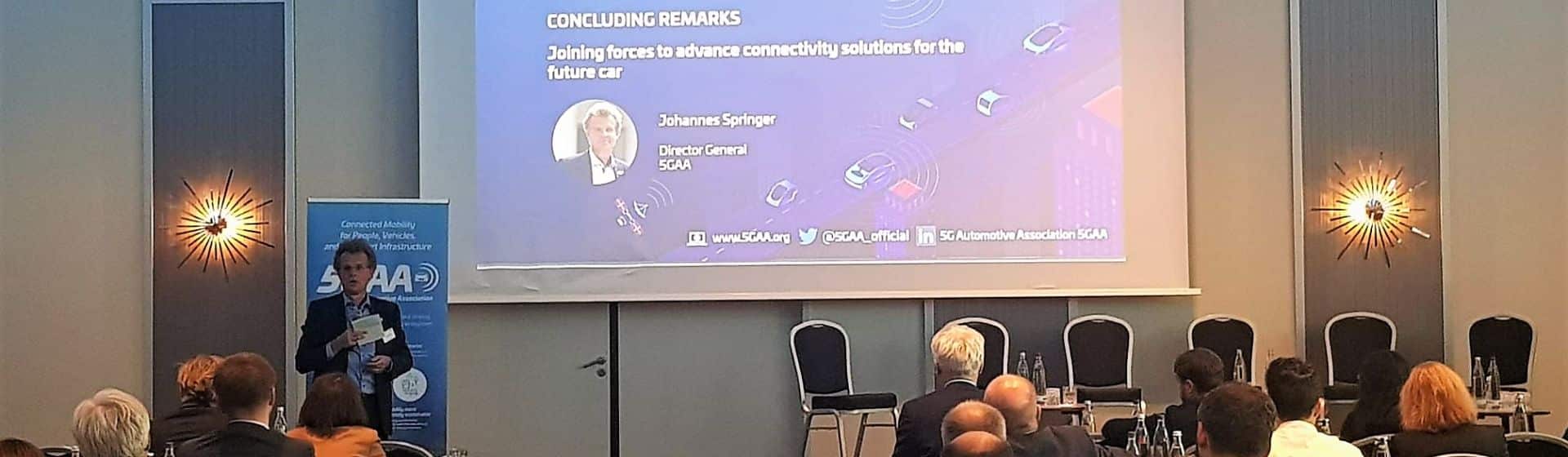
5GAA discusses the role of non-terrestrial networks in the connectivity of the car of the future
Ubiquitous connectivity is an essential prerequisite to achieving a full-scale digital transformation of the automotive sector. Connectivity challenges and how the seamless integration of terrestrial and non-terrestrial network solutions can foster high-capacity global connectivity were at the heart of the Connectivity for the Car of the Future Symposium, hosted by the 5G Automotive Association (5GAA).
Berlin (Germany), 16 May 2022. The 5G Automotive Association (5GAA) and the European Space Agency discussed the crucial role of ubiquitous connectivity and the opportunities for space technologies to offer future solutions for the automotive sector during its “Connectivity for the Car of the Future Symposium.”
Today, over 200 million connected vehicles worldwide are equipped with applications sharing hazard and traffic warnings on the road. The automotive sector is undergoing a significant transformation: from a focus on vehicle performance to a focus on a fully digital, tailor-made digital experience, and customers increasingly expect a fully connected car. Ubiquitous connectivity is an essential prerequisite to achieving a full-scale digital transformation of the automotive sector. Ensuring the network’s reliability can be a challenge, particularly in rural or remote areas that still experience no or poor band coverage, and non-terrestrial networks can have a crucial role in deploying hybrid connectivity solutions for the car of the future.
To explore the connectivity challenges and how space solutions can support the car industry in connected mobility, the 5G Automotive Association organised a Symposium in collaboration with the European Space Agency (ESA). What does the future car look like? Which connectivity and business models are needed to enable? What is the place of space in the mix? These were some of the questions addressed by industry representatives of car manufacturers, connectivity providers, mobile network operators, satellite connectivity providers and decision-makers.
Satellite connectivity can complement terrestrial solutions in white spots and in case of outages and congestion. In this sense, Europe must accelerate the development of assets and capacities in this field to compete globally, provide the appropriate solutions for the automotive sector and fill in any potential gaps. Therefore, it is essential to ensure that all the stakeholders and their respective innovative roadmaps are aligned, as highlighted by Joseph Aschbacher, Director-General of ESA, in his welcome messagefor the event. As such, the car industry will be able to make the most of cutting-edge developments in the connectivity domain.
“We are pleased to collaborate with 5GAA to promote and build the connected car ecosystem of the future. Vehicles are rapidly becoming fully connected devices and drive investments into new-generation connectivity. Satellites and space-based technologies are key assets to complete terrestrial networks, build smart and hybrid systems and offer ubiquitous, secure, and sustainable connectivity. We look forward to continuing this intense exchange with the automotive value chain to join forces and build a truly European connected car architecture,” added Elodie Viau, Director, Telecommunications and Integrated Applications Directorate, ESA.
During the Symposium, car manufacturers and tier-1 suppliers discussed the mobility-related technology innovations, opportunities, requirements, and challenges, highlighting the crucial role of ubiquitous connectivity for the automotive sector and the increasing number of use-cases already developed by the automotive industry for both private and commercial vehicles.
Including non-terrestrial connectivity in the mix will bring many benefits, such as extending high connectivity to rural areas at a comparatively low cost and enabling digital services and autonomous driving applications. However, space solutions need to be integrated with the existing terrestrial solutions, as they will not replace them. In addition, the seamless integration of antennas technology on the car, and the smooth handover between the networks, are just some of the challenges that still need to be addressed. Therefore, speakers pointed out that these solutions need to be included in the 3GPP standardisation system, which is currently the integrational connectivity path, defining the terrestrial connectivity requirements.
Finally, all the stakeholders engaged in a lively discussion to map how the whole ecosystem can work together to address the connectivity challenges and develop targeted R&D, demonstrators and pilots and expand them into mature business models and strategic partnerships. Indeed, to enable cross-border coordination and integration of terrestrial and satellite connectivity solutions, the cooperation and alignment of various players and investments will be essential. In this area, ESA aims to provide the European automotive sector with the necessary support and expertise to maximise its positive social, economic and environmental impact and develop competitive car connectivity solutions.
“Use cases and requirements are already there, and ubiquitous connectivity will enable their full-scale deployment. Satellite solutions can play a crucial role in achieving this,” concluded Johannes Springer, Director General, 5GAA. “It is crucial to ensure the greatest alignment and cooperation between all the stakeholders involved. Let’s continue working together to bring the 3GPP standards to the satellite solutions and seamlessly integrate them with the terrestrial networks to provide solutions for the car of the future.”
Below the presentations showcased during the first session of the event:
Andreas Schaller, V2X Technology Strategy, Robert Bosch Mobility Solutions
Olaf Eckart, Senior Expert Cooperations R&D, Industry Customers, BMW
Jörg Plechinger, Head of Mobile Connectivity Plattform / Car2X, AUDI AG
Susanne Schulz, Head of Department Cooperative, Connected and Automated Mobility, Autobahn GmbH



Volvo Car Corp.
Volvo Cars is one of the most well-known and respected premium car brands, preparing for a new future that will be all-electric, autonomous and connected.