

5GAA supports the European Strategic Deployment Agenda for Connected and Automated Mobility
The 5G Automotive Association (5GAA) is proud to announce the publication of the 5G Strategic Deployment Agenda for Connected and Automated Mobility in Europe (EU 5G SDA for CAM), by the 5G Infrastructure Public Private Partnership (5G PPP), a joint European Commission and European ICT industry initiative.
5GAA was among the key contributors to this document which outlines the shared view of a industry and public stakeholders, including other relevant European associations (ACEA, CEDR and GSMA) and experts of the three 5G corridors trial projects, based on eight common principles to stimulate investment in 5G-ecosystems in the field of Connected and Automated Mobility:
- Deployment of the 5G infrastructure for CAM should follow an evolutionary path to cope with future market developments and technological progress.
- The infrastructure should aim at providing boundless connectivity with continuity of service across borders, Mobile Network Operators, vendors/OEMs, as well as traffic managers, road operators and service providers.
- The CAM infrastructure, including vehicles and road equipment, needs to have a very high level of cybersecurity.
- The 5G infrastructure for CAM will need to be a multi-service/multi-application platform using standardised specifications and/or data interfaces.
- The deployment of 5G infrastructure for CAM in Europe should be extensively coordinated with public and private actors in charge of delivering V2X services.
- Road operators, road authorities and mobile network operators should collaborate to create synergies for connectivity deployment along CAM corridors.
- It is a necessity to deliver future networks innovatively and with optimal economics.
- The digital transformation of industry verticals must be accelerated.
- As recognised by the European Commission, 5G is a critical enabler of future mobility solutions and its deployment in transport, including both network and direct communication modes, is a European public policy priority. To that end a strategic partnership with road and transportation stakeholders is critical to fully address society’s connected mobility and road safety needs, as per 5GAA mission and the European Commission’s objectives.
To accelerate the infrastructure rollout, the stakeholders recognised several key drivers, such as the need for appropriate cooperation models to enable the initial deployment of 5G highways corridors, stabilising the technology roadmap through standardisation, ensuring a high level of cybersecurity, regulatory innovation, data access and data sharing, harmonisation of spectrum, and coordination of deployment initiatives.
Read the full document here

Vulnerable Road User Protection
Road safety is a crucial aspect of mobility both for individuals as well as for policymakers. Road fatalities, in the European Union (EU), for example, have decreased by approximately half between 2001 and 2018 from 54,000 to 25,100 per year. However, in recent years, the number of fatalities has been on a stable level, and additional efforts are needed to further reduce the number of deaths and severe injuries.
5GAA has made VRU protection a priority area and this White Paper therefore aims at shedding light on the safety benefit that selected V2X use cases offer, which can have a significant impact on the protection of the most vulnerable traffic participants. Ultimately, this also has a positive impact on health-sector costs incurred, by reducing the number of people suffering serious injuries with life-changing consequences.

5GAA Efficient Security Provisioning System
Vehicle-to-everything (V2X) communication is at our doorsteps. It is a key part of the future of connected vehicles and autonomous driving as it enables infrastructure, pedestrians and vehicles to interact, thus taking the transportation ecosystem to the next level. Security plays an important role in building trust in V2X, protecting users’ privacy, and enabling safety, efficiency and comfort.
Efforts to reinforce trust in this ecosystem are driving global initiatives to develop, standardise and implement Security Credential Management Systems (SCMS). As a consequence, different stakeholders have put forward their requirements leading to differing, non-interoperable regional designs. The 5G Automotive Association (5GAA) has evaluated existing system designs and their regulatory requirements, as well as identified some new ‘advanced’ features. The resulting recommendations for improved design fulfilling these security and privacy requirements in a large-scale system are outlined in this white paper.
With the objective to integrate new technical opportunities in the automotive world, as afforded by widespread cellular connectivity, and to identify potential design simplifications, an analysis and evaluation of existing system designs has been completed over the last year. These existing designs are region-specific and not fully interoperable due to differing security and privacy requirements. Some ecosystem stakeholders within 5GAA challenged this status quo on several levels and evaluated these regional V2X security approaches.
The paper summarises the design simplifications, discusses their rationale and impact, and proposes an updated design for large-scale deployment and cross-regional interoperability called the ‘Efficient Security Provisioning System’ (ESPS). The paper outlines potential simplifications to the existing V2X credential management systems.

Predictive QoS – using 5G network data analytics to enable proactive C-V2X adaptation
On 26 March, 5GAA held its first public webinar on Predictive QoS – using 5G network data analytics to enable proactive C-V2X adaptation, with Ali Hamidian, Research & Development Manager at Huawei Sweden.
Click here to download the webinar recording or watch it online below.
Click here to read the White Paper Making 5G Proactive and Predictive for the Automotive Industry.
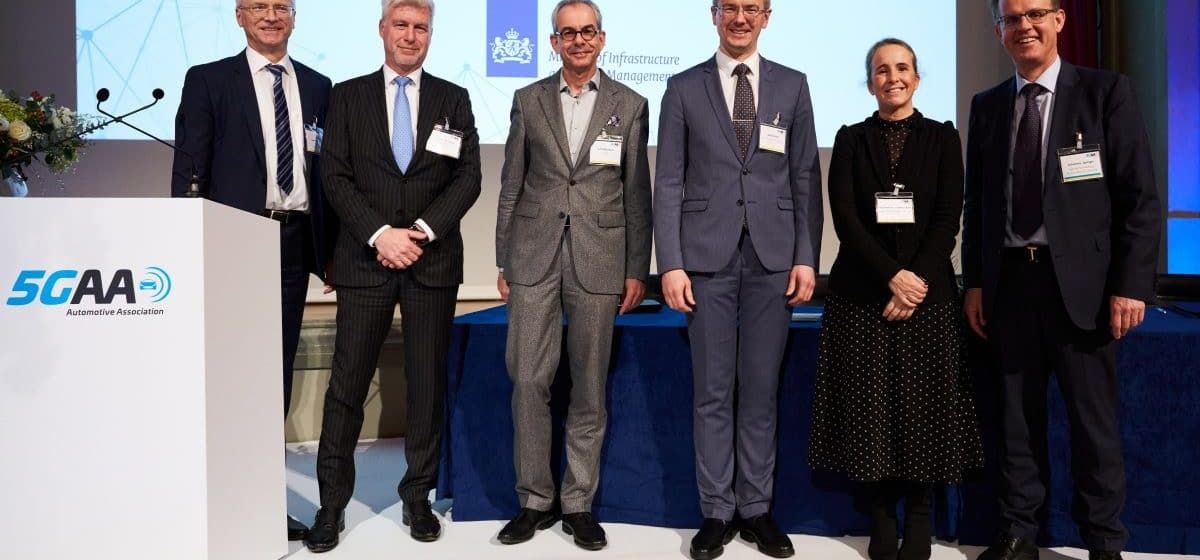
5GAA officialises five new MoUs during Brussels conference
Is 5G in-car technology ready for automated driving? Are Europe’s roads up to speed for this digital revolution? Are governments, road authorities and industry on the same page? What is Europe’s strategy to secure leadership and capture markets in the field? These and other pressing questions and challenges for connected and automated mobility were addressed on 6 February, at the 5GAA-hosted event – 5G, Igniting the Connected and Automated Mobility Revolution – in Brussels’ Concert Noble. High-level representatives and experts from industry, governments and the EU explored the capabilities, deployment models and vast opportunities of the latest ‘cellular vehicle to everything’ (C-V2X) technology.
BRUSSELS, 6 February 2020 – The 5G Automotive Association (5GAA) organised a conference bringing together EU representatives and the connected automotive ecosystem to the heart of Europe, to officialise its public-private partnerships with several European authorities. Indeed, 5GAA announced extending its partnership network by signing Memoranda of Understanding with the Dutch Ministry of Infrastructure and Water Management, the Italian Ministry of Technological Innovation and Digitalisation, the Spanish Directorate-General of Traffic (DGT), the German Federal Highway Research Institute (BASt) and the Electronic Communication Office of Latvia (VASES). The ambition of the association is to strengthen the collaboration between industry and the public sector and to facilitate the dialogue to drive innovation in mobility and transport with these closer collaborations.
Some recognised speakers at the conference included BMW’s Joachim Göthel, Senior Manager in the German automaker’s ‘Project 5G Alliance’, and Dino Flore who is Vice-president of Technology at Qualcomm, the US chipmaker, as well as Robert MacDougall who heads mobile operator Vodafone Enterprise’s Public Policy Unit. They were joined by senior EU policymakers, including a message from Maria Koleva on behalf of the European Commissioner for Innovation, Research, Culture, Education and Youth Mariya Gabriel and speech by Pearse O’Donohue, Director for Future Networks, Directorate-General for Communications Networks, Content and Technology, as well as national experts from the Netherlands and Spain giving their unique perspective.
“To fulfil its potential in connected and automated mobility, Europe really needs a clear policy message reinforcing its ‘technology neutral’ approach in the future C-ITS regulations,” noted 5GAA’s CTO and spokesperson Maxime Flament.
Automated and connected driving, intelligent driver assistance and data-driven transportation network optimisation are examples of what tomorrow’s transportation will look like for people and governments.
Discussions and conclusions reached at the 5G, Igniting the Connected and Automated Mobility Revolution conference thus paint a rich picture of the work currently underway and the roadblocks and potential detours that may lie ahead. With the help of audience contributions, the event helped to chart the way for future autonomous transport that not only meets the needs of society and industry but can also make a positive contribution to meeting the global Sustainable Development Goals in terms of cleaner and safer transportation.
About 5GAA
The 5G Automotive Association (5GAA) is a global, cross-industry organisation of over 130 members comprised of leading global automakers, Tier-1 suppliers, mobile operators, semiconductor companies and test equipment vendors. It works together to develop end-to-end solutions for future mobility and transport services. 5GAA is committed to helping define and develop the next generation of connected mobility, automated vehicle and intelligent transport solutions based on C-V2X.
Learn more on the 5GAA website and follow us on Twitter and LinkedIn.
Media Contacts
Delia Voica
Tel.: +32 486 69 76 22
Email: delia.voica@5gaa.org
Marketing and Communications Team
Email: marcom@5gaa.org
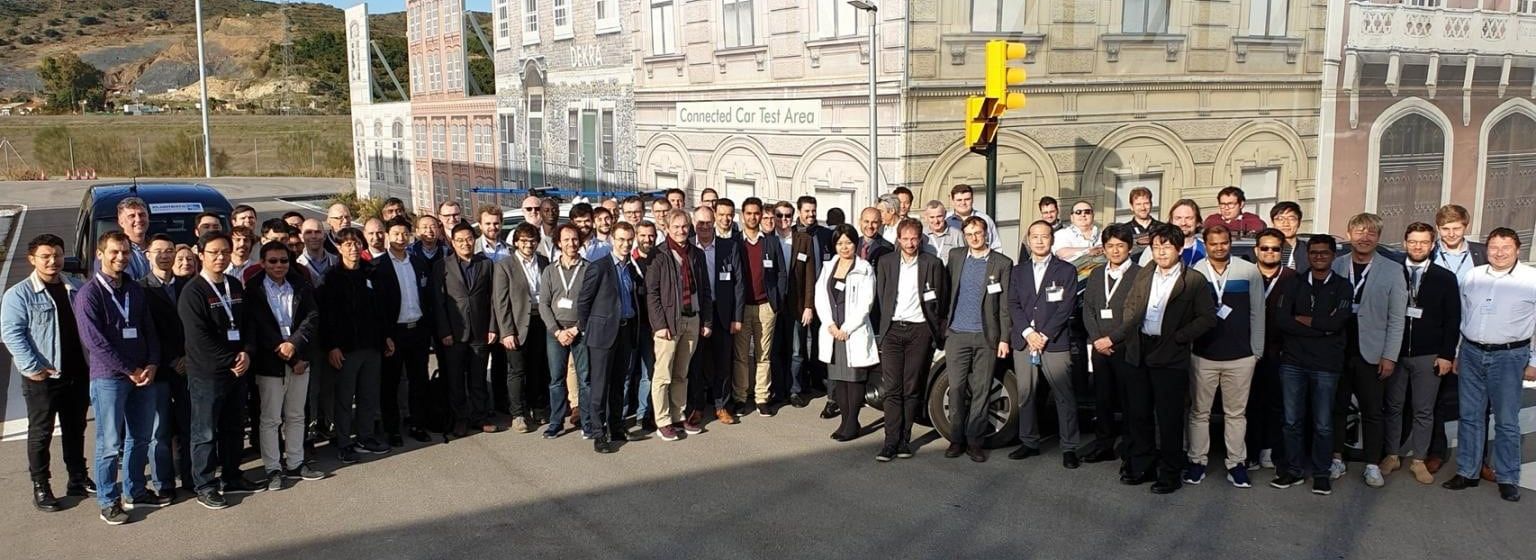
ETSI-5GAA C-V2X testing event in Europe confirms high level of interoperability
5GAA has proudly partnered with ETSI for their first C-V2X PlugtestsTM. The testing, that took place from December 2nd to 6th at the Malaga premises of the 5GAA Member DEKRA, has been concluded with a success rate of more than 95% of the executed tests, showing an extremely positive level of multi-vendor interoperability.
The event
The event demonstrated a high-level of interoperability across all participating companies employing 320 C-ITS test-cases, where devices were successfully communicating with each other directly and without network connectivity based on ETSI TC ITS and 3GPP standards, in both lab and field environments. In addition to the existing ITS upper layer interoperability test specifications from ETSI, participating companies conducted also the recently adopted 5GAA cellular vehicle-to-everything (C-V2X) IoT test specification for mode 4 operation over the PC5 direct communication access layer interface.
The positive results showed the industry’s maturity to support the commercial deployment of C-V2X solutions throughout the world, with both infrastructure and onboard units.
“Testing European LTE-V2X radios with ETSI was an important milestone on our global strategy to accelerate C-V2X time-to-market and finally deploy C-V2X on the European roads” commented 5GAA CTO Maxime Flament.
Plugtests™ represent a fundamental tool to allow vendors to evaluate the interoperability of their systems, strengthening cross-industry cooperation and the entire C-V2X ecosystem. Moreover, this event was a further milestone in the cooperation between 5GAA and DEKRA, a leader in automotive safety testing, that already had the chance to collaborate during a previous Plugfest in April 2019.
The week was viewed as very successful by participants (65% of them were 5GAA members), as it brought together roughly 70 C-ITS experts for testing and to validate that C-V2X products are both mature and commercially available today for the cooperative, connected and automated mobility ecosystem.
At the end of the event, Bob Banks, 5GAA WG3 Chair (Vodafone Group), declared “The results clearly show the maturity of not only the C-V2X technology but also the products from different vendors as crucial and available enablers for connected and safer mobility”.
“I’m glad we could successfully demonstrate again that C-V2X is working as expected and that so many companies are ready for deployment in Europe” stated Ralf Weber, 5GAA WG3 Vice Chair (Qualcomm).
The Workshop
During the event, 5GAA also organised a joint workshop on December 4th, on the latest developments related C-V2X Interoperability and Deployment. Standards experts from 3GPP and ETSI TC ITS offered thorough presentations on the ongoing developments related to standards that are already supporting the deployment of C-V2X. Subsequently, speakers from the European Commission, the Dutch Ministry of Infrastructure and the Global Certification Forum (GCF) presented updates on ITS and how C-V2X can favour its deployment.
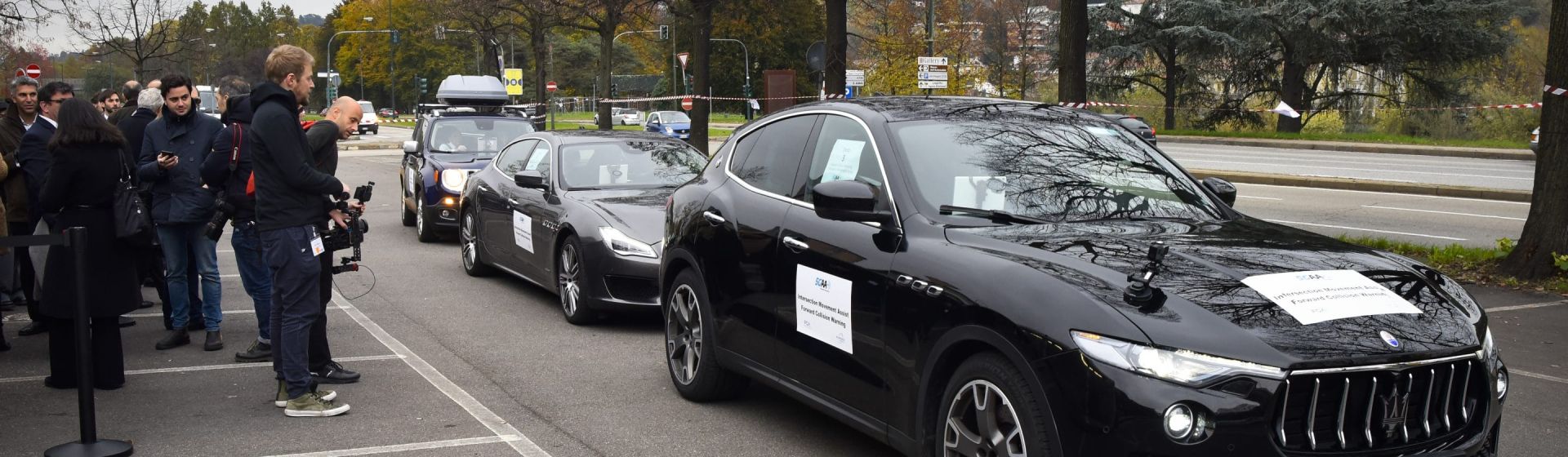
5GAA live demos show C-V2X as a market reality
Turin, 14 November 2019 – Smart mobility technology is a reality today, with ‘Cellular Vehicle-to-Everything’ (C-V2X) allowing connected vehicles to communicate with the cloud, directly with each other and their surroundings. Deployment plans are primarily sustained by the global trend in the automotive industry to adopt 4G LTE cellular technology, followed by the emerging 5G high-speed low latency communications. Beyond infotainment, C-V2X will capitalize on vehicular and smartphone connectivity to contribute to better safety, less congestion and reduced emissions.
During a live demo event in Turin, the 5G Automotive Association (5GAA) showcased ready to deploy use cases in the streets of the city and a sneak preview of what the future has in store on the renowned Lingotto rooftop test track.
Prominent members and partners of the 5GAA including Audi, Continental, Ericsson, Fiat Chrysler Automobiles, Harman Samsung, Marelli, Pirelli, Qualcomm, TIM and Vodafone demonstrated the current state of C-V2X and the road to future, Vehicle-to-Vehicle (V2V), Vehicle-to-Infrastructure (V2I), and Vehicle-to-Network (V2N) applications based on 4G LTE and 5G.
“Connected mobility is a market reality.” says 5GAA Chief Technology Officer, Dr. Maxime Flament. “The use cases demonstrated in the streets of Turin are planned for deployment with a huge industry momentum based on the evolution path to 5G capabilities.”
Using both direct short-range communications and mobile networks, the open-road demonstrations showcased the extensive capabilities of today’s C-V2X technology, ready for deployment. To name a few:
- Protecting vulnerable road users, for instance, by alerting drivers about a pedestrian at a crossing using LTE-connected infrastructure.
- Smoothing traffic by allowing public authorities and road operators to provide real-time warnings to drivers in urban environments concerning roadworks or speed limits, via the network.
- Preventing incidents at dangerous intersections or in the event of unexpected braking, thanks to C-V2X direct-short range communications between vehicles.
The track demonstrations at Lingotto underlined the enhanced safety benefits that can be expected thanks to the versatility of 5G and the wide range of services it enables. To name a few:
- Vehicles will geo-tag dangerous areas for the following cars or provide ‘see-through’ functions to avoid dangerous overtaking.
- Pedestrians will be detected directly via their smartphones and surrounding vehicles will be warned.
- In case of accidents, emergency services will be able to visualize the situation live using on-board cameras of surrounding vehicles, improving response times and providing emergency responders situational awareness prior to arriving at the crash scene.
Furthermore, Intel showcased an “In Vehicle Entertainment” demo at the Museum, in collaboration with Marelli, TerraNet and Equinix, showing how Multi-Access Edge Computing (MEC) can support immersive high-definition (HD) entertainment for all occupants of a moving vehicle, including video streaming, gaming, virtual reality (VR), office work, online education, advertisement.
A short summary on each of the 5GAA C-V2X use cases, demonstrated today in Turin
Demo 1 “Vulnerable Road Users”: open road demos on safety
In this trial – which is part of Torino Smart Roads Initiative patronized by the Municipality of Turin – TIM, Links Foundation and Luxoft showed how the communication between the various actors moving along the roads can help in detecting potentially dangerous situations. The goal of the demos was to demonstrate how the 5G mobile network facilitates the protection of Vulnerable Road Users: pedestrians (“Presence of a pedestrian on a crosswalk”) and cyclists (“Presence of a connected bike on the road”). In the case of a pedestrian approaching a crosswalk, a Roadside Unit connected to the mobile network, equipped with a camera able to detect the event, sent a warning message to the nearby connected vehicles (I2V communication). In the case of a connected bike and a connected vehicle that are approaching each other, the two vehicles received a warning message about their presence when a risk of collision is detected.
Demo 2 “Urban Georeferenced Alerting” in open roads
TIM, FCA, Links Foundation, City of Turin with 5T, and Politecnico di Torino showed how the Local Traffic Authority in Turin intends to notify drivers in real time of possible dangers and special situations on the road (traffic jam, road works warning, dynamic speed limit, etc.). A standard geo-referenced warning message was dispatched to a TIM AMQP broker” at the edge of the 5G mobile network and only the involved vehicles received the geo-localized message from the AMQP Broker using the TIM 5G Network. The warning was read and displayed in an FCA vehicle through the on-board HMI and can for instance notify the driver of upcoming speed reduction. The aim of the trial was to demonstrate how the TIM 5G Network is suitable for realizing smart roads services for connected cars. The solution is compliant with the standards so it can be applied in other locations covered with mobile networks.
Demo 3 Intersection Movement Assist (IMA), Forward collision Warning (FCW)
FCA and Harman Samsung showcased two Vehicle to Vehicle (V2V) demos, by integrating C-V2X direct-short range communication into Maserati Levante and Quattroporte. The vehicles, through a direct radio link (network-less radio link), anonymously communicated basic information such as their position and related direction.
The Forward Collision Warning (FCW), detected possible frontal collision and warned the driver accordingly. The Intersection Movement Assist (IMA), assisted the driver at the cross junctions to avoid a possible lateral collision with an oncoming vehicle.
Demo 4 Emergency Electronic Brake Light (EEBL), Stationary Vehicle Warning (SVW)
FCA, Continental, and Qualcomm demonstrated fast and reliable information exchange between vehicles in emergency situations. The two demos are based on C-V2X direct-short range technology, enabling Vehicle-to-Vehicle (V2V) communication between two Jeep Renegade. There were two portions to this demo:
- “Stationary Vehicle Warning” (SVW): when the hazard lights are activated, the application broadcasted a message to all nearby vehicles so that approaching vehicles could be informed even if the hazard was not visible.
- “Emergency Electronic Brake Light warning” (EEBL): in the event of a sudden braking, the application broadcasted a message to following vehicles, such that approaching vehicles were notified of the potentially dangerous situation.
Demo 5 See-through
Vodafone, FCA, Vodafone Automotive, Marelli and Altran revealed the ‘See Through’ that uses C-V2X long-range cellular network communication to exchange streamed video in real time between vehicles, extending the driver’s visual range under obstructed visibility scenarios and to prevent accidents, especially those that may occur in an overtaking phase. The two involved Jeep Renegades vehicles were equipped with a connectivity solution (Marelli) and high frame-rate cameras (Marelli Motorsport) to detect the road lanes.
A real time tracking system and a space mapping algorithm of the vehicles, specifically developed by Vodafone Automotive, allowed Vodafone’s Multi-access Edge Computing (MEC) to dynamically manage and route the video flows on the basis of the vehicles’ relative positions and to ensure minimal end-to-end latency in the interest of drivers’ safety. Vodafone 5G ultra-low latency and high reliability were paramount to ensure the flow and synchrony of the real-time video exchange between vehicles, also under high traffic and cell saturation conditions.
Demo 6 World-first 5G-enhanced ADAS services
Audi, Ericsson, Italdesign, KTH, Pirelli, Qualcomm, TIM and Tobii showed how smart cars, commercial 5G smartphones and 5G networks jointly improve comfort, safety and efficiency. This unique collaboration combined the power of eye-tracking glasses, intelligent tires, in-vehicle augmented reality and 5G phones to work together over a live 5G network. With its high capacity and low latency, cellular 5G connectivity is ready to enable instantaneous cooperation between vehicles, the IoT ecosystem and more advanced driver assistance services. The live demonstrations at the Turin Lingotto test track were based on TIM’s commercial 5G network delivered in Turin in partnership with Ericsson. Audi cars, equipped with Pirelli Cyber Tyre, and embedded 5G modems provided by Qualcomm and available 5G smartphones were utilized to enhance pedestrian’s safety.
About 5GAA
The 5G Automotive Association (5GAA) is a global, cross-industry organisation of over 130 members comprised of leading global automakers, Tier-1 suppliers, mobile operators, semiconductor companies and test equipment vendors. It works together to develop end-to-end solutions for future mobility and transport services. 5GAA is committed to helping define and develop the next generation of connected mobility, automated vehicle and intelligent transport solutions based on C-V2X.
Learn more on the 5GAA website and follow us on Twitter and LinkedIn.
Media Contacts
5GAA Marketing & Communications
Email: marcom@5gaa.org
Official pictures: Conference – Demonstrations

5GAA and the City of Turin become official partners
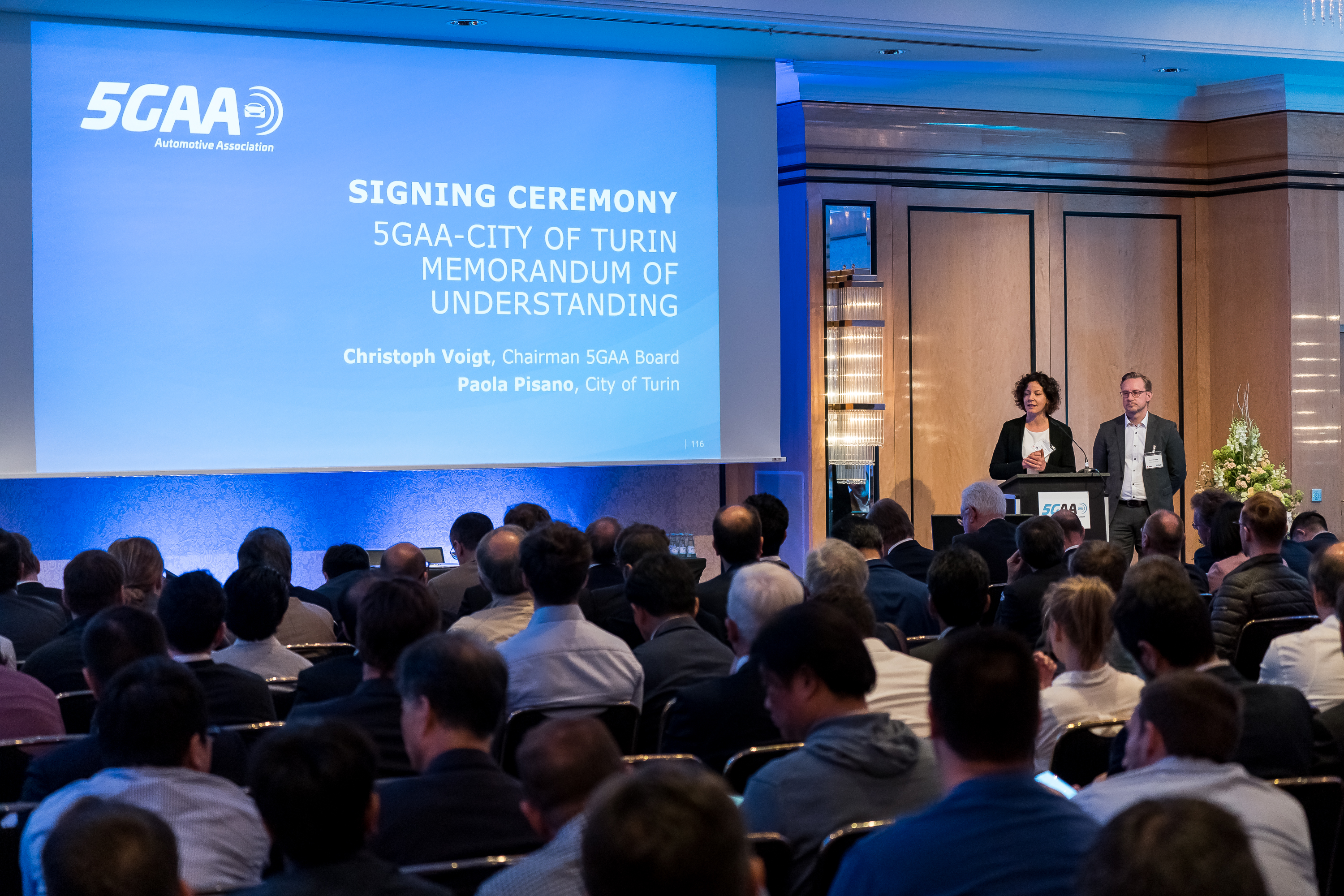
The 5G Automotive Association officially became a partner of the City of Turin through the signature of a Memorandum of Understanding, at the occasion of 5GAA’s Connected and Automated Driving Workshop in Berlin on 23 May 2019.
The City of Turin is the first public authority 5GAA is officially partnering with. The Piedmontese capital, home to the Italian automotive industry, will work together with 5GAA to strengthen the collaboration between industry and the public sector and to facilitate the dialogue to drive innovation in mobility and transport. “The signature of a memorandum of understanding with a public authority, the City of Turin, is a first step towards the development of strategy public partnerships. We look forward to a fruitful collaboration” said 5GAA Chairman Christoph Voigt.
The City of Turin has started a linked strategic path to innovation (Torino City Lab, Smart Road) based on the opening of the city to frontier innovation, testing and experimentation on the whole urban territory using real environments and integrating new solutions within the city’s technological infrastructures, attraction and realization of new services. According to Innovation Counsellor Paola Pisano, “the intention is to place Turin into the innovation maps of 5GAA partners, providing the project with the know-how of the territory and the support of the Torino City Lab policy for the development of innovation in the areas of mobility and telecommunications, with a focus on 5G.”
5GAA’s objectives are fully aligned as the association intends to develop new partnerships with public authorities around C-V2X technical and testing activities to accelerate and support time-to-market and foreseen deployments in Europe and other world regions.
The City of Torino will be hosting the next 5GAA meeting in Europe in November 2019.
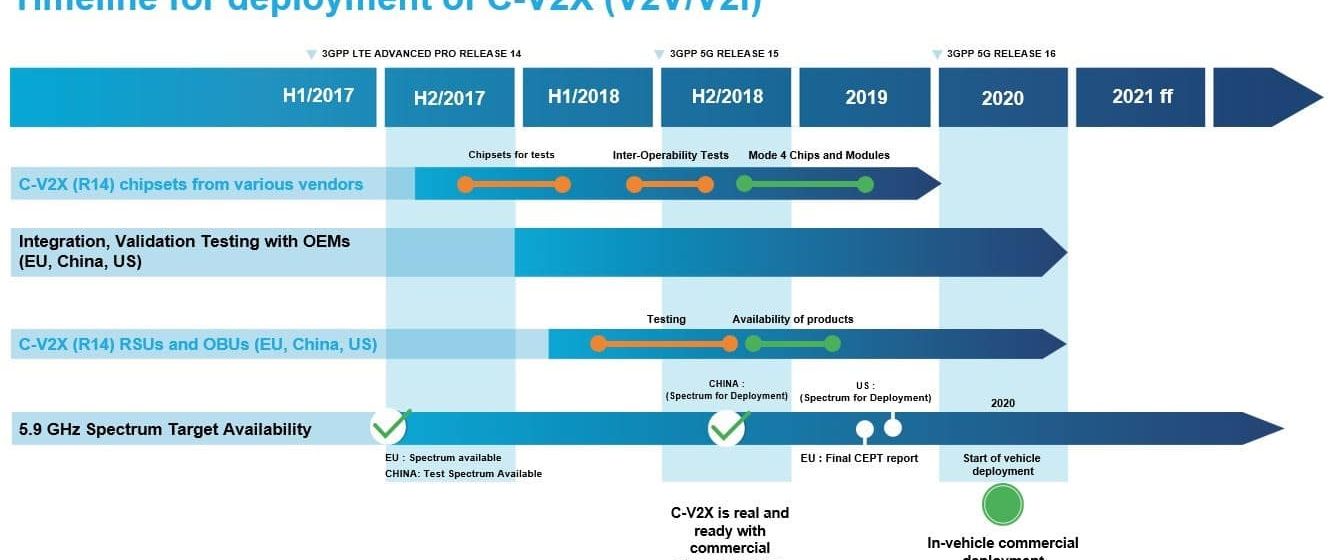
5GAA releases updated white paper on C-V2X Deployment Timeline
In December 2017 5GAA published the white paper “Timeline for deployment of LTE-V2X (V2V/V2I)” focusing on the introduction of direct communications with LTE 3GPP Rel.14. Since then Cellular-V2X (C-V2X) has gained a lot of momentum in the eco-system and we are at the verge of deploying the next generation of mobile network technology – 5G.
This updated timeline of the introduction of C-V2X covers the following topics:
- The extended use of V2N for safety-oriented services in vehicles deployed on the roads
- The comprehensive test and evaluation activities undertaken by the ecosystem consisting of OEMs, tier-1s, chip vendors, road operators, mobile operators as well as their suppliers and test equipment providers
- Outlook on the evolution towards 5G including backward compatibility
- C-V2X use cases for railways and respective test activities
- Progress on regulatory aspects
The inclusion of 2G, 3G and 4G cellular communication technologies (V2N – Vehicle2Network) into vehicles (i.e. “Connected Cars”) has been extremely successful in delivering benefits for the vehicle, the driver, the automaker and other participants in the transportation and emergency services ecosystem.
At present, more than 100 million Vehicles connected to cellular networks (V2N) are on the roads. This V2N connection is used for a wide variety of services including telematics, connected infotainment, real time navigation and traffic optimization, as well as for safety services including automatic crash notification (ACN) such as eCall, the recognition of slow or stationary vehicle(s) and informational alerts for events including traffic jams, road works and other traffic infrastructure related information, inclement weather conditions and other hazardous conditions. Several OEMs[i] share safety related warnings between their vehicles and have started to exchange this information across OEMs using e.g. services from HERE Technologies. Other initiatives to share information by interconnected backend systems are the EU financed projects ‘Nordic Way’, Talking Traffic’ and the ‘Drive Sweden projects. These projects also interconnect Road Traffic Authorities, Road operators, OEMs and smartphone applications to share traffic related info. The current understanding, also based on the European C-ITS Platform Final Report, is that the nature of these warning messages is informational, and the driver is always responsible.
C-V2X is a recent term introduced for cellular technologies optimized for transportation and connected vehicles. In particular, the C refers to both 4G LTE and 5G NR (new radio) releases of specifications, whereas X refers to multiple things’ vehicles may connect with. C-V2X includes both network-based communications that have been in use for decades, such as vehicle-to-network (V2N), as well as a new complementary mode of operation first defined in the 3GPP Release 14 specifications and approved in June 2017, which allows direct communications between vehicles (V2V), as well as between vehicle and road side infrastructure (V2I and I2V) without requiring any cellular network coverage or subscription. It can further support vulnerable road users (e.g. vehicle to pedestrian, or V2P) by integrating the direct communications technology into mobile and other devices. The direct communications functionality is used to specifically support safety critical services to reduce collisions, support automated driving, and improve traffic efficiency. LTE-V2X is the 3GPP nomenclature for direct communications as specified in releases 14 and 15, whereas 5G NR-V2X is from Release 16 onward. 3GPP R14 also added network communications improvements, delivering increased data volumes, managing greater scale of connected devices, and can further reduce latency and provide for higher levels of reliability in V2N. V2N is also technically known as Uu and refers to an endpoint such as a vehicle communicating with network infrastructure over operator licensed spectrum, whereas V2V/V2I/V2P is supported by direct communications operating on the ITS spectrum (e.g. 5.9GHz) and is known technically as PC5.
Click here to read the full version of this updated White Paper.
[i] https://www.autoblog.com/2018/05/07/volvo-cars-volvo-trucks-share-data/?guccounter=1#slide-7324246

5G Automotive Association at CES 2019: Highlighting connected mobility through 5G
The 5G Automotive Association and 47 of its members will be present at CES 2019
LAS VEGAS – January 7, 2019 – The 5G Automotive Association (5GAA), the global, cross-industry organization of companies working together on future mobility solutions, will be at CES 2019 to discuss the future of transportation through 5G – including the critical role of Cellular Vehicle-to-Everything (C-V2X) deployment.
The 5G Automotive Association (5GAA) will be present at the Consumer Electronic Show (CES) 2019 on January 8-11 in Las Vegas. The global stage for innovation that has introduced breakthrough technologies over the past 50 years will have a special focus on autonomous and smart vehicles – from safety to policy roadmaps – and highlight the future of transportation through 5G. In other words, topics that 5GAA helps shaping across the world thanks to its network of over 100 members. And 47 of these leader companies of the telecommunications and automotive industries will help spread the message at the global stage event.
With a roll-out planned as early as 2020, 5GAA is pushing for the Cellular Vehicle-to-Everything (C-V2X) technology – technology that helps making roads safer while also laying the groundwork for fully automated vehicles. The technology has also been selected as a CES 2019 Innovation Award Honoree in the “Vehicle Intelligence and Self-Driving Technology” category. Some 5GAA members, like Qualcomm, will be driving discussions on the subject at high-level CES panel conferences such as SAE’s Connect2Car conference session on 5G/DSRC, Bluetooth, Wi-Fi. Audi, Ducati, Ford and Qualcomm with the support of other C-V2X ecosystem players will demonstrate advanced use cases enabled by C-V2X. Additionally, 5GAA members will highlight the achievement of significant milestones in the commercial introduction of C-V2X products.
When it comes to the application of the technology in the telecommunication industry:
- 5GAA founding member Ericsson will showcase its latest use of the C-V2X technology, demonstrating how the 4G/5G mobile networks will enable safety services for the connected vehicle and will be used to make self-driving cars a reality.
- Samsung and its subsidiary HARMAN will also showcase their scalable 5G Telematics module designed to enable wide-scale C-V2X communications.
- Working alongside the broad automotive and telecom ecosystems, Savari, Inc. will showcase its continued momentum in the development of its C-V2X real-time direct communications technology through its RSU and software stack. As an active member of the automotive association, Savari expects the 5G cellular compatible solution to bring benefits for road safety, automated driving and traffic efficiency as soon as 2020.
- Veniam and Bosch are both showcasing their jointly developed all-in-one central control unit for V2X data management and communication – together, the Veniam and Bosch solution demonstrates how to move massive amounts of data to, from and between vehicles on the road.
- With a deep focus on the technology, Wistron NeWeb Corporation (WNC) will showcase its 5G and C-V2X system and modular solutions designed to enable eco-system partners to promptly rollout in-vehicle and infrastructure applications.
- Continental will be showcasing a flexible 5G hybrid platform that allows both mobile network communication and rapid and reliable direct exchange of data. Depending on regional requirements and customer preferences, the platform enables C-V2X as well as Dedicated Short Range Communication. These benefits are being realized with a first customer award for this 5G-Hybrid-V2X solution.
As 2019 stands for the year for the connected cars ecosystem to prepare the ground for mass roll-out of the technology in 2020, 5GAA will be driving 5G innovation at CES as an official partner at the Allied Association corner located in South Hall 1. 5GAA representatives, including CTO Maxime Flament, will be available for briefings and interviews.
About 5GAA
The 5G Automotive Association (5GAA) is a global cross-industry organization of companies from the automotive, technology and telecommunications industries (ICT) working together to develop end-to-end solutions for future mobility and transportation services.
Created in 2016, the association includes over 100 members whose mission is to develop, test and promote communications solutions, initiate their standardization and accelerate their commercial availability and global market penetration, to address society’s connected mobility and road safety needs with applications such as automated driving, ubiquitous access to services and integration into smart city and intelligent transportation. For more information, visit 5GAA’s website, LinkedIn and Twitter pages.
Contact
Margaux Demeyer – Communications & Marketing
Tel: +32 (0)25882430
Mail: margaux.demeyer@5gaa.org
Marketing and Communications Team
Email: marcom@5gaa.org