

Toward fully connected vehicles: Edge computing for advanced automotive communications
Connected Vehicles and especially connected Autonomous Driving (AD) vehicles bring a whole new ecosystem with new requirements on the Cloud and the network architecture to support the new workloads and to satisfy the real-time service requirements. Such ecosystem includes the vehicles, the road infrastructure, the network infrastructure, and the Cloud.
Edge Computing based Vehicle-to-Cloud solutions enable edge cloud capabilities for different levels of autonomous driving, including Highly Autonomous Driving (HAD) and Fully Autonomous Driving (FAD) through providing different services for the driving process (e.g., High Definition real-time Maps, real-time traffic monitoring and alerts, and richer passengers experience), supporting vehicles on roads to drive co-operatively and to be aware of road hazards, and providing better user experience and trust to drivers and passengers.
This white paper provides an overview of automotive use cases and shows how Edge Computing provides compute/storage/networking capabilities at the network edge, and how it can be considered a supporting technology for multiple services for connected AD vehicles. The paper draws the attention to the value of Multi-access Edge Computing (MEC) as a standardized solution for Edge Computing, especially important from automotive stakeholders’ point of view (while also serving other vertical market segments). In particular, from a standardization perspective, some use cases targeting fully connected cars (i.e. FAD with the maximum level of automation) have challenging requirements that may be fulfilled only with the introduction of 5G networks. Finally, this paper also illustrates the opportunities that are here already today in deploying Edge Computing to support AD, using the flagship services as examples.
Read the full paper here.
Peaceful coexistence of C-V2X and ITS-G5 technology offers the highest net benefits for Europe
5GAA and EU policymakers discuss future of 5G for connected and automated vehicles
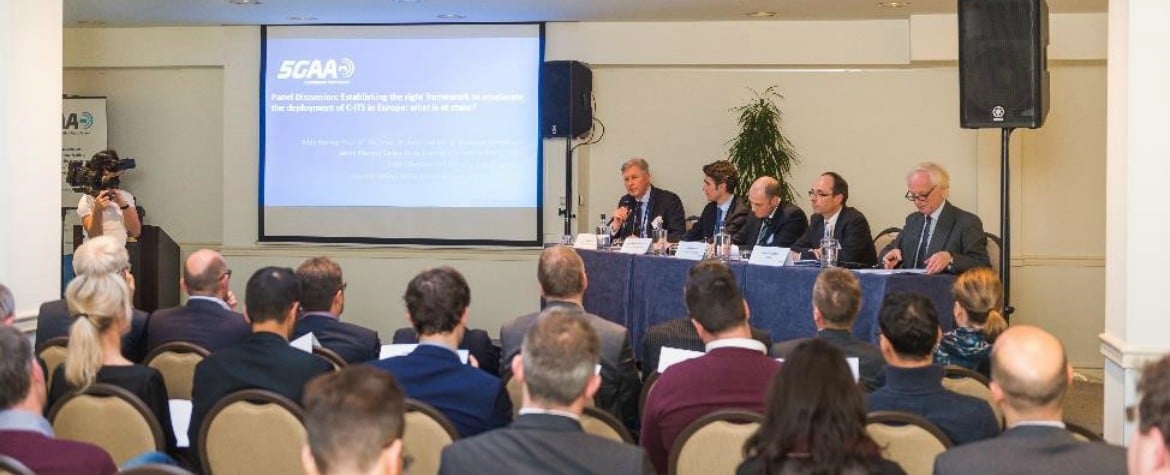
12 December 2017, Brussels, Belgium – The 5G Automotive Association (5GAA), a cross-industry association of the telecoms and automotive industry, held a policy debate on Tuesday 5 December in Brussels to discuss the concrete actions necessary to implement 5G connected and automated vehicles in Europe. A recurring theme in Tuesday’s debate was the cohesive development and implementation of cellular “vehicle to everything” (C-V2X) technology, the technology that will enable automobiles to communicate via cellular networks to other connected devices but also the possibility of ad-hoc communication without any cellular network involvement (e.g. in case of weak coverage). Policymakers and industry face the ongoing challenge of creating a cohesive framework that enables private sector innovation while ensuring a safe and economically viable rollout of new technologies.
Attendees heard from a wide range from various European political and administrative representatives, including Eddy Hartog, EC Head of Unit Smart Mobility and Living, Attila Benedek (Adviser to István Ujhelyi MEP, rapporteur on European C-ITS Strategy), Jaime Moreno García-Cano of the Spanish traffic authority or Andreas Geiss, EC Head of Unit for Spectrum Policy. 5GAA was represented by its Secretary, Markus Dillinger of Huawei and board members, Luke Ibbetson of Vodafone, Joachim Göthel of BMW, Rainer Krumrein of Daimler, and Friedhelm Ramme of Ericsson.
The debate coincides with the Commission’s ongoing public consultation on its European Strategy on Cooperative Intelligent Transport Systems (C-ITS), which runs through January 5, 2018. C-V2X technology stands to significantly improve road safety and facilitate traffic flows in the EU. Ultimately, the benefits of this technology across the EU could save the several billion euros that are lost every year to traffic accidents and congested roadways.
Markus Dillinger, 5GAA Secretary and Member of the Executive Committee: “5GAA was founded to underscore the urgency in developing technology that makes our roads safer and smarter. Today’s debate brought together public and private sector stakeholders to discuss the capabilities of such technology as well as the acceleration of creating a regulatory framework in which the industry can work.”
During the event, analysts from Analysys Mason and SBD Automotive presented the findings of a cost-benefit analysis of implementing the C-V2X technology. The socio-economic returns of deployment of C-ITS systems may amount to EUR 43 billion by 2035 in Europe, if both C-V2X and the Wi-Fi Standard IEEE 802.11p are able to co-exist in the 5.9GHz spectrum band. The 5GAA also presented a study assessing the road safety benefits of LTE–V2X (PC-5) and IEEE 802.11p in the EU, which indicates that LTE-V2X (PC5) outperforms 802.11p in reducing fatalities and serious injuries. In addition, it demonstrates that the absence of interoperability between technologies is unlikely to present a substantive barrier to the reduction of road accidents in the short to medium term. Bill McKinley, 5GAA rapporteur on tests and trials, and Rainer Krumrein of Daimler also presented 5GAA’s perspective on C-V2X performance and future capabilities.
The event culminated in a panel discussion to discuss the right framework to accelerate the deployment of the C-ITS across Europe. Particular attention was given to short-range communications in the 5.9 GHz band and the four guiding policy principles established by the European Commission: uncompromised safety services for all users in case of multiple technologies implementation, technology neutrality of spectrum regulation, efficient spectrum use and introduction in the longer-term of 5G for the further development of cooperative, connected and automated mobility.
Luke Ibbetson, R&D Director Vodafone Group and member of 5GAA: “Both C-V2X and ITS-G5 technologies should peacefully co-exist in the 5.9 GHz band. The socio-economic and road safety studies presented at this event indicate that co-existence offers the highest net benefits for the European economy, amounting to EUR 43 billion by 2035.”
Joachim Göthel, Senior Manager Project 5G-Alliance of BMW and member of 5GAA: “C-V2X offers a strong evolution path to 5G which is absolutely essential to enable full connected and automated driving in the future, while enabling a fast roll-out for many functionalities in the very short-term, utilizing existing cellular networks.”

The presentations made during the Workshop are downloadable here below:
1. Introductory 5GAA Presentation
2. Presentation on cellular V2X socio-economic benefit study
3. LTE-V2X (PC5) and road safety in the EU
4. 5GAA Presentation Trials
5. Daimler view on V2X – 5GAA Policy Debate
About the 5GAA
The 5GAA is a cross-industry association between the cellular and automotive industries to develop, test and promote communications solutions, initiate their standardisation and accelerate their commercial availability and global market penetration, to address society’s connected mobility and road safety needs with applications such as automated driving, ubiquitous access to services and integration into smart city and intelligent transportation.
Pictures credit © Thomas Blairon, 2017. Reproduction of this image is authorised, provided the source is acknowledged

5GAA Study | The cost-benefit analysis on cellular vehicle-to-everything (C-V2X) technology and its evolution to 5G-V2X
This report, authored by independent telecoms, media and technology consultants Analysys Mason together with automotive consultancy SBD Automotive, assesses the benefits of cellular vehicle to everything (C‑V2X) technology for delivery of vehicle-to-everything (V2X) communication. The report, which has a focus on the benefits of such solutions in Europe, uses qualitative evidence, and describes quantitative cost–benefit analysis that the consultants have undertaken, relating to deployment of C‑V2X.
The purpose of the study has been to examine qualitative evidence and perform quantitative analysis, regarding the net benefits of C‑V2X. Quantitative analysis is focused on the European market, where the European Commission (EC) is currently undertaking a public consultation on the deployment of cooperative intelligent transport systems (C‑ITS).
Read the full study here.
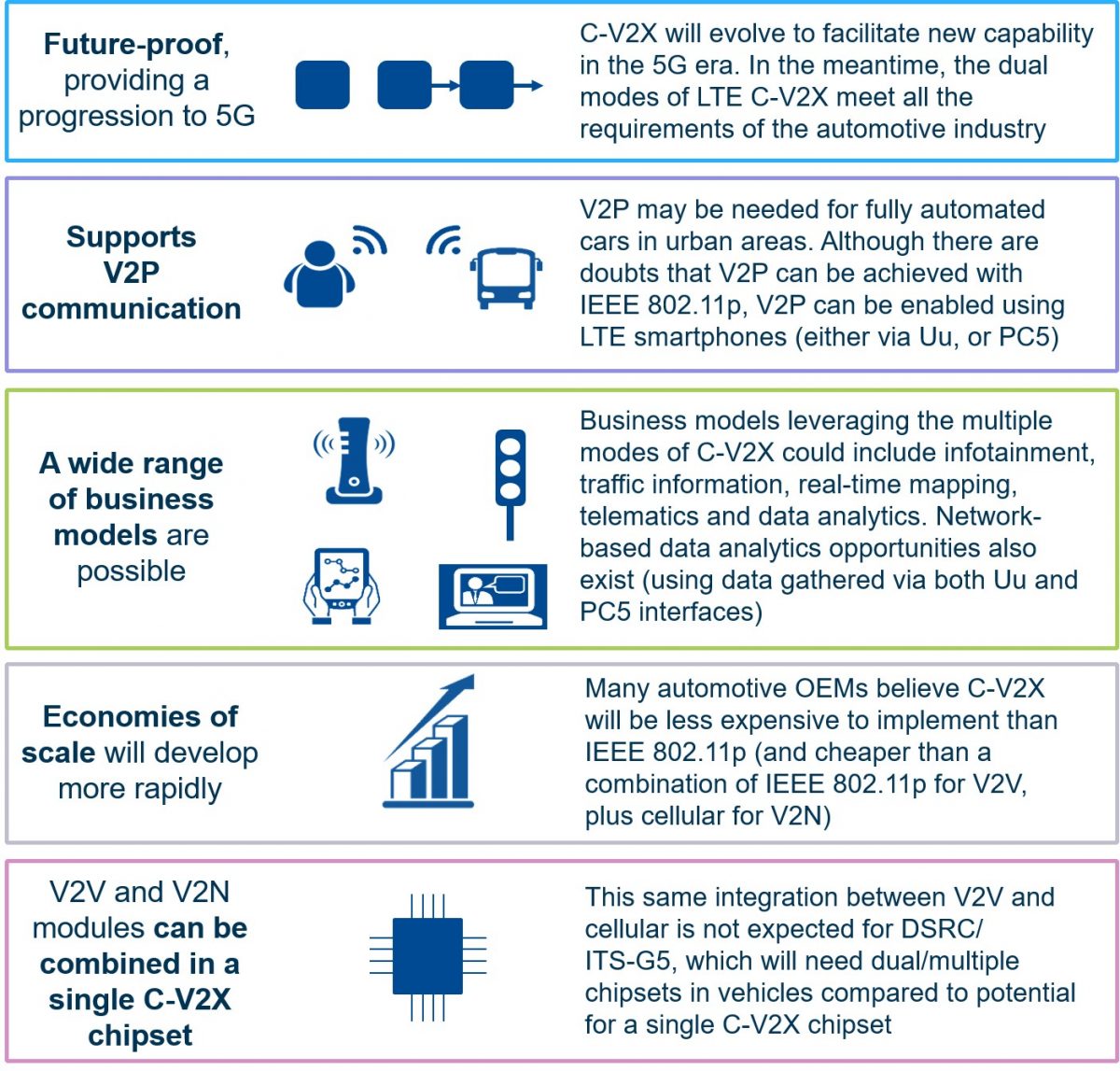
As part of this study, primary research has been conducted to elicit views from the mobile and automotive industries on the benefits of C‑V2X. One-to-one interviews with companies involved in the 5GAA were held, in order to identify several key benefits, as summarised in Figure 1.1 below.
A snippet from the report featuring the benefits of C-V2X [Source: Analysys Mason, 2017]

An assessment of LTE-V2X (PC5) and 802.11p direct communications technologies for improved road safety in the EU
This report by the 5G Automotive Alliance (5GAA) presents a quantitative analysis of the ability of Cooperative Intelligent Transport Systems using short-range ad hoc/direct communications to reduce the number of fatalities/serious injuries caused by motoring accidents in the EU. In this context, the study estimates the number of accidents avoided over time through the use of two short-range wireless technologies, 3GPP LTE-V2X (PC5) and IEEE 802.11p, examining their respective performance and projected take-up among road users. The modelling underlying this report has been peer-reviewed and validated by the technology and policy consultancy, Ricardo.
Specifically, two standardised C-ITS short-range technologies are compared for the purposes of this report, namely 3GPP LTE-V2X PC5 (also known as LTE side-link) and IEEE 802.11p (also known as DSRC or ITS-G5), both operating in the 5.9 GHz band for the provision of direct communications between road users. It should be noted that additional reductions in the number of fatalities and serious injuries are possible via longer-range C-ITS communications enabled through interactions with a LTE cellular network, but that these are not considered in this report. Hence, the analysis is limited to LTE-V2X (PC5) only, in comparison to 802.11p.
This study examines and compares two independent counter-factual scenarios: one where LTE-V2X (PC5) is the only deployed C-ITS technology, and the other where 802.11p is the only deployed C-ITS technology.
We consider, as a baseline, the existing and future projected statistics for road traffic fatalities and serious injuries in the EU. We then evaluate the reduction in the number of fatalities and serious injuries which may occur as a result of C-ITS direct communications between road users, by modelling:
- The expected take-up (penetration) of LTE-V2X (PC5) and 802.11p among road users in the EU over time (including vehicles, motorcycles, bicycles and pedestrians), and
- the radio link performance of LTE-V2X (PC5) and 802.11p in successfully delivering actionable warning messages between road users in a number of collision scenarios.
We identify the following conclusions and recommendations from the results of this report:
- The study indicates that LTE-V2X (PC5) outperforms 802.11p in reducing fatalities and serious injuries on the EU’s roads. This is due to a combination of the superior performance of LTE-V2X (PC5) at the radio link level for ad hoc/direct communications between road users, and the market led conditions which better favour the deployment of LTE-V2X in vehicles and in smartphones, and include a clear evolutionary path towards 5G-V2X. For these reasons, it is essential that EU regulations remain technology neutral and do not hinder the deployment of LTE-V2X (PC5) in favour of 802.11p for the provision of direct communications among vehicles and between vehicles and vulnerable road users.
- An absence of interoperability at radio link level between LTE-V2X (PC5) and 802.11p is unlikely to present a substantive barrier to the reduction of road accidents in the EU in the short to medium term. The relatively low penetration of C-ITS technologies in vehicles in the first half of the next decade (and perhaps even later) means that a vehicle equipped with LTE-V2X (PC5) or 802.11p is far more likely to collide with a vehicle that is not equipped with C-ITS technologies at all – indeed it is not until the middle of the next decade that penetration rates are expected to reach a level which results in significant impacts on accident rates. Any regulations which mandate LTE-V2X (PC5) to be backward interoperable with 802.11p will therefore have only a limited effect in the early years of deployment pre-2025. Such regulations may run the risk of unnecessarily distorting the market in favour of 802.11p, thereby obstructing the adoption of LTE-V2X (PC5) and resulting in greater road fatalities and injuries in the longer term.
Read the full study here.

Socio-economic benefits of cellular vehicle-to-everything could amount to 43 Billion Euros by 2035
Brussels, 05th December 2017 – The 5GAA today published a report, authored by independent telecoms, media and technology consultants Analysys Mason together with automotive consultancy SBD Automotive, which assesses the benefits of cellular vehicle to everything (C‑V2X) technology for delivery of vehicle-to-everything (V2X) communication. The report, which has a focus on the benefits of such solutions in Europe, uses qualitative evidence, and describes quantitative cost–benefit analysis that the consultants have undertaken, relating to deployment of C‑V2X.
Publication of the report coincides with policy development on V2X, and use of the 5.9GHz band, in the European Union, where the European Commission is currently undertaking a public consultation on deployment of cooperative intelligent transport systems (C‑ITS).
The study concludes that the deployment of C-ITS systems is beneficial at the European Union level. Net benefits that could be accrued in Europe are estimated to be in the range of EUR20 billion to EUR43 billion in 2035 (with the highest benefits coming from increased road safety, and traffic efficiency), across the four scenarios modelled.
The most favourable scenario of those modelled in the study (amounting to EUR 43 billion net benefits) is where the potential for rapid penetration and economies of scale for C-V2X is maximised and both C-V2X and the Wi-Fi Standard IEEE 802.11p are able to co-exist in the 5.9GHz spectrum band. Such benefits do not arise in a scenario where the use of IEEE 802.11p is mandated for C-ITS services, which would result in less than half these expected net benefits (EUR 20 billion).
The study also indicates benefits of C-V2X for the European market lie in its deployment flexibility, with the ability to provide coverage for both short range and wide area applications, and certainty of future evolution to 5G, potentially facilitating earlier deployment as well as after-market deployment (e.g. V2X services provided in vehicles via a smartphone or other after-market device with C-V2X connectivity).
Reduced infrastructure deployment costs are a further key benefit of C-V2X, from the potential to re-use existing mobile infrastructure, and thus leveraging cellular technology integration and economies of scale, rather than building independently operated roadside infrastructure.
Christoph Voigt, 5GAA Chairman comments: “C-V2X will be fundamental to the deployment of cooperative intelligent transport systems. The benefits highlighted is this report indisputably demonstrate that this technology will lead to major improvements in driving and road safety. It further highlights that the European Commission should take a technology neutral approach and not limit these benefits by mandating the use of the Wi-Fi standard IEEE 802.11p”
The socio-economic benefits study on C-V2X can be found here.
Separately, the 5GAA has also today published a study which carries out a quantitative analysis of LTE–V2X (PC-5) and IEEE 802.11p technologies for short-range ad hoc/direct communications in reducing fatalities and serious injuries caused by motoring accidents in the EU. The modelling underlying this report was peer-reviewed and validated by the technology and policy consultancy, Ricardo. The study find that LTE-V2X (PC5) outperforms 802.11p in reducing fatalities and serious injuries on the EU’s roads. The 5GAA’s study on an assessment of LTE-V2X (PC5) and 802.11p direct communications technologies for improved road safety in the EU can be found here.
About C-V2X
V2X allows vehicles to communicate with each other and the wider transport ecosystem. It will potentially complement on-board sensors by providing enhanced information (such as data from other vehicles) over a longer range.
C‑V2X is a technology developed by the Third Generation Partnership Project (3GPP) to deliver V2X services, using two modes of communication:
- a direct vehicle-to-vehicle mode (called ‘PC5’ in 3GPP specifications) and
- a network communications interface (called ‘Uu’ in 3GPP specifications) for vehicle-to-network (V2N) communication via existing mobile networks.
Download Press Release here.

5GAA & GSMA Letter to EU Commission
The 5G Automotive Association (5GAA) represents the automotive and telecom industry’s alignment for the global connected and autonomous vehicle, supported by more than 50 member companies including many world class car manufacturers. 5GAA’s mission is to develop, test and promote communication solutions for the future of the 5G automotive economy in Europe and globally. The 5GAA is actively contributing to ETSI, 3GPP and ITU in the fields of standardisation and spectrum-related matters. The 5GAA is committed to accelerating Cellular-V2X (C-V2X) standards seamlessly embracing 4G and 5G, and would like to call on the European Commission to support stakeholders in this collaborative process by providing leadership and timely regulatory support.
The GSMA, which represents the Mobile Network Operators globally, has succeddfully collaborated with the Automotive Industry for many years. Together we have created secure solutions that have advanced the Connected Car market with major benefits to consumers. Cellular V2X will enable further cross-industry collaboration with government agencies in cities and transport. The GSMA believes that C-V2X will contribute to safer vehicles, reduce congestion and pollution. It will build upon the existing 23 million existing Cellular Connected Car market in Europe and drive the deployment of Digital Europe.
The 5GAA is keenly aware of the imperative for road safety and the need for Europe to assert 5G leadership while ensuring spectrum efficiency. Given the longevity of vehicles and the significant industry investment in cellular technologies, C-V2X will be of utmost importance as Europe and the world transitions to 5G in supporting mission critical applications and the massive opportunities associated with the introduction of a new global standard.
We therefore urge the European Commission to allow the ITS-G5 and C-V2X stakeholders to work collaboratively toward an agreement on the future of connected and automated cars, without a premature and cumbersome legislative decision.
The 5GAA is confident that the industry will ultimately align with a pragmatic solution that saves the most lives while embracing technology evolution, and managing complexity and cost. We firmly believe in and pledge to collaboratively work with other stakeholders on solutions that ultimately benefit the European Union. We encourage the European Commission to support technology neutrality, mitigating a significant risk that 5G in the key automotive vertical will struggle, thus impacting the European automotive industry and the future growth and global competitiveness of the EU economy.
Europe is an important pillar for members of the 5GAA and is leading the world in the development of smart transportation solutions. A considerable part of C-V2X innovation occurs in Europe, and will contribute to road safety, the development of smart cities and trans-border corridors, to achieve the efficiency and environmental objectives that ultimately benefit European citizens. 5GAA members are accelerating C-V2X with pre-commercial trials in Europe, and will culminate in global deployments.
We are strongly supportive of 3GPP technologies for direct communications over ITS spectrum to enable vehicle-to-vehicle, vehicle-to-infrastructure, vehicle-to-pedestrian (and other vulnerable road users), i.e. C-V2X, while also leveraging vehicle-to-network over mobile operator spectrum. An important part of the ongoing 5GAA work is to support the European Commission’s policies laid out in the C-ITS Masterplan, as well as Gear2030 for Highly Automated Vehicles and the 5G Action Plan. We strongly rely on the European institutional support to enable a regulatory framework conducive to an industry-driven and swift deployment of the platform of their choice.
The 5GAA looks forward to continuing the dialogue with the European Commission and the various industry stakeholders in order to lay the foundation for a 5G automotive future in Europe.
Download the letter here
Coexistence of C-V2X and 802.11p at 5.9 GHz
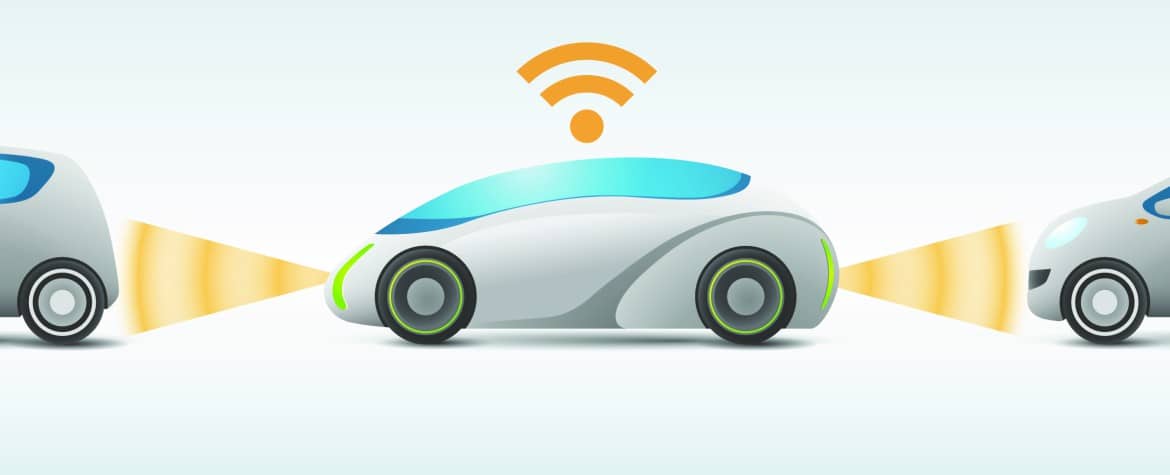
Today the European market has interest in two distinct technologies for Intelligent Transport Systems (ITS) and the provision of vehicle to vehicle communications; namely 3GPP LTE-V2X and IEEE 802.11p.
The technology-neutral nature of spectrum regulations in Europe means that both LTE-V2X1 and 802.11p have equal rights to operate in the 5.9 GHz band, subject to compliance with the relevant regulatory technical conditions.
It is not the objective of this paper to compare and contrast the relative merits of these two technologies, although the 5GAA is a proponent of LTE-V2X as today’s realisation of Cellular V2X (C-V2X), and as a platform to evolve towards 5G technologies.
Instead, in this paper, we address the issue of co-channel coexistence between the two technologies at 5.9 GHz. We note that this is a critically important issue for the ITS industry, and that it is beneficial for all stakeholders to arrive at a proportionate, fair, and pragmatic solution to resolve this matter, and allow the market to proceed with the deployment of ITS equipment.
To this end, we propose a solution – to be agreed among the stakeholders – to be implemented in up to three steps. In all steps, each of C-V2X and 802.11p can operate safety-related ITS services free from co-channel interference from the other technology. The difference between the distinct steps lies in the overall usage efficiency of the spectrum resource: In the short-term, we propose to allocate distinct 10 MHz channels at 5875-5905 MHz to each of the two technologies, while the final configuration will apply full sharing of all available channels across the two technologies. The latter will require further studies on appropriate sharing mechanisms and thus cannot be provided from the beginning.
We further explain how such a first step partitioning of 5875-5905 MHz might be complemented by additional technical mechanisms which would – where needed – allow each of C-V2X and 802.11p to access the remaining 20 MHz in a fair manner, with a reduced risk of harmful co-channel interference.
We believe that the proposed approach would greatly facilitate the coexistence of C-V2X and 802.11p at 5.9 GHz, and we would encourage stakeholders to further develop this proposal and come to a speedy agreement on this for the benefit of the European ITS industry as a whole.
Read the full paper here.
5GAA submitted comments to the National Highway Traffic Safety Administration
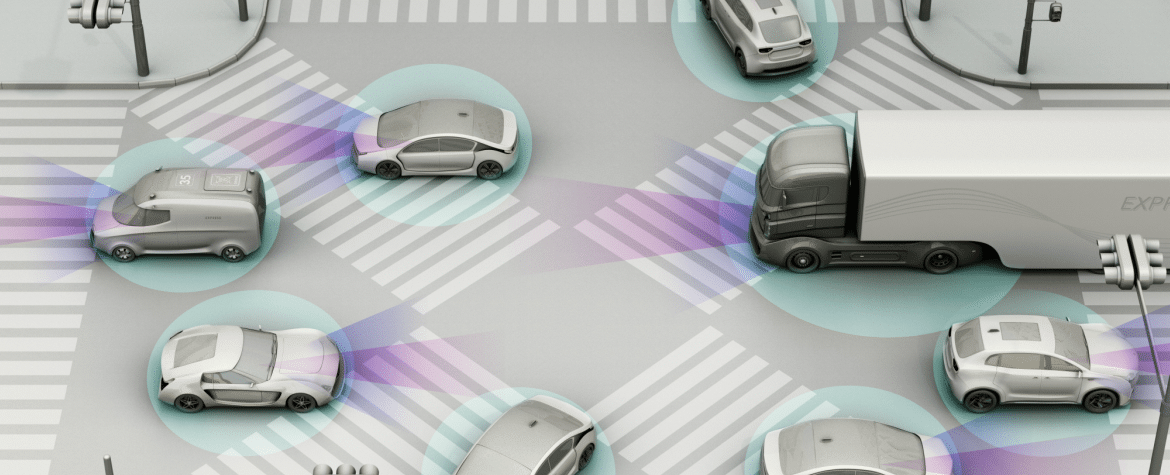
The 5G Automotive Association (5GAA) submitted comments to the National Highway Traffic Safety Administration (NHTSA) notice of proposed rulemaking (NPRM), “Federal Motor Vehicle Safety Standards; V2V Communications.” The proposed rule is to mandate new light-duty vehicles to be equipped with dedicated short range communications (DSRC).
The 5GAA is a new global cross-industry association of automotive, technology and telecommunications companies and includes 42 members, of which 8 are founding members (AUDI AG, BMW Group, Daimler AG, Ericsson, Huawei, Intel, Nokia, Qualcomm). Our mission is to enable communications solutions that address society’s connected mobility and road safety needs.
In our submission, 5GAA applauds the concept behind the rule, as V2V safety is important to our technology deployment mission. 5GAA urges NHTSA to not consider just the best technology of today, but also to consider the best technologies of tomorrow. Such an approach will promote innovation and competitive market-based outcomes, ensuring that American drivers and passengers benefit from the best and most advanced safety solutions available as technology evolves. Rigid technology mandates such as specifying DSRC, whether direct or de facto, freeze technology solutions to a past point in time. NS will significantly impede the innovation and evolution path for Vehicle-to-Vehicle (V2V) safety, and positions the US to lag behind the rest of the world in V2V communications specifically as well as V2X broadly. 5GAA elaborates on the following points:
Similar to DSRC, Cellular-V2X technology for V2V safety can transmit BSM in an ad hoc manner without cellular network coverage.
Cellular-V2X technology for V2V safety communications can operate without a SIM card and offers the tools to adopt, evolve or innovate any privacy-preserving security management system including SCRM.
Cellular-V2X technology for V2V safety benefits from a significantly larger link budget than DSRC (e.g., 8 dB at high speeds), corresponding to twice the range of DSRC and higher reliability.
Cellular-V2X technology for V2V safety can support up to 50 messages per second with less than 20 msec latency.
Cellular-V2X enables V2V, and for that matter Vehicle-to-Infrastructure (V2I), Vehicle-to-Pedestrian (V2P) and Vehicle-to-Network (V2N), safety applications to take advantage of the widespread cellular network coverage in the US.
5GAA notes also that the impending launch of 5G will only widen the performance gap between Cellular- V2X and DSRC.
5GAA believes that Rather than moving forward with the proposed regulation, NHTSA should instead undertake an updated, comprehensive technology neutral analysis of V2V solutions, including DSRC and Cellular-V2X, against the performance requirements in the NPRM. If this review indicates that regulatory action is necessary, the U.S. Department of Transportation should move forward with a technology neutral regulation that sets forth minimum V2V safety performance requirements only.

5GAA comments to the NHTSA on notice of proposed rulemaking
The 5G Automotive Association (5GAA) supports the goal of the National Highway Traffic Safety Administration (NHTSA) to increase motor vehicle safety through the use of communications solutions. 5GAA is a new global cross-industry association of automotive, technology and telecommunications companies. 5GAA includes 42 members, of which 8 are founding members (AUDI AG, BMW Group, Daimler AG, Ericsson, Huawei, Intel, Nokia, Qualcomm). Our mission is to enable communications solutions that address society’s connected mobility and road safety needs.
5GAA, like the U.S. Department of Transportation (USDOT) and National Highway Traffic Safety Administration (NHTSA), values safety first and foremost; this is what makes the immediate proceeding so important to us and why we are moved to offer the sum of our expertise in providing comments. To realize the full safety benefits of vehicle communications, NHTSA’s guiding principle must be one that allows for not only the best technology of today but also for the best technologies of tomorrow. Such an approach will promote innovation and competitive market-based outcomes, ensuring that American drivers and passengers benefit from the best and most advanced safety solutions available as technology evolves. This is particularly essential for regulations touching the communications industry, which has witnessed rapid technological innovation over the past two decades – with 4G cellular prevalent today and 5G on the horizon. By contrast, rigid technology mandates, whether direct or de facto, freeze technology solutions to a past point in time. With the communications market rapidly evolving, any technology NHTSA mandates today will be outdated by the time the mandate goes into effect, if not already outdated. This will significantly impede the innovation and evolution path for Vehicle-to-Vehicle (V2V) safety, and positions the US to lag behind the rest of the world in V2V communications specifically as well as V2X broadly.
For this reason, 5GAA respectfully cannot support the proposed V2V technology mandate predicated on the use of dedicated short-range radio communications (DSRC), a technology originally designed in the 1990s. The proposed direct technology-specific mandate, by definition, is on its face not technology neutral. Similarly, the one-way interoperability requirement in the alternate “if equipped” proposal, where “alternative” technologies would be required to be backwards interoperable with DSRC, is flawed in that it would impose no reverse interoperability requirement on DSRC to ensure backwards interoperability with other technology solutions, including today’s Cellular Vehicle-to-Everything (Cellular-V2X) solutions for V2V safety.
In effect, the “path” for compliance is not a path at all, but instead a dead-end for other technologies, as it creates a non-level playing field in the US V2V market.The 5G Automotive Association (5GAA) supports the goal of the National Highway Traffic Safety Administration (NHTSA) to increase motor vehicle safety through the use of communications solutions. 5GAA is a new global cross-industry association of automotive, technology and telecommunications companies.
5GAA includes 42 members, of which 8 are founding members (AUDI AG, BMW Group, Daimler AG, Ericsson, Huawei, Intel, Nokia, Qualcomm). Our mission is to enable communications solutions that address society’s connected mobility and road safety needs.5GAA, like the U.S. Department of Transportation (USDOT) and National Highway Traffic Safety Administration (NHTSA), values safety first and foremost; this is what makes the immediate proceeding so important to us and why we are moved to offer the sum of our expertise in providing comments. To realize the full safety benefits of vehicle communications, NHTSA’s guiding principle must be one that allows for not only the best technology of today but also for the best technologies of tomorrow. Such an approach will promote innovation and competitive market-based outcomes, ensuring that American drivers and passengers benefit from the best and most advanced safety solutions available as technology evolves. This is particularly essential for regulations touching the communications industry, which has witnessed rapid technological innovation over the past two decades – with 4G cellular prevalent today and 5G on the horizon. By contrast, rigid technology mandates, whether direct or de facto, freeze technology solutions to a past point in time. With the communications market rapidly evolving, any technology NHTSA mandates today will be outdated by the time the mandate goes into effect, if not already outdated. This will significantly impede the innovation and evolution path for Vehicle-to-Vehicle (V2V) safety, and positions the US to lag behind the rest of the world in V2V communications specifically as well as V2X broadly.
For this reason, 5GAA respectfully cannot support the proposed V2V technology mandate predicated on the use of dedicated short-range radio communications (DSRC), a technology originally designed in the 1990s. The proposed direct technology-specific mandate, by definition, is on its face not technology neutral. Similarly, the one-way interoperability requirement in the alternate “if equipped” proposal, where “alternative” technologies would be required to be backwards interoperable with DSRC, is flawed in that it would impose no reverse interoperability requirement on DSRC to ensure backwards interoperability with other technology solutions, including today’s Cellular Vehicle-to-Everything (Cellular-V2X) solutions for V2V safety. In effect, the “path” for compliance is not a path at all, but instead a dead-end for other technologies, as it creates a non-level playing field in the US V2V market.
Read the full paper here.

5GAA Response to the Draft RSPG Opinion on Spectrum Aspects of Intelligent Transportation Systems
The 5G Automotive Association (5GAA) is pleased with the opportunity to provide an industry consortium view on the RSPG’s draft opinion on spectrum aspects of ITS. Spectrum for ITS is important to 5GAA, as our association was founded on the prospect that direct communications between vehicles and the roadside units and pedestrians is critical to road safety and automated driving.
We are committed to the realisation that direct 4G and eventually 5G communications will supplement the ever-increasing coverage and capabilities of wide area cellular coverage. Consequently, with the proviso that Cellular V2X (C-V2X) technologies gain fair access to spectrum harmonised for ITS, the 5GAA is working diligently on technology, standards, and deployment models to considerably – even transformational – to enhance safety and mobility on roads and railways in Europe.
We see a great promise by integrating cellular systems in addressing the totality of transport communication requirements, fulfilling not only the important short-range ad hoc need but at the same time addressing the manifold communication links necessary for seamless multi-modal connectivity.
Read the full publication here.