5GAA live demos show C-V2X as a market reality

5GAA live demos show C-V2X as a market reality

Turin, 14 November 2019 – Smart mobility technology is a reality today, with ‘Cellular Vehicle-to-Everything’ (C-V2X) allowing connected vehicles to communicate with the cloud, directly with each other and their surroundings. Deployment plans are primarily sustained by the global trend in the automotive industry to adopt 4G LTE cellular technology, followed by the emerging 5G high-speed low latency communications. Beyond infotainment, C-V2X will capitalize on vehicular and smartphone connectivity to contribute to better safety, less congestion and reduced emissions. 

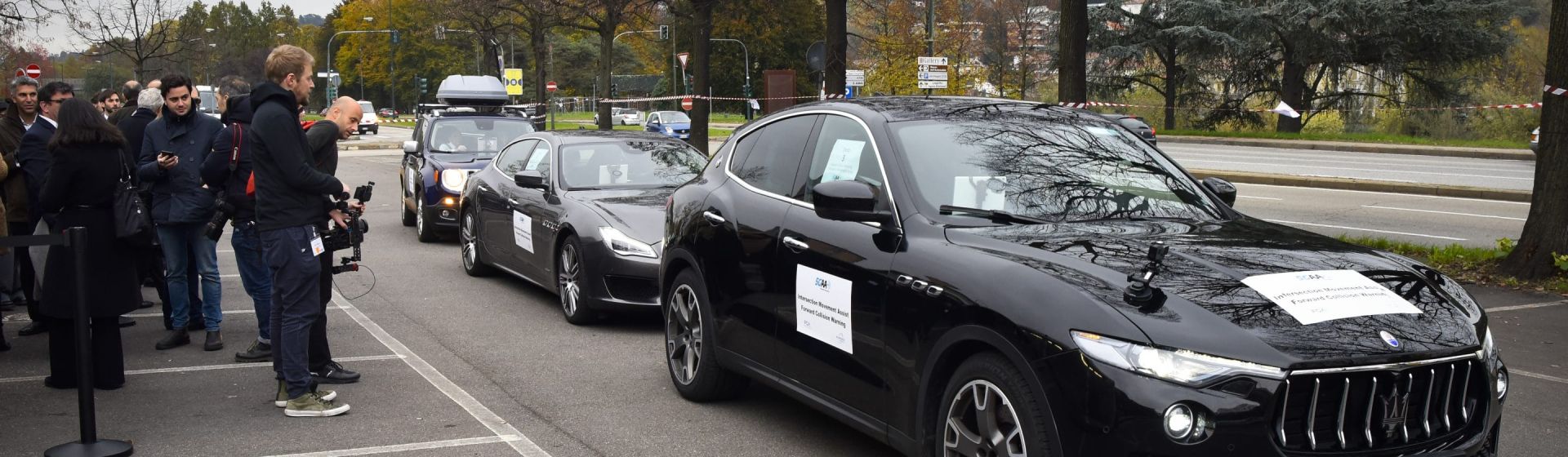
During a live demo event in Turin, the 5G Automotive Association (5GAA) showcased ready to deploy use cases in the streets of the city and a sneak preview of what the future has in store on the renowned Lingotto rooftop test track.  

Prominent members and partners of the 5GAA including Audi, Continental, Ericsson, Fiat Chrysler Automobiles, Harman Samsung, Marelli, Pirelli, Qualcomm, TIM and Vodafone demonstrated the current state of C-V2X and the road to future, Vehicle-to-Vehicle (V2V), Vehicle-to-Infrastructure (V2I), and Vehicle-to-Network (V2N) applications based on 4G LTE and 5G. 

“Connected mobility is a market reality.” says 5GAA Chief Technology Officer, Dr. Maxime Flament. “The use cases demonstrated in the streets of Turin are planned for deployment with a huge industry momentum based on the evolution path to 5G capabilities.”  

Using both direct short-range communications and mobile networks, the open-road demonstrations showcased the extensive capabilities of today’s C-V2X technology, ready for deployment. To name a few: 

  • Protecting vulnerable road users, for instance, by alerting drivers about a pedestrian at a crossing using LTE-connected infrastructure. 
  • Smoothing traffic by allowing public authorities and road operators to provide real-time warnings to drivers in urban environments concerning roadworks or speed limits, via the network. 
  • Preventing incidents at dangerous intersections or in the event of unexpected braking, thanks to C-V2X direct-short range communications between vehicles. 

The track demonstrations at Lingotto underlined the enhanced safety benefits that can be expected thanks to the versatility of 5G and the wide range of services it enables. To name a few: 

  • Vehicles will geo-tag dangerous areas for the following cars or provide ‘see-through’ functions to avoid dangerous overtaking. 
  • Pedestrians will be detected directly via their smartphones and surrounding vehicles will be warned. 
  • In case of accidents, emergency services will be able to visualize the situation live using on-board cameras of surrounding vehicles, improving response times and providing emergency responders situational awareness prior to arriving at the crash scene. 

Furthermore, Intel showcased an “In Vehicle Entertainment” demo at the Museum, in collaboration with MarelliTerraNet and Equinix, showing how Multi-Access Edge Computing (MEC) can support immersive high-definition (HD) entertainment for all occupants of a moving vehicle, including video streaming, gaming, virtual reality (VR), office work, online education, advertisement. 

A short summary on each of the 5GAA C-V2X use cases, demonstrated today in Turin 

Demo 1 “Vulnerable Road Users”: open road demos on safety  

In this trial – which is part of Torino Smart Roads Initiative patronized by the Municipality of Turin – TIMLinks Foundation and Luxoft showed how the communication between the various actors moving along the roads can help in detecting potentially dangerous situations. The goal of the demos was to demonstrate how the 5G mobile network facilitates the protection of Vulnerable Road Users: pedestrians (“Presence of a pedestrian on a crosswalk”) and cyclists (“Presence of a connected bike on the road”). In the case of a pedestrian approaching a crosswalk, a Roadside Unit connected to the mobile network, equipped with a camera able to detect the event, sent a warning message to the nearby connected vehicles (I2V communication). In the case of a connected bike and a connected vehicle that are approaching each other, the two vehicles received a warning message about their presence when a risk of collision is detected.

Demo 2 “Urban Georeferenced Alerting” in open roads  

TIMFCALinks FoundationCity of Turin with 5T, and Politecnico di Torino showed how the Local Traffic Authority in Turin intends to notify drivers in real time of possible dangers and special situations on the road (traffic jam, road works warning, dynamic speed limit, etc.). A standard geo-referenced warning message was dispatched to a TIM AMQP broker” at the edge of the 5G mobile network and only the involved vehicles received the geo-localized message from the AMQP Broker using the TIM 5G Network. The warning was read and displayed in an FCA vehicle through the on-board HMI and can for instance notify the driver of upcoming speed reduction. The aim of the trial was to demonstrate how the TIM 5G Network is suitable for realizing smart roads services for connected cars. The solution is compliant with the standards so it can be applied in other locations covered with mobile networks. 

Demo 3 Intersection Movement Assist (IMA), Forward collision Warning (FCW)  

FCA and Harman Samsung showcased two Vehicle to Vehicle (V2V) demos, by integrating C-V2X direct-short range communication into Maserati Levante and Quattroporte. The vehicles, through a direct radio link (network-less radio link), anonymously communicated basic information such as their position and related direction. 

The Forward Collision Warning (FCW), detected possible frontal collision and warned the driver accordingly. The Intersection Movement Assist (IMA), assisted the driver at the cross junctions to avoid a possible lateral collision with an oncoming vehicle. 

Demo 4 Emergency Electronic Brake Light (EEBL), Stationary Vehicle Warning (SVW)  

FCAContinental, and Qualcomm demonstrated fast and reliable information exchange between vehicles in emergency situations. The two demos are based on C-V2X direct-short range technology, enabling Vehicle-to-Vehicle (V2V) communication between two Jeep Renegade. There were two portions to this demo: 

  • “Stationary Vehicle Warning” (SVW): when the hazard lights are activated, the application broadcasted a message to all nearby vehicles so that approaching vehicles could be informed even if the hazard was not visible.  
  • “Emergency Electronic Brake Light warning” (EEBL): in the event of a sudden braking, the application broadcasted a message to following vehicles, such that approaching vehicles were notified of the potentially dangerous situation. 

Demo 5 See-through 

VodafoneFCAVodafone AutomotiveMarelli and Altran revealed the ‘See Through’ that uses C-V2X long-range cellular network communication to exchange streamed video in real time between vehicles, extending the driver’s visual range under obstructed visibility scenarios and to prevent accidents, especially those that may occur in an overtaking phase. The two involved Jeep Renegades vehicles were equipped with a connectivity solution (Marelli) and high frame-rate cameras (Marelli Motorsport) to detect the road lanes.  

real time tracking system and a space mapping algorithm of the vehicles, specifically developed by Vodafone Automotive, allowed Vodafone’s Multi-access Edge Computing (MEC) to dynamically manage and route the video flows on the basis of the vehicles’ relative positions and to ensure minimal end-to-end latency in the interest of drivers’ safety. Vodafone 5G ultra-low latency and high reliability were paramount to ensure the flow and synchrony of the real-time video exchange between vehicles, also under high traffic and cell saturation conditions. 

Demo 6 World-first 5G-enhanced ADAS services 

AudiEricssonItaldesignKTHPirelliQualcommTIM and Tobii showed how smart carscommercial 5G smartphones and 5G networks jointly improve comfort, safety and efficiency. This unique collaboration combined the power of eye-tracking glasses, intelligent tires, in-vehicle augmented reality and 5G phones to work together over a live 5G network. With its high capacity and low latency, cellular 5G connectivity is ready to enable instantaneous cooperation between vehicles, the IoT ecosystem and more advanced driver assistance services. The live demonstrations at the Turin Lingotto test track were based on TIM’s commercial 5G network delivered in Turin in partnership with Ericsson. Audi cars, equipped with Pirelli Cyber Tyre, and embedded 5G modems provided by Qualcomm and available 5G smartphones were utilized to enhance pedestrian’s safety. 

About 5GAA 

The 5G Automotive Association (5GAA) is a global, cross-industry organisation of over 130 members comprised of leading global automakers, Tier-1 suppliers, mobile operators, semiconductor companies and test equipment vendors. It works together to develop end-to-end solutions for future mobility and transport services. 5GAA is committed to helping define and develop the next generation of connected mobility, automated vehicle and intelligent transport solutions based on C-V2X. 

Learn more on the 5GAA website and follow us on Twitter and LinkedIn. 

Media Contacts

5GAA Marketing & Communications
Email: marcom@5gaa.org 

PDF Document

Official pictures: ConferenceDemonstrations

Environmental benefits of Cooperative, Connected and Automated Mobility (CCAM)

Environmental benefits of Cooperative, Connected and Automated Mobility (CCAM)

The new European Commission recently outlined its political priorities, based on two fundamental and complementary pillars: environmental protection through the European Green Deal, and the digitalisation of Europe. Transport still represents around 25% of Europe’s total CO2 emissions. Road-based travel is responsible for the largest share of these emissions, which are expected[1] to double by 2050. Therefore, decisive actions need to be taken by policymakers and stakeholders to ensure that the objective laid out by the European Union[2] of cutting greenhouse gas emission by more than 80% in 2050 compared to 1990’s level is met.

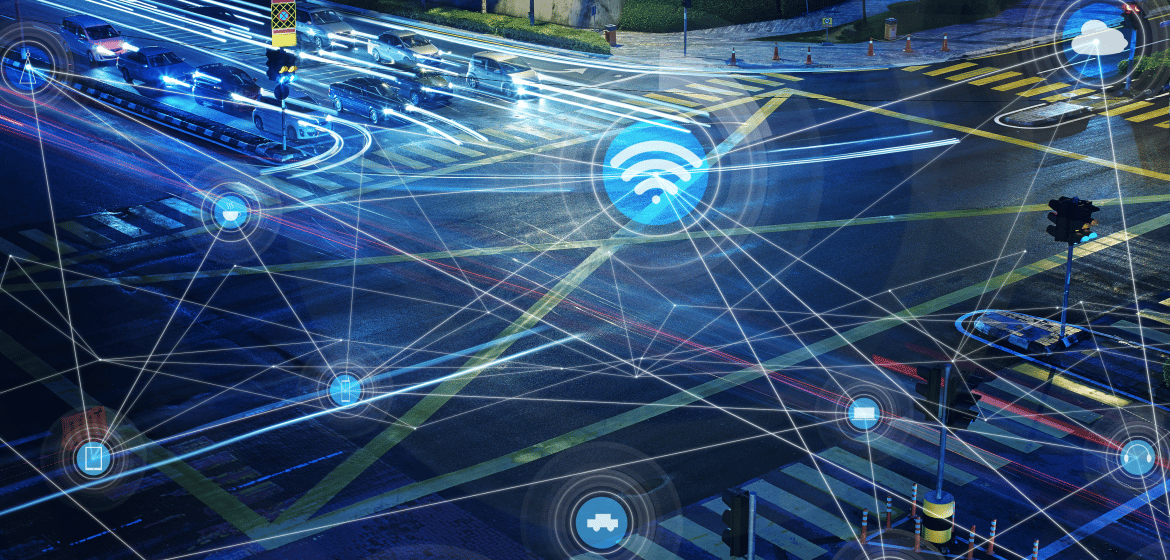
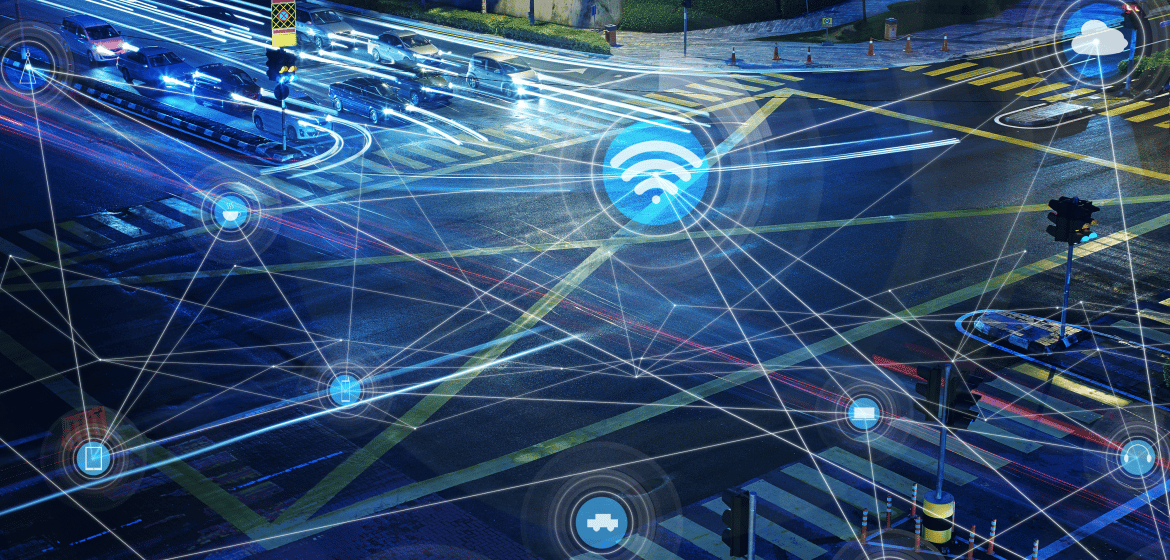
5G technology enables a fully connected and automated mobility which begins with the availability of the LTE-V2X technology today. Vehicles and infrastructure are able to exchange relevant information via LTE-V2X either through direct short-range communication, which does not require network coverage, or long-range communication via the network, creating a real-time connection between all actors of road mobility. The upcoming 5G revolution will reinforce those interactions and spark a whole new set of services, dramatically changing the mobility landscape.

Read 5GAA’s Position Paper on the matter.

5GAA feedback on the call for inputs on the impact of 5G on regulation from the BEREC

5GAA feedback on the call for inputs on the impact of 5G on regulation from the BEREC

The 5G Automotive Association (5GAA) is a global, cross-industry organisation of more than 120 companies from the automotive, technology, and telecommunications industries (ICT), working together to develop end-to-end connectivity solutions for future mobility and transportation services.

5GAA welcomes the opportunity to give feedback on the call for inputs on the impact of 5G on regulation from the Body of European regulators for Electronic Communications (BEREC).

Following the assessment by the BEREC on the list of regulatory aspects impacted by the development of the 5G technology, 5GAA would take this opportunity to add potential missing regulatory aspects as well as to highlight 5GAA’s view on BEREC’s priorities for the coming three years.

    1. 5GAA considers the availability of spectrum for digital communications to be critical for road safety using 5.9 GHz ITS spectrum. It is therefore essential that any regulatory framework provides certainty to the industry to invest in today’s technology for Day 1 services as well as a robust roadmap for advanced safety (5GAA is currently working on a related Work Item on New Radio V2X).
    2. Beside the direct communication means in the 5.9 GHz band enabling V2V and V2I communication, 5GAA stresses the need for the development of mobile network coverage alongside the road network, and calls for the adoption of regulation which stimulates investments in mobile network coverage (5GAA is currently working on a related Work Item on Strategic Deployment Agenda), to enable the full range of capabilities provided by cellular V2X.
    3. 5GAA highlights the need for continuous coverage and seamless handover of 5G connectivity for vehicles crossing country borders in Europe. Further work is needed, notably in collaboration with standardisation bodies, to establish the right conditions to stimulate continuous coverage and seamless handover across borders. (5GAA is currently working on a Work Item on Network Selection for this very purpose). However, it should be noted that despite the importance of cross-border handover with 5G networks, given use of ITS spectrum, it is not a concern for the 5G sidelink case.
    4. 5GAA stresses the required investments into connected intelligent traffic infrastructures to assure safe and efficient mobility. Significant investments can be ensured by stimulating synergies of mobile network infrastructure and intelligent road infrastructure along with cohesive funding mechanisms (e.g. CEF Transport/Digital) (5GAA is currently working on a Work Item on Road Side Unit).
      On this point, 5GAA would like to add that CEF transport needs to remain technological neutral while CEF Digital should be focused on Mobile Networks.
    5. As road safety and automated driving are prominent example of Quality of Service needs, 5GAA calls for regulation which focuses on social benefits, outcomes and market adoption to position Europe as a global leader in the field. (e.g. enables prioritization of different service classes) (5GAA is currently working on a Work Item on this matter, Business Aspects of Network Slicing (BARNS)).
    6. 5GAA would like to draw attention to CCAM’s needs in terms of direct communications for critical road safety use cases as well as complementary network based communication and calls for the adoption of regulation which considers various ways of connectivity and keep regulation technology neutral.
    7. As CCAM goes beyond automotive sector, 5GAA would like to point that there is an opportunity to address the digital transformation of the transportation sectors by stimulating synergies with other transportation sectors (as pedestrians, bikes, motorcycles, esp. in urban environments, as well as rail and tolling).

The next years are crucial to set Europe at the forefront of the development of 5G and of Connected and Automated Mobility, to guarantee the safe and sustainable mobility of citizens while maintaining a global competitive edge in 5G development. Effective synergy between the development of the 5G ecosystem and European regulation is a precondition to ensuring that the benefits of 5G are indeed fulfilled.

PDF Document


5GAA Meets Turin 2019: Face-to-Face Meeting and Conference

5GAA Meets Turin 2019: Face-to-Face Meeting and Conference

The 5G Automotive Association (5GAA) has the pleasure to announce “The 5G Path of Vehicle-to-Everything Communication: From Local to Global” Conference, Live Demonstrations and Press Event on 14 November 2019 in Turin, Italy.

Conference | Museo Nazionale dell’Automobile

The conference aims at fostering the dialogue between high-level institutional and industry stakeholders on current challenges in the field of connected and automated mobility and provide solutions by presenting the capabilities and deployment models of the C-V2X technology. For this edition, we are glad to announce that we will be welcoming top profiles such as Prof. Vito Mauro, Italian Ministry of Transport and Infrastructure, Elisabetta Romano, TIM CTIO, as well as Paola Pisano, Italian Minister for Innovation and Digitalisation.

Live Demonstrations | Lingotto & Open Roads

In the afternoon, conference participants will have the opportunity to join a demonstration of C-V2X technology scenarios organised by 5GAA members Fiat Chrysler Automobiles (FCA), Audi, Marelli, TIM (Telecom Italia), Vodafone and Ericsson, who will showcase the current state of C-V2X and the future of 5G technology.

Press Event | Museo Nazionale dell’Automobile

As an independent side event to the conference, 5GAA is organising a press gathering with a select group of journalists for them to witness key technology capabilities during six live demos taking place in the streets of Turin and on the Lingotto track. The press demonstrations will showcase how C-V2X is poised to offer significant improvements in road safety and how it will support future autonomous vehicles, lessen traffic congestion and reduce CO2 emissions.

_____

You can indicate your interest to attend via the following link. Due to limited capacity, we can guarantee attendance only to some of the interested participants.

See the detailed programme of the event here.

5GAA to be main supporting partner of 5G Techritory – Riga, 27-29 November 2019

5GAA to be main supporting partner of 5G Techritory – Riga, 27-29 November 2019

5G Techritory is the annual Baltic Sea Region 5G Ecosystem Forum organised by the Electronic Communications Office (ECO) of Latvia, aiming at gathering decision makers, major representatives from industry associations, and business leaders to discuss the deployment of the earliest available commercial applications of 5G technology. Its second edition is going to be held in the Latvian capital, Riga, on 27-29 November.

Taking place in a vibrant region for 5G implementation, the 5G Automotive Association is proud to be confirmed once again as one of the main partners of this conference. 5GAA Director General Johannes Springer is going to participate as a speaker in front of an audience of up to a thousand senior professionals invited upon an attentive selection to ensure the highest quality of debate.

The Baltic Sea Region includes nine countries comprising of a population of 150 million people. Among the Baltic countries, Latvia appears in the third place of the 5G Readiness ranking according to the European Commission’s Digital Economy and Society Index (DESI) 2019 report. This result shows that the potential for international leadership in the field is highly promising and this edition has all the characteristics to be a must-visit, given the renewed interest for digital and technology of the newly appointed European Commission.

Since the objective of the programme is to focus on what is readier for commercialisation, four verticals have been identified as the main topics:

  • Smart City
  • Smart Mobility
  • Industry 4.0
  • Smart Media and Entertainment

In addition, a 5G policy hackathon, a key stakeholders’ roundtable and an exhibition are scheduled as side events.

Registration is open and all the possible interested participants are encouraged to apply.

See the official press release and leaflet.

5GAA comments for ETC national standard in China

5GAA comments for ETC national standard in China

The 5G Automotive Association (5GAA) is a global, cross-industry organisation of companies from the automotive and telecommunications industries, working together to develop end-to-end solutions for future mobility and transport services.

Following its vision, 5GAA has rapidly expanded to include key players, namely the automotive manufacturers, Tier-1 suppliers, chipset/communication system providers, mobile operators and infrastructure vendors. More than 120 companies have now joined 5GAA. Diverse both in terms of geography and expertise, 5GAA’s members are committed to helping define and develop the next generation of connected mobility and automated vehicle and intelligent transport solutions.

5GAA is willing to engage with the Chinese government and eco-system to accelerate the growth of the automotive industry and connected-automated driving services in China. Regarding Electronic Toll Collection (ETC) Onboard Unit (open for public comment), 5GAA fully supports the targets to phase out physical tolling stations in China and would like to share some views on introducing C-V2X technology to fulfil this function:

  1. Our research and field tests indicate that C-V2X offers high network security and reliability, as well as better performance in terms of coverage and latency compared to other existing alternatives. 5GAA believes that enabling electronic toll collection (ETC) via C-V2X would offer significant benefits. 5GAA is acting to include tolling as one of the most critical use cases supported by C-V2X. In addition, we noticed that the Society of Automotive Engineers (SAE) V2X Technical Committee has worked on a similar objective. More importantly, in addition to vehicle-to-infrastructure (V2I), C-V2X supports vehicle-to-pedestrians (V2P), vehicle-to-vehicle (V2V) and vehicle-to-network (V2N), encompassing all scenarios of smart mobility;
  2. C-V2X is the future-proof technology to evolve from LTE-V2X to NR-V2X and so on;
  3. C-V2X has matured thanks to broad cross-industry support. Major carmakers are now speeding up the business cases and pre-installation of C-V2X in their vehicles. For example, 5GAA released its C-V2X deployment roadmap at the beginning of 2018 and expects the first batch of C-V2X-equipped cars to be commercialised as early as 2020.
  4. With regard to industry development, 5GAA believes there are two phases for C-V2X to be implemented and to enable all services needed to realise intelligent transport:
  • Phase I: Utilising the existing C-V2X mature products and industry’s support, including chipset, devices, vehicles and communication equipment, to address tolling service for highway scenarios.
  • Phase II: Based on C-V2X and its implementation in diverse categories of terminals like mobile phones (pre-installed and after-market), foster V2I synergy for the next ten years, e.g. highway tolling, Mobility as a Service (MaaS), for V2P, as well as road safety and coordinated driving for V2V.

5GAA believes C-V2X technology is a critical technology enabler for in-vehicle ETC technology and recommends including C-V2X into the Chinese national standard covering the Electronic Toll Collection Onboard Unit.

PDF Document

5GAA Meets Toronto 2019: Face-to-Face Meeting and Workshop

5GAA Meets Toronto 2019: Face-to-Face Meeting and Workshop

Toronto is hosting the next quarterly 5G Automotive Association (5GAA) Face-to-Face meeting. The event spans over five days focused on cellular-to-everything (C-V2X) technology.

The first three days will be dedicated to meetings on Working and Cross-Working Group Items. Days four and five will kick off with board and executive level discussions and a workshop on connected and automated driving in North America. These exciting events will be coupled with live demonstrations, hosted by 5GAA Canada-based members.

The 5GAA Workshop

5GAA will be hosting a workshop around ‘C-V2X: The Future of Connected and Automated Driving in North America’. With over 200 attendees expected, the event targets North American transport stakeholders, including policymakers, road traffic authorities, road operators and an array of interest groups and industry representatives. The primary objective is to raise awareness of C-V2X and the opportunity it provides to drive its adoption in North America.

The workshop will be divided in two parts, the first part will focus on an update to C-V2X development, including an overview of the European Road Map, as well as examples of recent innovation in Europe and North America. The second part will embark on a broader path, concentrating on future connected mobility. Key figures from Intelligent Transportation Systems (ITS) in North America will be presenting and take part in the day’s discussions. See workshop programme here.

Due to limited capacity, the workshop is by invitation only. Please contact liaison@5gaa.org for more information.

Live Demonstrations

5GAA members, Bell Canada and Huawei Canada, will organise two separate demonstrations of C-V2X 5G technology, 6-8 August 2019.

One demonstration, HD Mapping and Vulnerable Road User (VRU) Vehicle to Network, will take approximately 30 minutes and feature an in-vehicle live HD Map/VRU system.

The other demonstration will centre on Tele-operated Driving (ToD) Vehicle to Network technology. It will last approximately three hours at the Bell campus in Mississauga, Canada. There will be lunch served and a shuttle service to and from the Metro Toronto Convention Centre. Delegates can register here.

5GAA Supports the 3GPP 2nd 5G Vertical User Workshop

5GAA Supports the 3GPP 2nd 5G Vertical User Workshop

Following the first session held in Brussels on 12-13 February 2019, 5GAA returned to the second 5G Vertical User Workshop, which was in Rome on 9-10 July 2019. This initiative, launched by 3GPP Market Representative Partners (5GAA, 5G-IA, 5G-ACIA and PSCE) was organised as a collaborative event for strategic dialogue between vertical industries (technology, automotive and transport, health and public safety ) and 3GPP by exchanging on future needs and upcoming cellular standard developments.

5G networks are intended to bring a new innovative ecosystem, where actors from the vertical industries will be involved alongside the telecom operators, manufacturers, SMEs and research institutes. There is an increasing need to involve this wider range of industries to optimally capture end-user requirements and contribute to the 3GPP standardisation process. The working groups of 3GPP operate on a bottom-up basis focusing on partners contributions. As such, 3GPP notably benefits from further developing the role and usefulness of 5G vertical industries as Market Representation Partners.

The agenda for the 2nd 5G Vertical Users Workshop can be found here. The Workshop focused on 5G vertical technical viewpoints, common requirements and common interests with lively interactive discussions. 5GAA members Huawei, Nokia and Orange supported the workshop. The 5GAA CTO, Maxime Flament, had seized the opportunity to address:

  • The 5GAA vision for 3GPP rel-17 as part of C-V2X and intelligent transport systems (available here)
  • Predictive QoS, an innovative mechanism to provide in-advance QoS notifications from the network to the V2X application (available here)

5GAA enthusiastically supports the initiative and to enhance collaboration with partners such as 5G-IA, 5G-ACIA and PSCE.

5GAA Releases White Paper on C-V2X Use Cases: Methodology, Examples and Service Level Requirements

5GAA Releases White Paper on C-V2X Use Cases: Methodology, Examples and Service Level Requirements

Several innovative automotive use cases using C-V2X technologies have emerged during the last years and many more will come in the following years in an attempt to describe novel capabilities and new features of connected vehicles. Safety, vehicle operations management, convenience, autonomous driving, platooning, traffic efficiency and environmental friendliness, society and community are some of the areas that C-V2X use cases are expected to have high impact.

This white paper describes 5GAA’s methodology in defining use cases and associated Service Level Requirements (SLRs) in a communications technology solution agnostic approach. Sequences of actions and interactions between involved actors are described as general as possible relative to the specific implementation and architecture of the overlaying cellular system. Moreover, an example set of C-V2X use cases have been described in detail and have been used to apply the 5GAA methodology. Each use case is composed of multiple use case scenarios, wherein use case scenarios can differ in terms of applicable road environment, actors involved, service flows, etc. The SLRs of the selected example use cases have been provided and analyzed in a technology and implementation agnostic way.

5GAA use cases are used by 5GAA work groups to develop C-V2X solutions, create test procedures, demos and pilots, evaluate spectrum needs and co-operate with Standards Development Organizations (SDOs) and finally create the business case and path for deployment.

Please note that this document is currently under revision

Click here to read the White Paper

5GAA publishes test results in support to C-V2X FCC petition for waiver

5GAA publishes test results in support to C-V2X FCC petition for waiver

Recently, the 5G Automotive Association (5GAA) filed a petition for waiver with the Federal Communications Commission of the United States requesting that C-V2X be allowed to operate in the upper 20 MHz (5905 MHz – 5925 MHz) of the US ITS band.

In support of this petition, 5GAA member companies have performed a series of tests in an attempt to address anticipated technical questions related to the favourable implementation of this petition. The report describes the test procedures and results that were undertaken to support the 5GAA C-V2X FCC petition for waiver in the 5.9 GHz band.

The report presents results of testing C-V2X in 20-MHz wide CH183 – the channel that has been recently proposed for C-V2X deployment in the ITS band and is referred to as basic C-V2X Channel and it allows for V2V and V2X messages such as basic safety message (BSM), signal phase and timing (SPaT), signal request message (SRM), signal status message (SSM), and others covered by the Road Safety Message under development in SAE standards. The upper part of the ITS band was chosen to minimize impact to DSRC channels, especially CH172.

The viability of C-V2X in 10 MHz has been demonstrated in a preceding report in which C-V2X has been shown to outperform DSRC in terms of reliability, resilience to out-of-band interference and range. This report extends these results by showing that a BSM message sent in 20‑MHz CH183 has the same reliability as previously shown in 10-MHz CH184.

Both lab and field data included in the report demonstrate consistent results:

  • C-V2X communication in 20-MHz CH183 has the same reliability performance (Packet Reception Ratio vs. distance) as the identical BSM-like message transmission in 10-MHz CH184.
  • Impact of C-V2X high load transmissions in CH183 on DSRC basic safety transmissions in CH172 is negligible up to a 1.4-km range in LOS conditions
  • Impact of C-V2X high load transmissions in CH183 on V2I and I2V transmissions in CH178 is negligible up to a 1.4‑km range in LOS conditions
  • Impact of C-V2X high load transmissions in CH183 on V2I and I2V transmissions in CH180 is negligible up to 1 km in LOS Conditions


Read the full report here.