
5GAA, Audi, Ford and Qualcomm Showcase C-V2X Direct Communications Interoperability to Improve Road Safety
WASHINGTON, D.C., April 26, 2018 – C-V2X Communications’ Superior Performance, Synergies with Telematics Units and Evolutionary Path Towards 5G Offers Greater Potential to Save Lives; World’s First Showcase Across Vehicle Manufacturers Shows Readiness for Industry Deployment as Early as 2020.
| Downloadable Resources | |
|---|---|
| Photos | |
| Infographic | |
| Video clip 1 | |
| Video clip 2 |
5G Automotive Association (5GAA), Audi AG (NASDAQ: AUDVF), Ford Motor Company (NYSE: F) and Qualcomm Technologies, Inc., a subsidiary of Qualcomm Incorporated (NASDAQ: QCOM), announced today the world’s first demonstration for Cellular Vehicle-to-Everything (C-V2X) direct communications technology operating across vehicles from different manufacturers. C-V2X is a global solution for V2X communications to support improved automotive safety, automated driving, and traffic efficiency, and is the only V2X technology based on globally recognized 3rdGeneration Partnership Project (3GPP) specifications with ongoing evolution designed to offer forward compatibility with 5G, and leveraging upper layer protocols defined by the automotive industry, including Society of Automotive Engineering (SAE) and the European Telecommunications Standards Institute (ETSI) organizations.
The demonstration showcased the benefits of using C-V2X real-time direct communications on the globally harmonized 5.9 GHz ITS spectrum for vehicle-to-vehicle (V2V) collision avoidance and improved road safety without any dependency on cellular operator network involvement, credentials or coverage. The organizations also unveiled initial field test results showing a significant range, reliability and performance advantage of C-V2X direct communications, with more than twice the range and improved reliability compared to 802.11p radio technology. Based on C-V2X’s potential to enhance safety and save lives, the 5GAA, Audi, Ford and Qualcomm Technologies encourage the broad automotive ecosystem to accelerate adoption of C-V2X, which is expected to be deployed as early as 2020.
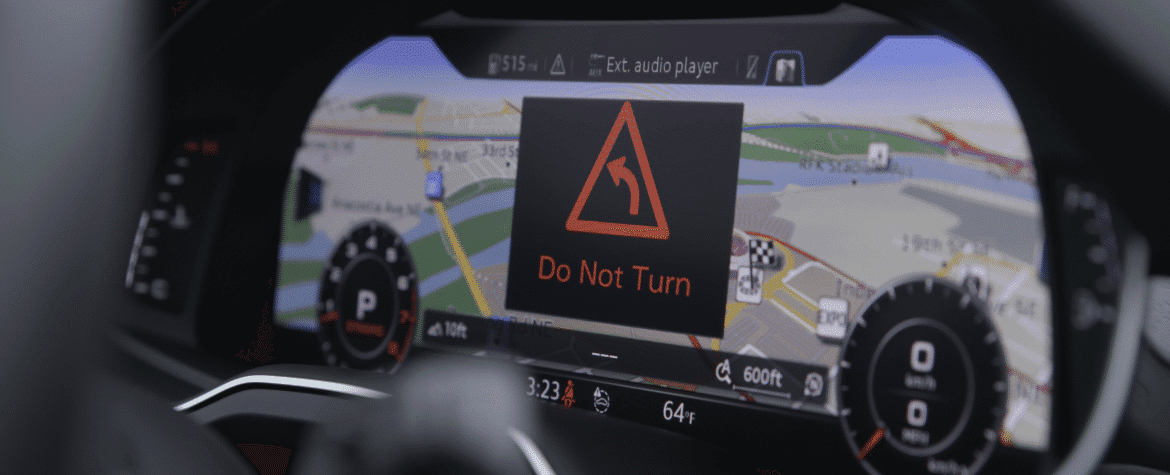
Featuring Audi and Ford vehicles which incorporate the C-V2X technology utilizing the C-V2X chipset from Qualcomm Technologies, the showcase exhibited various scenarios of how C-V2X communications is beneficial for road safety. These scenarios included situations with obstructed or no visibility, including Left Turn Assist and Emergency Electronic Brake Light use cases, in which vehicle-to-vehicle (V2V) communications alerted surrounding vehicles when cars were turning left or braking. Additional use cases were featured, including a vulnerable road user (VRU) demonstration showcasing what can be possible with future vehicle-to-pedestrian (V2P) communications. Use cases for vehicle-to-infrastructure (V2I) communication were also demonstrated, which showcased how direct communications can work closely with traffic signal controllers to ensure reduction in carbon emissions and optimization of traffic efficiency in cluttered intersections and dense environments.
C-V2X is supported by a broad automotive ecosystem, that includes the fast-growing global organization 5GAA, which currently has over 80 members comprised of leading automakers, Tier-1 suppliers, software developers, mobile operators, semiconductor companies, test equipment vendors, telecom suppliers, traffic signal suppliers and road operators.
Designed with a focus on security, C-V2X benefits from established security transport layers and application protocols defined by the automotive standards communities, including SAE, ETSI, International Standards Organization (ISO), and Institute of Electrical and Electronics Engineers (IEEE) 1609, and Qualcomm’s decades of investment in cellular technologies. C-V2X solutions are expected to be more cost efficient and economical over competing technologies as this functionality gets integrated into the base cellular modem product that automakers equip in every vehicle.
“We are excited to witness this monumental breakthrough in the evolution of C-V2X and the growing momentum behind this life-saving technology,” said Christoph Voigt, Chairman of 5GAA. “After years of development supported by leading carmakers, technology providers and the automotive ecosystem at large, C-V2X is ready to improve road safety with deployment in production vehicles and road infrastructure as soon as 2020, leveraging a state-of-the-art proven radio with decade-long developed automotive software protocols. This unique showcase firstly demonstrates the commitment of our members to ensure that the potential of the C-V2X technology is realized and represents a key step towards the next generation of cellular technology, 5G.”
“C-V2X is critical to enhance road safety and also gives us a look into the key role that vehicle-to-vehicle and 5G wireless technologies play in the future of Audi and the automotive industry in general to support autonomous driving,” said Gerhard Stanzl, Head of Predevelopment Smart Mobility and Machine Learning, Audi Electronics Venture. “This interoperability demonstration marks a major milestone on the road to safer driving and we look forward to working alongside the extensive automotive ecosystem in helping accelerate C-V2X deployment globally.”
“With its ability to safely and securely connect vehicles, along with its evolution into 5G, C-V2X is integral to Ford’s vision for transportation and the cities of the future in which all cars and infrastructure collaborate speaking the same language,” said Don Butler, Executive director connected vehicle platform and product, Ford Motor Company. “We are very encouraged by preliminary test results which support our belief that C-V2X has superior V2X communication capabilities. We are also very pleased to see strong ecosystem support of product roadmaps that accelerates time to market for C-V2X.”
“At Qualcomm Technologies, we are committed to accelerating automotive innovation and enabling carmakers to deliver safe and connected vehicles, and we strongly believe that C-V2X can offer significant improvements in road safety for people worldwide,” said Nakul Duggal, vice president of product management, Qualcomm Technologies, Inc. “After years spearheading the development of C-V2X we are ready for its rollout in collaboration with leading automakers such as Audi and Ford, and the larger auto industry.”
5GAA, Audi, Ford and Qualcomm Technologies are scheduled to showcase another live C-V2X interoperability demonstration at the upcoming Intelligent Transportation Society of America (ITS-A) World Meeting in Detroit from June 4-7. Initial test results showing significant lifesaving benefits of C-V2X direct communications compared against the 802.11p solution can be found here. For more information on C-V2X please visit here.
About 5GAA
The 5G Automotive Association (5GAA) is a global cross-industry organization of companies from the automotive, technology and telecommunications industries (ICT), working together to develop end-to-end solutions for future mobility and transportation services. Created in 2016, the Association is comprised of over 80 members whose mission is to develop, test and promote communications solutions, initiate their standardization and accelerate their commercial availability and global market penetration, to address society’s connected mobility and road safety needs with applications such as automated driving, ubiquitous access to services and integration into smart city and intelligent transportation. For more information, visit 5GAA’s LinkedIn and Twitter pages.
About Audi
The Audi Group, with its brands Audi, Ducati and Lamborghini, is one of the most successful manufacturers of automobiles and motorcycles in the premium segment. It is present in more than 100 markets worldwide and produces at 16 locations in twelve countries. 100 percent subsidiaries of AUDI AG include Audi Sport GmbH (Neckarsulm), Automobili Lamborghini S.p.A. (Sant’Agata Bolognese, Italy) and Ducati Motor Holding S.p.A. (Bologna, Italy).
In 2017, the Audi Group delivered to customers about 1.878 million automobiles of the Audi brand, 3,815 sports cars of the Lamborghini brand and 55,900 motorcycles of the Ducati brand. In the 2017 fiscal year, AUDI AG achieved total revenue of €60.1 billion and an operating profit of €5.1 billion. At present, approximately 90,000 people work for the company all over the world, more than 60,000 of them in Germany. Audi focuses on sustainable products and technologies for the future of mobility.
About Ford Motor Company
Ford Motor Company is a global company based in Dearborn, Michigan. The company designs, manufactures, markets and services a full line of Ford cars, trucks, SUVs, electrified vehicles and Lincoln luxury vehicles, provides financial services through Ford Motor Credit Company and is pursuing leadership positions in electrification, autonomous vehicles and mobility solutions. Ford employs approximately 202,000 people worldwide. For more information regarding Ford, its products and Ford Motor Credit Company, please visit https://www.corporate.ford.com.
About Qualcomm
Qualcomm invents breakthrough technologies that transform how the world connects and communicates. When we connected the phone to the Internet, the mobile revolution was born. Today, our inventions are the foundation for life-changing products, experiences, and industries. As we lead the world to 5G, we envision this next big change in cellular technology spurring a new era of intelligent, connected devices and enabling new opportunities in connected cars, remote delivery of health care services, and the IoT – including smart cities, smart homes, and wearables. Qualcomm Incorporated includes our licensing business, QTL, and the vast majority of our patent portfolio. Qualcomm Technologies, Inc., a subsidiary of Qualcomm Incorporated, operates, along with its subsidiaries, all of our engineering, research and development functions, and all of our products and services businesses, including, the QCT semiconductor business. For more information, visit Qualcomm’s website, OnQ blog, Twitter and Facebook pages.
Media contact:
Lisa Boch-Andersen
Senior Director, Strategic Communication and Marketing, 5GAA
Email: lisa.boch-andersen@5GAA.org / Mobile phone: +32(0)475450972

5GAA participates in Testbed Visit in Shanghai
Shanghai, China – 16 November 2017 – following the 5G Automotive Association General Assembly Meeting, 5GAA leadership, delegates as well as representatives from Chinese and South Korean government participated in a testbed visit. This practice case was then followed by eight use-cases, demonstrating the success of the LTE-V2X advances. Both of these actions took place at the purpose-built Shanghai district – Testbed F-zone and T-Zone – where the latest developments in vehicle technology are assessed.
1. Realizing LTE-V2X’s capacity: Visit to F-Zone
Huawei LTE-V leader for Research & Development, Mr. Yangyongchao, opened the visit by showcasing LTE-V2X testing reports as well as running a live test result. This series of LTE-V2X performance tests were measured in terms of the technology’s capacity to manage two variables (link level and system level). This analysis was managed by the partnership of China Mobile (CMCC), SIAC and SAIC Motor.
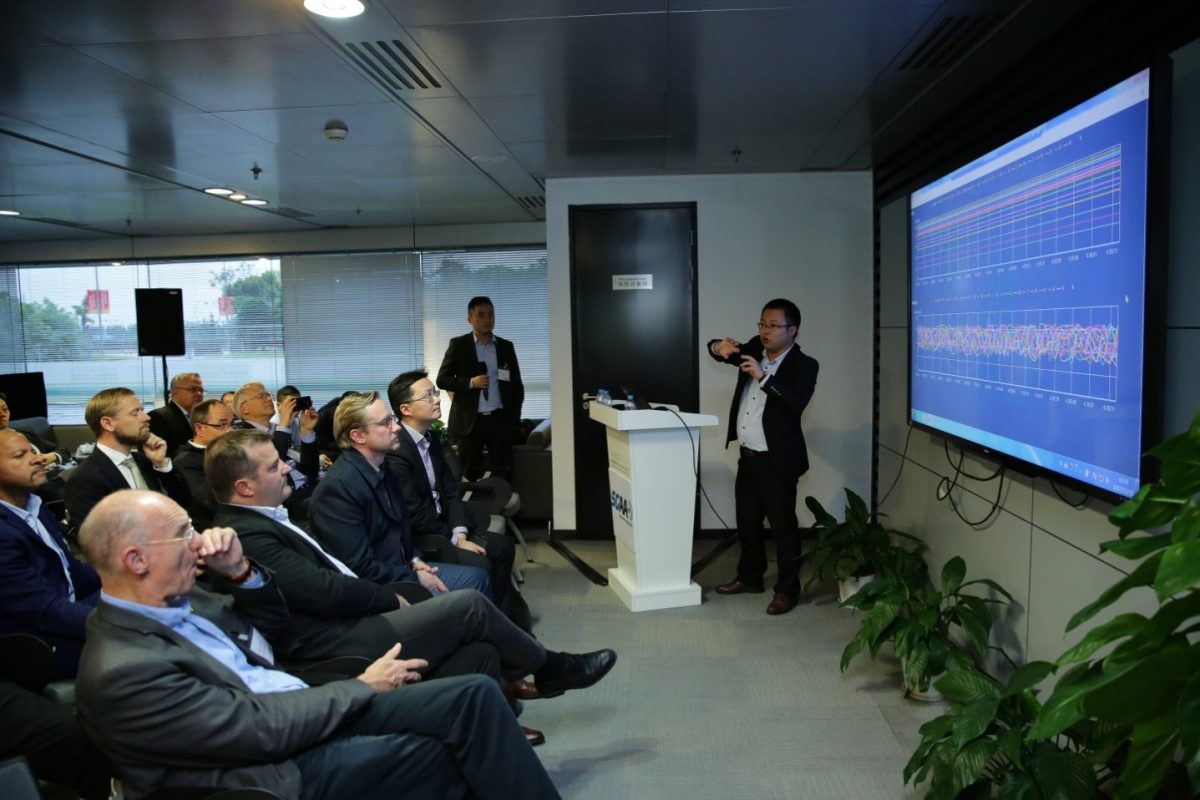
- Link Level Testing: LTE-V2X can support relative vehicle speeds of up to 500km/h, even with correction for timing and frequency errors. LTE-V2X shows excellent link performance with different packet size. The maximum RSU coverage range reaches more than 1km from the test vehicle.
- System Level Testing: 400 vehicles were analysed in this trial environment. Based on this, the capacity and of Vehicle-to-Vehicle and Vehicle- to-Infrastructure is smaller is functional in a range of 20 metres. Messages were transmitted at a success rate of 90% within the demanded communication range in high-density scenarios.
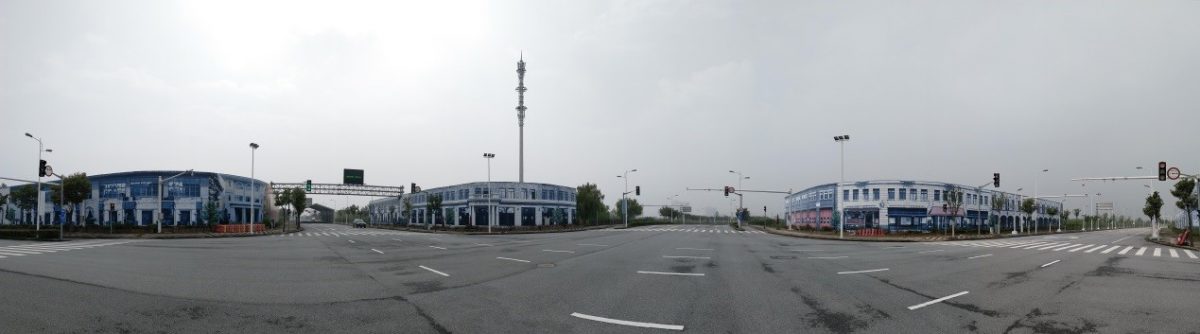
Right after this presentation, SIAC led the delegates to visit the site of F-Zone. Mr. Lilin, director of SIAC explained that F-zone is an enclosed area conducting different scenarios such as parks, urban roads with intersections, simulated highway and related road facilities. Additionally, F-zone is the national level Intelligent and Connected Vehicles test zone equipped with background vehicles, positioning capability and telecommunication infrastructure, including LTE-V2X based RSU, base stations that support both LTE and LTE-V2X, and assisted by operation system.
2. T-Zone visit
After the inspection of F-Zone, delegates visited C-V2X demonstration in T-Zone and observed eight cases in SAIC Motor’s intelligent connected vehicle operated with China Mobile and Huawei. The technology showcased was powered by 5G-V2X. This opened the vehicle up to possibilities such as Tele-Operated Driving, LTE-V2X based Platooning, Forward collision warning, Traffic light speed advisory and Vulnerable Road user warning. Dr. Liu Fen, also explained that with the abundant communications environment in T-zone and more C-V2X functionality can be realised in the future.

Christoph Voigt, Chairman of 5GAA, views these advances with optimism: “Today’s opportunity to see the fantastic progress from SIAC, SAIC Motor, China Mobile and Huawei is a demonstration of the unlimited possibilities that investing in 5G and LTE -V2X technologies hold. We know that C-V2X technology has the capacity for high-speed, high-density communication between vehicles, infrastructure, and pedestrians. Following further research and collaboration with our members and policy makers in governments around the world, 5GAA is looking forward to introducing this technology globally.”
Dino Flore, Director General of 5GAA is proud of the extensive partnerships that the association has fostered: “5GAA’s aim is to act as a bridge between the automotive and telecommunications industries. I would like to thank our hosts today in Shanghai for their hospitality and proudly showcasing the possibilities promised by C-V2X and 5G. Our organisation is focused on accelerating research and delivering solutions to society to build safer and more sustainable transport for our citizens. Today’s demonstrations are proof of what future holds.”
About the 5GAA
The 5G Automotive Association (5GAA) is a global cross-industry organisation of companies from the automotive, technology and telecommunications industries (ICT), working together to develop end-to-end solutions for future mobility and transportation services. Created in 2016, the Association is comprised of over 67 members which mission is to develop, test and promote communications solutions, initiate their standardization and accelerate their commercial availability and global market penetration to address societal need.
5GAA: cellular technology is key enabler for smart mobility of the future
Industry association calls on European Commission to allow stakeholders to work collaboratively towards an agreement on the technology catalyzing the mobility of the future and warns against a “premature and cumbersome legislative decision”.
The 5G Automotive Association (5GAA) encourages the automotive, technology, and telecommunications industries and the European Commission to be ambitious when evaluating technologies for connected, autonomous vehicles. 5GAA is confident that cellular communication technology (C-V2X) has the most benefits when applied to connected, self-driving cars. It has provided its views to the Commission in a workshop and a letter with recommendations. Since its launch one year ago, over 50 industry leaders from the automotive, technology and telecommunications industries have teamed up in 5GAA to accelerate C-V2X technology development and its evolution to 5G-V2X for enhanced safety, automated driving and connected mobility.
Christoph Voigt, Chairman of 5GAA said, “5GAA is confident that cellular technology (including direct vehicle-to-vehicle communication at 5.9 GHz) has the potential to lead to the best outcomes in the long run. We are strongly relying on the European institutional support to put in place a regulatory framework allowing for an industry-driven and swift deployment of this technology. It is crucial to consider how the 5.9 GHz band, the “life blood” of wireless vehicle communication, can be used efficiently in the context of 5G technology evolution, road safety, and economic scalability. The automotive and transportation sectors, both public and private, are making significant investment commitments. Therefore, we are urging the European Commission to allow the ITS-G5 and C-V2X stakeholders to work together towards an agreement on the future of connected and automated cars, without a premature and cumbersome legislative decision.”
5GAA has recently provided its views to the Commission in a workshop and a letter with recommendations.
Christoph Voigt: “We should aim high enough when selecting the solutions to make connected, self-driving vehicles a reality. These are a catalyst to improving the quality of life globally through safer traffic, improved mobility, cleaner air in cities, and a better experience overall for drivers.”
Dino Flore, Director General of 5GAA adds, “Saving lives through improved road safety is obviously the primary positive outcome of deploying communication technology solutions. In addition, we should take into account other aspects when evaluating alternatives. We’re not only talking about reducing congestion and pollution but also optimizing the driving experience. It is our view that cellular technology, including direct vehicle-to-vehicle communication at 5.9 GHz, has the most upward potential in the long run.”
Helping vehicles “understand the environment they are navigating”
Launched in September 2016 by 8 founding members the 5GAA has in less than a year grown to include over 50 leaders from the automotive, technology and telecom industries who collaborate cross-industry on the future of transport. 5GAA’s mission is to develop, test, and promote communications solutions, initiate their standardization and accelerate their commercial availability and global market penetration. The objective is to address society’s connected mobility and road safety needs with applications such as autonomous driving, ubiquitous access to services and integration into smart city and intelligent transportation.
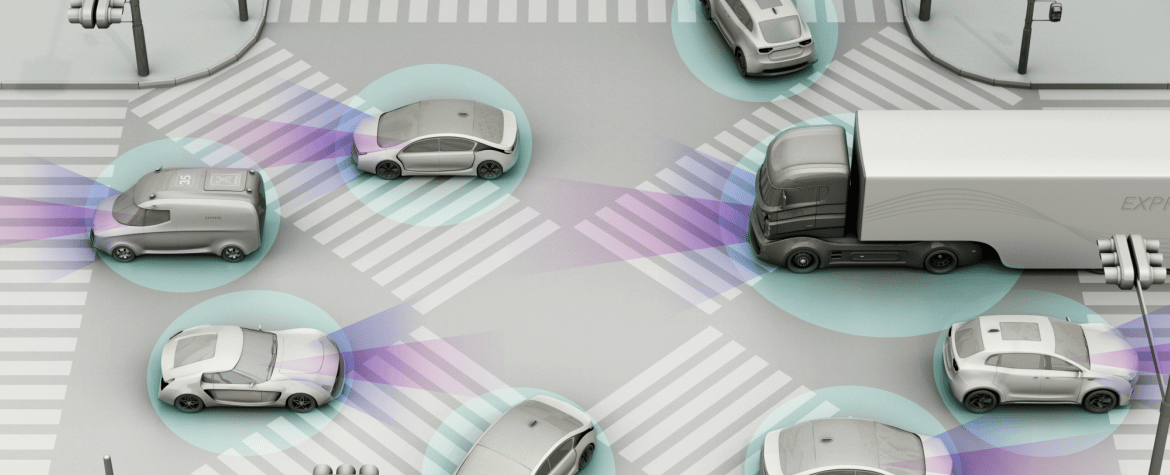
Connected vehicles use communication technology to not only communicate with other vehicles but also with road infrastructure, other road users such as pedestrians, and the Internet – e.g. to provide traffic updates and parking guidance. Use cases include collision warnings, “traffic jam ahead” warnings, green light optimal speed advisory, parking guidance, and assisting drivers in tackling treacherous traffic situations (e.g. turning left at a crossroads). Connected vehicles will eventually reduce pollution, and make traffic more efficient, reducing congestion in cities and improving the flow of goods and people.
Christoph Voigt explains, “Equipping cars with sensors and cameras is one thing, but imagine what is possible when cars use cellular technology to communicate with their entire ecosystem: other vehicles, road users, infrastructure, and central services that give real-time information.”
“It’s the difference between a car that is capable of seeing what is happening in its immediate surroundings and one that can use all available information to allow for a safer and more comfortable driving experience. After all, as drivers we do more than purely react to what’s in front of us. We listen to traffic info, we are aware of the area we’re navigating, and we are alert to traffic jams in rush hour. We use context to guide our driving.”
“This is exactly what cellular connectivity can enable vehicles to make easier, or even take over from us in the case of self-driving vehicles. Except that it will be faster and more accurate,” concludes Christoph Voigt.
-Ends
About 5GAA
The 5G Automotive Association (5GAA) is a global cross-industry organisation of companies from the automotive, technology and telecommunications industries (ICT), working together to develop end-to-end solutions for future mobility and transportation services. Created in 2016, the Association is comprised of over 50 members which mission
is to develop, test and promote communications solutions, initiate their standardization and accelerate their commercial availability and global market penetration to address societal need. For more information please visit 5gaa.org
Contacts
Robbe Libbrecht
FINN PR
robbe.libbrecht@finnpr.com
M +32 497 23 30 38
5GAA Marketing & Communications
marcom@5GAA.org

5GAA comments to the NHTSA on notice of proposed rulemaking
The 5G Automotive Association (5GAA) supports the goal of the National Highway Traffic Safety Administration (NHTSA) to increase motor vehicle safety through the use of communications solutions. 5GAA is a new global cross-industry association of automotive, technology and telecommunications companies. 5GAA includes 42 members, of which 8 are founding members (AUDI AG, BMW Group, Daimler AG, Ericsson, Huawei, Intel, Nokia, Qualcomm). Our mission is to enable communications solutions that address society’s connected mobility and road safety needs.
5GAA, like the U.S. Department of Transportation (USDOT) and National Highway Traffic Safety Administration (NHTSA), values safety first and foremost; this is what makes the immediate proceeding so important to us and why we are moved to offer the sum of our expertise in providing comments. To realize the full safety benefits of vehicle communications, NHTSA’s guiding principle must be one that allows for not only the best technology of today but also for the best technologies of tomorrow. Such an approach will promote innovation and competitive market-based outcomes, ensuring that American drivers and passengers benefit from the best and most advanced safety solutions available as technology evolves. This is particularly essential for regulations touching the communications industry, which has witnessed rapid technological innovation over the past two decades – with 4G cellular prevalent today and 5G on the horizon. By contrast, rigid technology mandates, whether direct or de facto, freeze technology solutions to a past point in time. With the communications market rapidly evolving, any technology NHTSA mandates today will be outdated by the time the mandate goes into effect, if not already outdated. This will significantly impede the innovation and evolution path for Vehicle-to-Vehicle (V2V) safety, and positions the US to lag behind the rest of the world in V2V communications specifically as well as V2X broadly.
For this reason, 5GAA respectfully cannot support the proposed V2V technology mandate predicated on the use of dedicated short-range radio communications (DSRC), a technology originally designed in the 1990s. The proposed direct technology-specific mandate, by definition, is on its face not technology neutral. Similarly, the one-way interoperability requirement in the alternate “if equipped” proposal, where “alternative” technologies would be required to be backwards interoperable with DSRC, is flawed in that it would impose no reverse interoperability requirement on DSRC to ensure backwards interoperability with other technology solutions, including today’s Cellular Vehicle-to-Everything (Cellular-V2X) solutions for V2V safety.
In effect, the “path” for compliance is not a path at all, but instead a dead-end for other technologies, as it creates a non-level playing field in the US V2V market.The 5G Automotive Association (5GAA) supports the goal of the National Highway Traffic Safety Administration (NHTSA) to increase motor vehicle safety through the use of communications solutions. 5GAA is a new global cross-industry association of automotive, technology and telecommunications companies.
5GAA includes 42 members, of which 8 are founding members (AUDI AG, BMW Group, Daimler AG, Ericsson, Huawei, Intel, Nokia, Qualcomm). Our mission is to enable communications solutions that address society’s connected mobility and road safety needs.5GAA, like the U.S. Department of Transportation (USDOT) and National Highway Traffic Safety Administration (NHTSA), values safety first and foremost; this is what makes the immediate proceeding so important to us and why we are moved to offer the sum of our expertise in providing comments. To realize the full safety benefits of vehicle communications, NHTSA’s guiding principle must be one that allows for not only the best technology of today but also for the best technologies of tomorrow. Such an approach will promote innovation and competitive market-based outcomes, ensuring that American drivers and passengers benefit from the best and most advanced safety solutions available as technology evolves. This is particularly essential for regulations touching the communications industry, which has witnessed rapid technological innovation over the past two decades – with 4G cellular prevalent today and 5G on the horizon. By contrast, rigid technology mandates, whether direct or de facto, freeze technology solutions to a past point in time. With the communications market rapidly evolving, any technology NHTSA mandates today will be outdated by the time the mandate goes into effect, if not already outdated. This will significantly impede the innovation and evolution path for Vehicle-to-Vehicle (V2V) safety, and positions the US to lag behind the rest of the world in V2V communications specifically as well as V2X broadly.
For this reason, 5GAA respectfully cannot support the proposed V2V technology mandate predicated on the use of dedicated short-range radio communications (DSRC), a technology originally designed in the 1990s. The proposed direct technology-specific mandate, by definition, is on its face not technology neutral. Similarly, the one-way interoperability requirement in the alternate “if equipped” proposal, where “alternative” technologies would be required to be backwards interoperable with DSRC, is flawed in that it would impose no reverse interoperability requirement on DSRC to ensure backwards interoperability with other technology solutions, including today’s Cellular Vehicle-to-Everything (Cellular-V2X) solutions for V2V safety. In effect, the “path” for compliance is not a path at all, but instead a dead-end for other technologies, as it creates a non-level playing field in the US V2V market.
Read the full paper here.

Updates to Strategic Roadmap and Get Ready for Turin
5GAA is hosting a member-only webinar with Maxime Flament, the Chief Technology Officer, to give you an overview of the next Face-to-Face Meeting in Turin:
– What is new in the programme for the meeting (the Members’ Symposium)
– An update on the strategic roadmap
We look forward to you joining us on Wednesday, 6 November, 3:00-4:00 PM (CEST).
Please register here.

Updates to Strategic Roadmap and Get Ready for Turin – Asian timezone-friendly
Upon request of Asian members, 5GAA is hosting a second member-only webinar to better meet the needs of members living in Asian timezones. The webinar will be led by Maxime Flament, the Chief Technology Officer, to give you an overview of the next Face-to-Face Meeting in Turin:
– What is new in the programme for the meeting (the Members’ Symposium)
– An update on the strategic roadmap
We look forward to you joining us on Thursday 7 November, 9:00-10:00 AM (CET).
Please register here.

Predictive QoS – using 5G network data analytics to enable proactive C-V2X adaptation
5G Automotive Association (5GAA) has developed the concept of predictive Quality of Service (QoS), which is a mechanism enabling mobile networks to provide early notifications about predicted QoS changes to interested consumers, such as the V2X application in the vehicle. This makes it possible for the application to adjust its behaviour before the predicted QoS change takes effect, which is important to certain automotive use cases, such as remote and autonomous driving.
The concept of predictive QoS is spreading in the industry and among standards developing organizations (SDO). It is, therefore, of interest to achieve a common understanding of what predictive QoS is – what problems it addresses, as well as how they are addressed.
We cordially invite you to join the 40-minutes long discussion by registering to the link below.
IAA Mobility 2021 Munich
The 5G Automotive Association (5GAA) will participate in the IAA Mobility Conference 2021 that will take place from 7 to 12 September in Munich. IAA Mobility is the leading global platform for the mobility industry and brings together actors from the entire mobility chain.
Following the guiding theme “What will move us next” the discussion will focus on how automation, connectivity, and smart city solutions will drive our progression to a more sustainable and effective mobility.
The event will provide an excellent platform to discuss the future of mobility with relevant stakeholders of the transport ecosystem.
5GAA will be active at two occasions:
9 September 2021 10.30 AM CEST
5GAA will hold a Master Class session. A great opportunity to engage in cross-industry exchange, present our expertise in an educational format, and discuss last updates and automated mobility by demonstrating the capabilities and deployment models of the Cellular Vehicle to Everything (“C-V2X”) technology.
10 September 2021, 11.45 AM CEST
5GAA will be present with its own Speaker Corner in the Business Club House, located in the central area of the exhibition. During 90 minutes our association and its members will have the opportunity to have speakers discuss the latest topics on connected mobility, as well as enjoy networking opportunities.
More information to follow.