
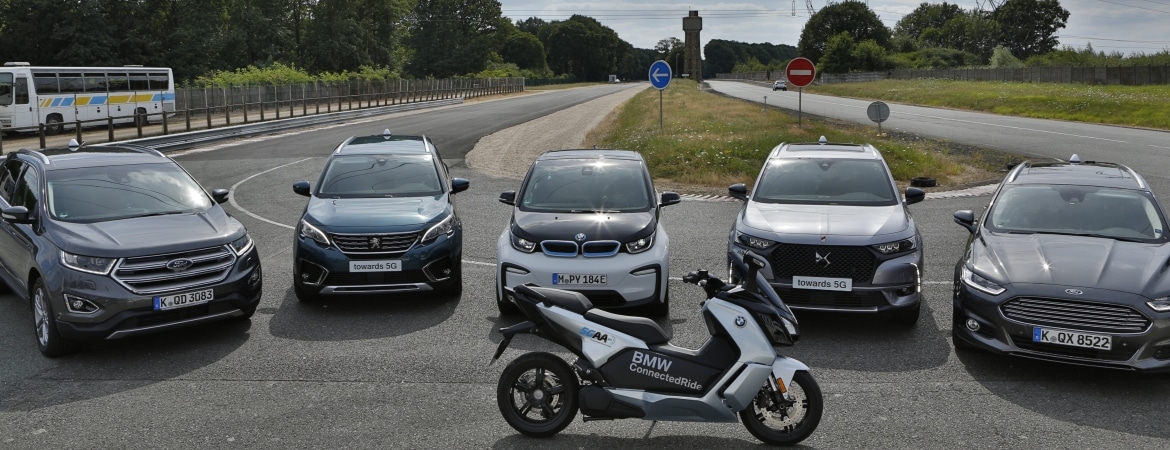
5GAA, BMW Group, Ford and Groupe PSA Exhibit First European Demonstration of C-V2X Direct Communication Interoperability Between Multiple Automakers
- Companies team up with Qualcomm and Savari to showcase C-V2X’s advanced performance for safety, traffic efficiency, and autonomy
- Exhibition includes communication between vehicles, motorcycles, and infrastructure, showing commercial readiness for industry deployments as early as 2020
Downloadable Resources |
Photos |
Infographic |
Soundbite Video Clip |
PARIS — July 11, 2018 – The 5G Automotive Association (5GAA), the BMW Group, Ford Motor Company (NYSE: F), and Groupe PSA — in association with Qualcomm Technologies, Inc., a subsidiary of Qualcomm Incorporated, and Savari, Inc. — announced today Europe’s first live demonstration of C-V2X direct communication technology operating across vehicles from multiple auto manufacturers. The live demonstration also featured a live showcase of C-V2X direct communication technology operating between passenger cars, motorcycles, and roadside infrastructure. C-V2X is a global solution for vehicle-to-everything (V2X) communication in support of improved automotive safety, automated driving and traffic efficiency.
The demonstration exhibited the road safety and traffic efficiency benefits of using C-V2X for Vehicle-to-Vehicle (V2V) collision avoidance, as well as Vehicle-to-Infrastructure (V2I) connectivity to traffic signals and Traffic Management Centers (TMC). C-V2X was operated using real-time direct communications over ITS spectrum and demonstrated its ability to work without cellular network coverage, and underscores its commercial readiness for industry deployment as early as 2020. Superior performance and cost-effectiveness compared to other V2X technologies, along with forward-compatibility with 5G, make C-V2X direct communications a preferred solution for C-ITS applications.
Six demonstrations were shown including Emergency Electronic Brake Light, Intersection Collision Warning, Across Traffic Turn Collision Risk Warning, Slow Vehicle Warning and Stationary Vehicle Warning, Signal Phase and Timing / Signal Violation Warning and Vulnerable Road User (pedestrian) Warning. The vehicles involved included two-wheel e-scooters provided by BMW Group, and automotive passenger vehicles provided by Ford, Groupe PSA, and BMW Group, all of which were equipped with C-V2X direct communication technology using the Qualcomm® 9150 C-V2X chipset solution. V2X software stack and application software, along with roadside infrastructure, were provided by industry leader, Savari.
C-V2X is globally supported by a broad automotive ecosystem, which includes the fast growing 5GAA organization. The 5GAA involves over 90 global members comprised of many leading automakers, Tier-1 suppliers, software developers, mobile operators, semiconductor companies, test equipment vendors, telecom suppliers, traffic signal suppliers and road operators.
Cellular modems will be key to the C-V2X deployment in vehicles to support telematics, eCall, connected infotainment and delivering useful driving/traffic/parking information. As C-V2X direct communication functionality is integrated into the cellular modem, C-V2X solutions are expected to be more cost-efficient and economical over competing technologies, and benefit from accelerated attach rates. C-V2X direct communication field validations are currently underway in Germany, France, Korea, China, Japan and the U.S.
C-V2X currently stands as the only V2X technology based on globally recognized 3rd Generation Partnership Project (3GPP) specifications, with ongoing evolution designed to offer forward compatibility with 5G. C-V2X also leverages and reuses the upper layer protocols defined by the automotive industry, including the European Telecommunications Standards Institute (ETSI) organization. C-V2X includes two complementary transmission modes:
- Direct communication as shown in this demonstration for V2V and V2I use cases
- V2N network communication, which leverages mobile operators for connectivity and delivers cloud-based services, including automated crash notification (ACN, as mandated by eCall), hazard warnings, weather conditions, green light optimal speed advisory (GLOSA), parking spot location, and remote tele-operation to support automated driving, to name a few.
“This demonstration builds on the successful C-V2X showcase we organised with our members Audi, Ford and Qualcomm in Washington DC in April” said Christoph Voigt, Chairman of 5GAA.
“We are excited to witness the growing momentum behind this life-saving technology and to see our members working together to deploy C-V2X, and to make it hit the road as soon as possible.”
“The BMW Group introduced the first C-ITS use cases already in 2013 with the market introduction of the BMW i3. Today most of envisaged C-ITS use-cases are already institutionalized. With the implementation of C-V2X, the BMW Group accomplishes the last set of the puzzle with a practical path to C-ITS showing quick benefits,” said Christoph Grote, Senior Vice President Electronics, BMW Group.
“With its ability to safely and securely connect vehicles, along with its evolution into 5G, C-V2X is integral to Ford’s vision for future transportation in which all cars and infrastructure talk to each other,” said Thomas Lukaszewicz, Manager Automated Driving, Ford of Europe. “We are very encouraged by preliminary test results in Europe and elsewhere which support our belief that C-V2X direct communications has superior V2X communication capabilities.”
“We’re moving forward with seamless communication between cars and their environment for enhancing road safety, as well as our customers’ safety,” said Carla Gohin, Group PSA’s Vice President for Research and Advanced Engineering. “Following the first European C-V2X direct communications demonstration we hosted with Qualcomm Technologies last March, we’re pleased to work with leading automotive and technology companies today to highlight that C-V2X interoperability is a reality.”
“This demonstration of interoperability between multiple automakers is not only another milestone achieved towards C-V2X deployment but also further validates the commercial viability and global compatibility of C-V2X direct communications for connected vehicles,” said Enrico Salvatori, senior vice president & president, Qualcomm Europe, and MEA. “We look forward in continuing to work alongside leaders in the automotive industry, like the 5GAA, BMW Group, Ford, Groupe PSA and Savari, to help advance the automotive industry’s shift towards a safer, connected and more autonomous future.”
“As one of the V2X pioneers, our company is extremely pleased to continue to help enable the next step in the V2X revolution that we helped start back in 2008,” said Ravi Puvvala, CEO of Savari. “For the last year and a half, the Savari team has worked diligently alongside the dedicated C-V2X engineers in the 5GAA partnership. The resulting string of increasingly impressive demonstrations is continuing to convince the world that C-V2X will soon be deployed around the world.”
About 5GAA
The 5G Automotive Association (5GAA) is a global cross-industry organization of companies from the automotive, technology and telecommunications industries (ICT), working together to develop end-to-end solutions for future mobility and transportation services.
Created in 2016, the Association is comprised of over 90 members whose mission is to develop, test and promote communications solutions, initiate their standardization and accelerate their commercial availability and global market penetration, to address society’s connected mobility and road safety needs with applications such as automated driving, ubiquitous access to services and integration into smart city and intelligent transportation. For more information, visit 5GAA’s website, LinkedIn and Twitter pages.
About the BMW Group
With its four brands BMW, MINI, Rolls-Royce and BMW Motorrad, the BMW Group is the world’s leading premium manufacturer of automobiles and motorcycles and also provides premium financial and mobility services. The BMW Group production network comprises 30 production and assembly facilities in 14 countries; the company has a global sales network in more than 140 countries. In 2017, the BMW Group sold over 2,463,500 passenger vehicles and more than 164,000 motorcycles worldwide. The profit before tax in the financial year 2017 was € 10.655 billion on revenues amounting to € 98.678 billion. As of 31 December 2017, the BMW Group had a workforce of 129,932 employees. The success of the BMW Group has always been based on long-term thinking and responsible action. The company has therefore established ecological and social sustainability throughout the value chain, comprehensive product responsibility and a clear commitment to conserving resources as an integral part of its strategy.
Facebook: https://www.facebook.com/BMWGroup
Twitter: https://twitter.com/BMWGroup
YouTube: https://www.youtube.com/BMWGroupview
Google+: https://googleplus.bmwgroup.com
About Ford Motor Company
Ford Motor Company is a global company based in Dearborn, Michigan. The company designs, manufactures, markets and services a full line of Ford cars, trucks, SUVs, electrified vehicles and Lincoln luxury vehicles, provides financial services through Ford Motor Credit Company and is pursuing leadership positions in electrification, autonomous vehicles and mobility solutions. Ford employs approximately 202,000 people worldwide. For more information regarding Ford, its products and Ford Motor Credit Company, please visit www.corporate.ford.com.
About Groupe PSA
Groupe PSA designs unique automotive experiences and delivers mobility solutions to meet all customer expectations. The Group has five car brands, Peugeot, Citroën, DS, Opel and Vauxhall and provides a wide array of mobility and smart services under the Free2Move brand. Its ‘Push to Pass’ strategic plan represents a first step towards the achievement of the Group’s vision to be “a global carmaker with cutting-edge efficiency and a leading mobility provider sustaining lifetime customer relationships”. An early innovator in the field of autonomous and connected cars, Groupe PSA is also involved in financing activities through Banque PSA Finance and in automotive equipment via Faurecia. Find out more at groupe-psa.com/en
Media library: medialibrary.groupe-psa.com / @GroupePSA_EN
About Qualcomm
Qualcomm invents breakthrough technologies that transform how the world connects and communicates. When we connected the phone to the Internet, the mobile revolution was born. Today, our inventions are the foundation for life-changing products, experiences, and industries. As we lead the world to 5G, we envision this next big change in cellular technology spurring a new era of intelligent, connected devices and enabling new opportunities in connected cars, remote delivery of health care services, and the IoT — including smart cities, smart homes, and wearables. Qualcomm Incorporated includes our licensing business, QTL, and the vast majority of our patent portfolio. Qualcomm Technologies, Inc., a subsidiary of Qualcomm Incorporated, operates, along with its subsidiaries, all of our engineering, research and development functions, and all of our products and services businesses, including, the QCT semiconductor business. For more information, visit Qualcomm’s website, OnQ blog, Twitter and Facebook pages.
About Savari
Savari seeks to make the world’s roadways and vehicles automated and safer by deploying advanced wireless sensor technologies and software. Savari builds software and hardware sensor solutions for automotive car manufacturers, the automotive aftermarket and smart cities. The company pioneered V2X radio technology, which is crucial for vehicles to achieve Level 4 and Level 5 of automation. The technology allows vehicles to share data with other vehicles, traffic lights and smartphones. With more than 150 man-years of V2X learning and development and 15 million-plus miles per year of public testing, Savari is a leader in V2X technology. Savari is headquartered in Santa Clara, Calif., and has offices in Detroit, Mich., Munich, Germany, Seoul, Korea and Bengaluru, India. For more information, visit savari.net.
###
Qualcomm is a trademark of Qualcomm Incorporated, registered in the United States and other countries. Other product and brand names may be trademarks or registered trademarks of their respective owners.
Qualcomm 9150 C-V2X chipset is product of Qualcomm Technologies, Inc. and/or its subsidiaries

5GAA Announces Deployment of LTE-V2X by 2020
The C-V2X technology tested, validated, and commercially available in vehicles in 2020
The inclusion of cellular communication technologies (V2N – Vehicle2Network) into vehicles (i.e. “Connected Cars”) has been extremely successful, and since early deployments in the last couple of decades, we continue to see an expansion of how these technologies can deliver benefits for the vehicle, the driver, and other participants in the transportation ecosystem.
At present, the automotive manufacturing members of 5GAA operate more than 20 million Connected Cars that have the ability to connect to cellular networks (V2N). This V2N connection is used for a wide variety of application domains including telematics, infotainment, traffic optimization, as well as for safety applications like the recognition of slow or stationary vehicle(s) and warnings for such events as traffic jam ahead, road works and other traffic infrastructure related information, inclement weather conditions, emergency brake light and other hazard warnings. The current understanding, also based on the European C-ITS Platform Final Report, is that the nature of these warning messages is informational and the driver is responsible at all times.
As defined in the approved 3GPP Release 14 in June 2017, cellular networks are able to take another evolutionary step in the pathway to broaden the reach and applicability of benefits.  In particular, this release addresses the challenges of delivering increased data volume, managing greater scale in connected devices, significantly reduced latency and providing higher levels of reliability. These defined attributes and an advanced architecture provide unprecedented support for the support of safety-critical communications, referred to as Cellular Vehicle to Everything (Cellular-V2X or C-V2X). In addition to such V2N enhancements, which rely on existing cellular networks, 3GPP Release-14 introduces the ability to support short-range communications between vehicles (V2V) and vehicle and road side infrastructure (V2I and I2V) without requiring any cellular network coverage.
3GPP Release 14 including C-V2X is also a key step to the next generation of cellular technology, 5G. Naturally C-V2X is already on a backwards compatible evolution path with enhancements being specified beginning with 3GPP Release 15.
The members of 5GAA are wholly committed to collaborating to ensure that the potential of the C-V2X technology is realized. This includes leading efforts to address key technical and regulatory issues, as well as integrating vehicle platforms with advanced cellular connectivity, networking and computing solutions.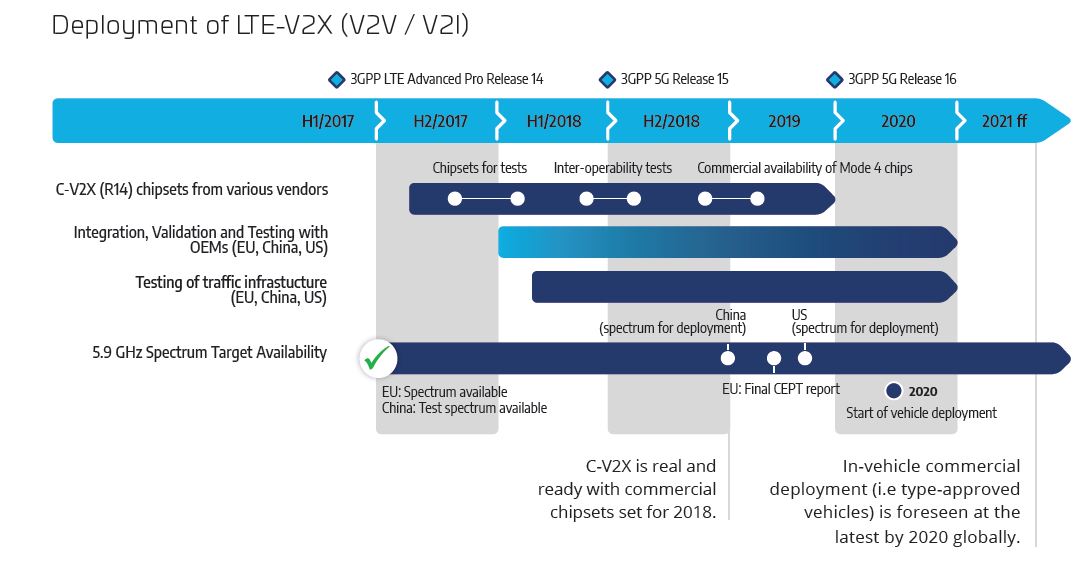
It is with this cooperation, collaboration, and commitment that 5GAA members continue to work to ensure that C-V2X technology is tested, validated, and commercially available in vehicles in 2020.

Socio-economic benefits of cellular vehicle-to-everything could amount to 43 Billion Euros by 2035
Brussels, 05th December 2017 – The 5GAA today published a report, authored by independent telecoms, media and technology consultants Analysys Mason together with automotive consultancy SBD Automotive, which assesses the benefits of cellular vehicle to everything (C‑V2X) technology for delivery of vehicle-to-everything (V2X) communication. The report, which has a focus on the benefits of such solutions in Europe, uses qualitative evidence, and describes quantitative cost–benefit analysis that the consultants have undertaken, relating to deployment of C‑V2X.
Publication of the report coincides with policy development on V2X, and use of the 5.9GHz band, in the European Union, where the European Commission is currently undertaking a public consultation on deployment of cooperative intelligent transport systems (C‑ITS).
The study concludes that the deployment of C-ITS systems is beneficial at the European Union level. Net benefits that could be accrued in Europe are estimated to be in the range of EUR20 billion to EUR43 billion in 2035 (with the highest benefits coming from increased road safety, and traffic efficiency), across the four scenarios modelled.
The most favourable scenario of those modelled in the study (amounting to EUR 43 billion net benefits) is where the potential for rapid penetration and economies of scale for C-V2X is maximised and both C-V2X and the Wi-Fi Standard IEEE 802.11p are able to co-exist in the 5.9GHz spectrum band. Such benefits do not arise in a scenario where the use of IEEE 802.11p is mandated for C-ITS services, which would result in less than half these expected net benefits (EUR 20 billion).
The study also indicates benefits of C-V2X for the European market lie in its deployment flexibility, with the ability to provide coverage for both short range and wide area applications, and certainty of future evolution to 5G, potentially facilitating earlier deployment as well as after-market deployment (e.g. V2X services provided in vehicles via a smartphone or other after-market device with C-V2X connectivity).
Reduced infrastructure deployment costs are a further key benefit of C-V2X, from the potential to re-use existing mobile infrastructure, and thus leveraging cellular technology integration and economies of scale, rather than building independently operated roadside infrastructure.
Christoph Voigt, 5GAA Chairman comments: “C-V2X will be fundamental to the deployment of cooperative intelligent transport systems. The benefits highlighted is this report indisputably demonstrate that this technology will lead to major improvements in driving and road safety. It further highlights that the European Commission should take a technology neutral approach and not limit these benefits by mandating the use of the Wi-Fi standard IEEE 802.11p”
The socio-economic benefits study on C-V2X can be found here.
Separately, the 5GAA has also today published a study which carries out a quantitative analysis of LTE–V2X (PC-5) and IEEE 802.11p technologies for short-range ad hoc/direct communications in reducing fatalities and serious injuries caused by motoring accidents in the EU. The modelling underlying this report was peer-reviewed and validated by the technology and policy consultancy, Ricardo. The study find that LTE-V2X (PC5) outperforms 802.11p in reducing fatalities and serious injuries on the EU’s roads. The 5GAA’s study on an assessment of LTE-V2X (PC5) and 802.11p direct communications technologies for improved road safety in the EU can be found here.
About C-V2X
V2X allows vehicles to communicate with each other and the wider transport ecosystem. It will potentially complement on-board sensors by providing enhanced information (such as data from other vehicles) over a longer range.
C‑V2X is a technology developed by the Third Generation Partnership Project (3GPP) to deliver V2X services, using two modes of communication:
- a direct vehicle-to-vehicle mode (called ‘PC5’ in 3GPP specifications) and
- a network communications interface (called ‘Uu’ in 3GPP specifications) for vehicle-to-network (V2N) communication via existing mobile networks.
Download Press Release here.
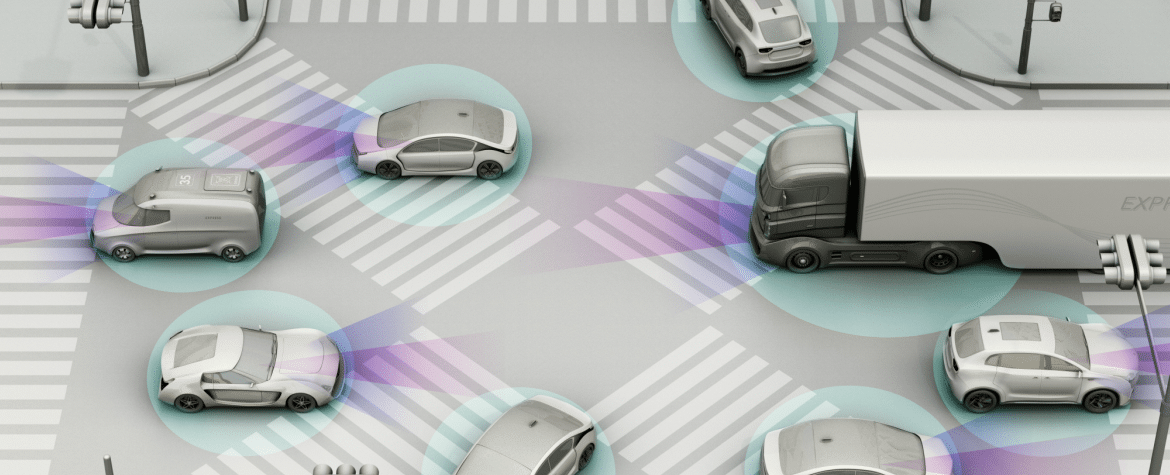
5GAA submitted comments to the National Highway Traffic Safety Administration
The 5G Automotive Association (5GAA) submitted comments to the National Highway Traffic Safety Administration (NHTSA) notice of proposed rulemaking (NPRM), “Federal Motor Vehicle Safety Standards; V2V Communications.” The proposed rule is to mandate new light-duty vehicles to be equipped with dedicated short range communications (DSRC).
The 5GAA is a new global cross-industry association of automotive, technology and telecommunications companies and includes 42 members, of which 8 are founding members (AUDI AG, BMW Group, Daimler AG, Ericsson, Huawei, Intel, Nokia, Qualcomm). Our mission is to enable communications solutions that address society’s connected mobility and road safety needs.
In our submission, 5GAA applauds the concept behind the rule, as V2V safety is important to our technology deployment mission. 5GAA urges NHTSA to not consider just the best technology of today, but also to consider the best technologies of tomorrow. Such an approach will promote innovation and competitive market-based outcomes, ensuring that American drivers and passengers benefit from the best and most advanced safety solutions available as technology evolves. Rigid technology mandates such as specifying DSRC, whether direct or de facto, freeze technology solutions to a past point in time. NS will significantly impede the innovation and evolution path for Vehicle-to-Vehicle (V2V) safety, and positions the US to lag behind the rest of the world in V2V communications specifically as well as V2X broadly. 5GAA elaborates on the following points:
Similar to DSRC, Cellular-V2X technology for V2V safety can transmit BSM in an ad hoc manner without cellular network coverage.
Cellular-V2X technology for V2V safety communications can operate without a SIM card and offers the tools to adopt, evolve or innovate any privacy-preserving security management system including SCRM.
Cellular-V2X technology for V2V safety benefits from a significantly larger link budget than DSRC (e.g., 8 dB at high speeds), corresponding to twice the range of DSRC and higher reliability.
Cellular-V2X technology for V2V safety can support up to 50 messages per second with less than 20 msec latency.
Cellular-V2X enables V2V, and for that matter Vehicle-to-Infrastructure (V2I), Vehicle-to-Pedestrian (V2P) and Vehicle-to-Network (V2N), safety applications to take advantage of the widespread cellular network coverage in the US.
5GAA notes also that the impending launch of 5G will only widen the performance gap between Cellular- V2X and DSRC.
5GAA believes that Rather than moving forward with the proposed regulation, NHTSA should instead undertake an updated, comprehensive technology neutral analysis of V2V solutions, including DSRC and Cellular-V2X, against the performance requirements in the NPRM. If this review indicates that regulatory action is necessary, the U.S. Department of Transportation should move forward with a technology neutral regulation that sets forth minimum V2V safety performance requirements only.