
5GAA: cellular technology is key enabler for smart mobility of the future
Industry association calls on European Commission to allow stakeholders to work collaboratively towards an agreement on the technology catalyzing the mobility of the future and warns against a “premature and cumbersome legislative decision”.
The 5G Automotive Association (5GAA) encourages the automotive, technology, and telecommunications industries and the European Commission to be ambitious when evaluating technologies for connected, autonomous vehicles. 5GAA is confident that cellular communication technology (C-V2X) has the most benefits when applied to connected, self-driving cars. It has provided its views to the Commission in a workshop and a letter with recommendations. Since its launch one year ago, over 50 industry leaders from the automotive, technology and telecommunications industries have teamed up in 5GAA to accelerate C-V2X technology development and its evolution to 5G-V2X for enhanced safety, automated driving and connected mobility.
Christoph Voigt, Chairman of 5GAA said, “5GAA is confident that cellular technology (including direct vehicle-to-vehicle communication at 5.9 GHz) has the potential to lead to the best outcomes in the long run. We are strongly relying on the European institutional support to put in place a regulatory framework allowing for an industry-driven and swift deployment of this technology. It is crucial to consider how the 5.9 GHz band, the “life blood” of wireless vehicle communication, can be used efficiently in the context of 5G technology evolution, road safety, and economic scalability. The automotive and transportation sectors, both public and private, are making significant investment commitments. Therefore, we are urging the European Commission to allow the ITS-G5 and C-V2X stakeholders to work together towards an agreement on the future of connected and automated cars, without a premature and cumbersome legislative decision.”
5GAA has recently provided its views to the Commission in a workshop and a letter with recommendations.
Christoph Voigt: “We should aim high enough when selecting the solutions to make connected, self-driving vehicles a reality. These are a catalyst to improving the quality of life globally through safer traffic, improved mobility, cleaner air in cities, and a better experience overall for drivers.”
Dino Flore, Director General of 5GAA adds, “Saving lives through improved road safety is obviously the primary positive outcome of deploying communication technology solutions. In addition, we should take into account other aspects when evaluating alternatives. We’re not only talking about reducing congestion and pollution but also optimizing the driving experience. It is our view that cellular technology, including direct vehicle-to-vehicle communication at 5.9 GHz, has the most upward potential in the long run.”
Helping vehicles “understand the environment they are navigating”
Launched in September 2016 by 8 founding members the 5GAA has in less than a year grown to include over 50 leaders from the automotive, technology and telecom industries who collaborate cross-industry on the future of transport. 5GAA’s mission is to develop, test, and promote communications solutions, initiate their standardization and accelerate their commercial availability and global market penetration. The objective is to address society’s connected mobility and road safety needs with applications such as autonomous driving, ubiquitous access to services and integration into smart city and intelligent transportation.
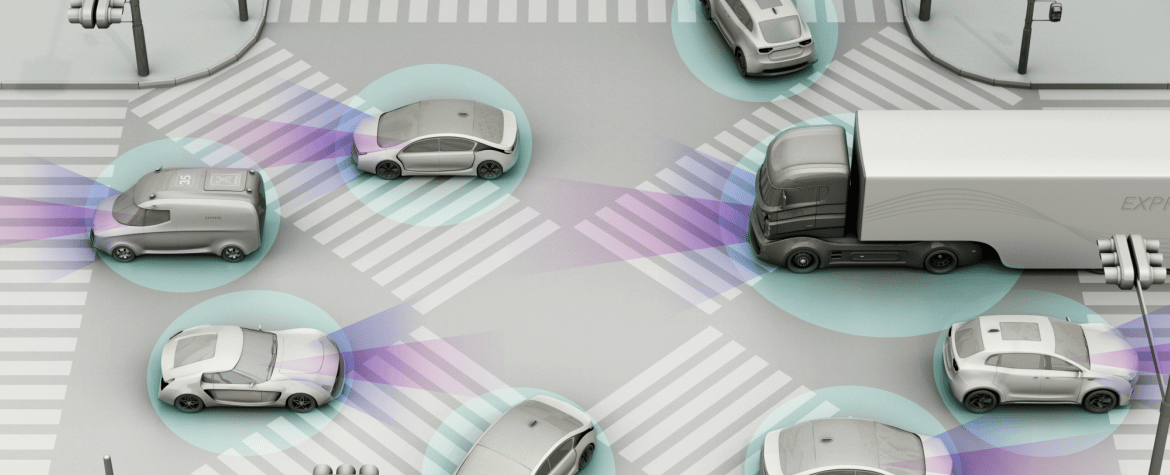
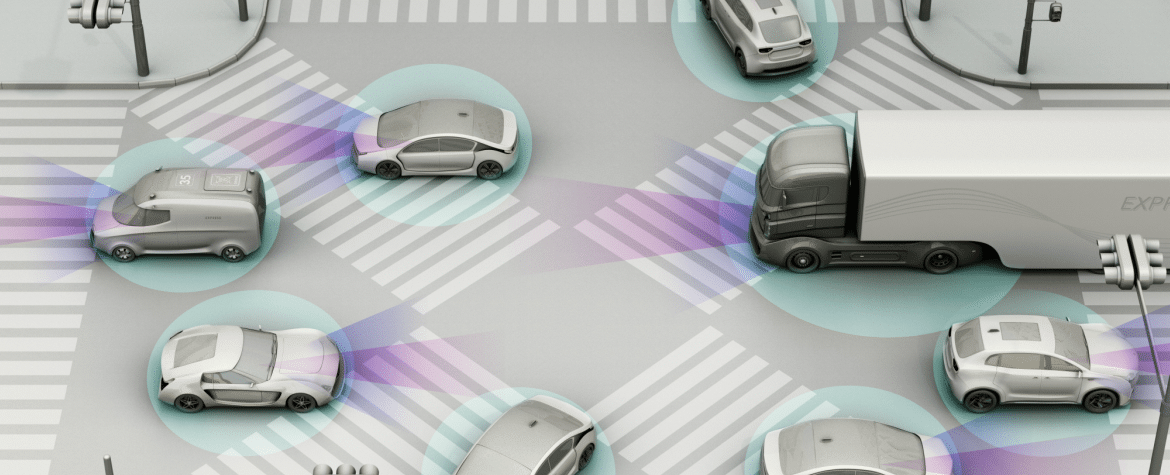
Connected vehicles use communication technology to not only communicate with other vehicles but also with road infrastructure, other road users such as pedestrians, and the Internet – e.g. to provide traffic updates and parking guidance. Use cases include collision warnings, “traffic jam ahead” warnings, green light optimal speed advisory, parking guidance, and assisting drivers in tackling treacherous traffic situations (e.g. turning left at a crossroads). Connected vehicles will eventually reduce pollution, and make traffic more efficient, reducing congestion in cities and improving the flow of goods and people.
Christoph Voigt explains, “Equipping cars with sensors and cameras is one thing, but imagine what is possible when cars use cellular technology to communicate with their entire ecosystem: other vehicles, road users, infrastructure, and central services that give real-time information.”
“It’s the difference between a car that is capable of seeing what is happening in its immediate surroundings and one that can use all available information to allow for a safer and more comfortable driving experience. After all, as drivers we do more than purely react to what’s in front of us. We listen to traffic info, we are aware of the area we’re navigating, and we are alert to traffic jams in rush hour. We use context to guide our driving.”
“This is exactly what cellular connectivity can enable vehicles to make easier, or even take over from us in the case of self-driving vehicles. Except that it will be faster and more accurate,” concludes Christoph Voigt.
-Ends
About 5GAA
The 5G Automotive Association (5GAA) is a global cross-industry organisation of companies from the automotive, technology and telecommunications industries (ICT), working together to develop end-to-end solutions for future mobility and transportation services. Created in 2016, the Association is comprised of over 50 members which mission
is to develop, test and promote communications solutions, initiate their standardization and accelerate their commercial availability and global market penetration to address societal need. For more information please visit 5gaa.org
Contacts
Robbe Libbrecht
FINN PR
robbe.libbrecht@finnpr.com
M +32 497 23 30 38
5GAA Marketing & Communications
marcom@5GAA.org
Coexistence of C-V2X and 802.11p at 5.9 GHz
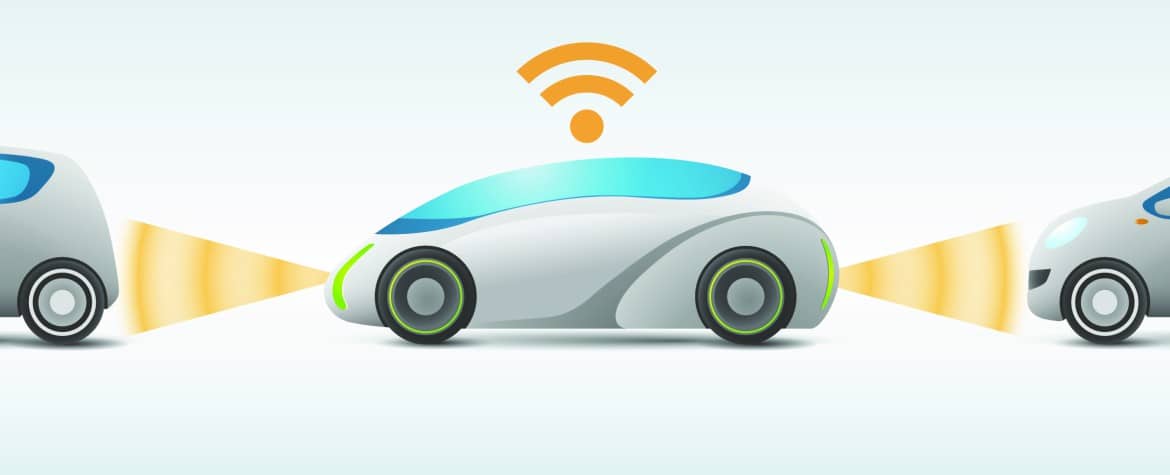
Today the European market has interest in two distinct technologies for Intelligent Transport Systems (ITS) and the provision of vehicle to vehicle communications; namely 3GPP LTE-V2X and IEEE 802.11p.
The technology-neutral nature of spectrum regulations in Europe means that both LTE-V2X1 and 802.11p have equal rights to operate in the 5.9 GHz band, subject to compliance with the relevant regulatory technical conditions.
It is not the objective of this paper to compare and contrast the relative merits of these two technologies, although the 5GAA is a proponent of LTE-V2X as today’s realisation of Cellular V2X (C-V2X), and as a platform to evolve towards 5G technologies.
Instead, in this paper, we address the issue of co-channel coexistence between the two technologies at 5.9 GHz. We note that this is a critically important issue for the ITS industry, and that it is beneficial for all stakeholders to arrive at a proportionate, fair, and pragmatic solution to resolve this matter, and allow the market to proceed with the deployment of ITS equipment.
To this end, we propose a solution – to be agreed among the stakeholders – to be implemented in up to three steps. In all steps, each of C-V2X and 802.11p can operate safety-related ITS services free from co-channel interference from the other technology. The difference between the distinct steps lies in the overall usage efficiency of the spectrum resource: In the short-term, we propose to allocate distinct 10 MHz channels at 5875-5905 MHz to each of the two technologies, while the final configuration will apply full sharing of all available channels across the two technologies. The latter will require further studies on appropriate sharing mechanisms and thus cannot be provided from the beginning.
We further explain how such a first step partitioning of 5875-5905 MHz might be complemented by additional technical mechanisms which would – where needed – allow each of C-V2X and 802.11p to access the remaining 20 MHz in a fair manner, with a reduced risk of harmful co-channel interference.
We believe that the proposed approach would greatly facilitate the coexistence of C-V2X and 802.11p at 5.9 GHz, and we would encourage stakeholders to further develop this proposal and come to a speedy agreement on this for the benefit of the European ITS industry as a whole.
Read the full paper here.
5GAA submitted comments to the National Highway Traffic Safety Administration
The 5G Automotive Association (5GAA) submitted comments to the National Highway Traffic Safety Administration (NHTSA) notice of proposed rulemaking (NPRM), “Federal Motor Vehicle Safety Standards; V2V Communications.” The proposed rule is to mandate new light-duty vehicles to be equipped with dedicated short range communications (DSRC).
The 5GAA is a new global cross-industry association of automotive, technology and telecommunications companies and includes 42 members, of which 8 are founding members (AUDI AG, BMW Group, Daimler AG, Ericsson, Huawei, Intel, Nokia, Qualcomm). Our mission is to enable communications solutions that address society’s connected mobility and road safety needs.
In our submission, 5GAA applauds the concept behind the rule, as V2V safety is important to our technology deployment mission. 5GAA urges NHTSA to not consider just the best technology of today, but also to consider the best technologies of tomorrow. Such an approach will promote innovation and competitive market-based outcomes, ensuring that American drivers and passengers benefit from the best and most advanced safety solutions available as technology evolves. Rigid technology mandates such as specifying DSRC, whether direct or de facto, freeze technology solutions to a past point in time. NS will significantly impede the innovation and evolution path for Vehicle-to-Vehicle (V2V) safety, and positions the US to lag behind the rest of the world in V2V communications specifically as well as V2X broadly. 5GAA elaborates on the following points:
Similar to DSRC, Cellular-V2X technology for V2V safety can transmit BSM in an ad hoc manner without cellular network coverage.
Cellular-V2X technology for V2V safety communications can operate without a SIM card and offers the tools to adopt, evolve or innovate any privacy-preserving security management system including SCRM.
Cellular-V2X technology for V2V safety benefits from a significantly larger link budget than DSRC (e.g., 8 dB at high speeds), corresponding to twice the range of DSRC and higher reliability.
Cellular-V2X technology for V2V safety can support up to 50 messages per second with less than 20 msec latency.
Cellular-V2X enables V2V, and for that matter Vehicle-to-Infrastructure (V2I), Vehicle-to-Pedestrian (V2P) and Vehicle-to-Network (V2N), safety applications to take advantage of the widespread cellular network coverage in the US.
5GAA notes also that the impending launch of 5G will only widen the performance gap between Cellular- V2X and DSRC.
5GAA believes that Rather than moving forward with the proposed regulation, NHTSA should instead undertake an updated, comprehensive technology neutral analysis of V2V solutions, including DSRC and Cellular-V2X, against the performance requirements in the NPRM. If this review indicates that regulatory action is necessary, the U.S. Department of Transportation should move forward with a technology neutral regulation that sets forth minimum V2V safety performance requirements only.

5GAA comments to the NHTSA on notice of proposed rulemaking
The 5G Automotive Association (5GAA) supports the goal of the National Highway Traffic Safety Administration (NHTSA) to increase motor vehicle safety through the use of communications solutions. 5GAA is a new global cross-industry association of automotive, technology and telecommunications companies. 5GAA includes 42 members, of which 8 are founding members (AUDI AG, BMW Group, Daimler AG, Ericsson, Huawei, Intel, Nokia, Qualcomm). Our mission is to enable communications solutions that address society’s connected mobility and road safety needs.
5GAA, like the U.S. Department of Transportation (USDOT) and National Highway Traffic Safety Administration (NHTSA), values safety first and foremost; this is what makes the immediate proceeding so important to us and why we are moved to offer the sum of our expertise in providing comments. To realize the full safety benefits of vehicle communications, NHTSA’s guiding principle must be one that allows for not only the best technology of today but also for the best technologies of tomorrow. Such an approach will promote innovation and competitive market-based outcomes, ensuring that American drivers and passengers benefit from the best and most advanced safety solutions available as technology evolves. This is particularly essential for regulations touching the communications industry, which has witnessed rapid technological innovation over the past two decades – with 4G cellular prevalent today and 5G on the horizon. By contrast, rigid technology mandates, whether direct or de facto, freeze technology solutions to a past point in time. With the communications market rapidly evolving, any technology NHTSA mandates today will be outdated by the time the mandate goes into effect, if not already outdated. This will significantly impede the innovation and evolution path for Vehicle-to-Vehicle (V2V) safety, and positions the US to lag behind the rest of the world in V2V communications specifically as well as V2X broadly.
For this reason, 5GAA respectfully cannot support the proposed V2V technology mandate predicated on the use of dedicated short-range radio communications (DSRC), a technology originally designed in the 1990s. The proposed direct technology-specific mandate, by definition, is on its face not technology neutral. Similarly, the one-way interoperability requirement in the alternate “if equipped” proposal, where “alternative” technologies would be required to be backwards interoperable with DSRC, is flawed in that it would impose no reverse interoperability requirement on DSRC to ensure backwards interoperability with other technology solutions, including today’s Cellular Vehicle-to-Everything (Cellular-V2X) solutions for V2V safety.
In effect, the “path” for compliance is not a path at all, but instead a dead-end for other technologies, as it creates a non-level playing field in the US V2V market.The 5G Automotive Association (5GAA) supports the goal of the National Highway Traffic Safety Administration (NHTSA) to increase motor vehicle safety through the use of communications solutions. 5GAA is a new global cross-industry association of automotive, technology and telecommunications companies.
5GAA includes 42 members, of which 8 are founding members (AUDI AG, BMW Group, Daimler AG, Ericsson, Huawei, Intel, Nokia, Qualcomm). Our mission is to enable communications solutions that address society’s connected mobility and road safety needs.5GAA, like the U.S. Department of Transportation (USDOT) and National Highway Traffic Safety Administration (NHTSA), values safety first and foremost; this is what makes the immediate proceeding so important to us and why we are moved to offer the sum of our expertise in providing comments. To realize the full safety benefits of vehicle communications, NHTSA’s guiding principle must be one that allows for not only the best technology of today but also for the best technologies of tomorrow. Such an approach will promote innovation and competitive market-based outcomes, ensuring that American drivers and passengers benefit from the best and most advanced safety solutions available as technology evolves. This is particularly essential for regulations touching the communications industry, which has witnessed rapid technological innovation over the past two decades – with 4G cellular prevalent today and 5G on the horizon. By contrast, rigid technology mandates, whether direct or de facto, freeze technology solutions to a past point in time. With the communications market rapidly evolving, any technology NHTSA mandates today will be outdated by the time the mandate goes into effect, if not already outdated. This will significantly impede the innovation and evolution path for Vehicle-to-Vehicle (V2V) safety, and positions the US to lag behind the rest of the world in V2V communications specifically as well as V2X broadly.
For this reason, 5GAA respectfully cannot support the proposed V2V technology mandate predicated on the use of dedicated short-range radio communications (DSRC), a technology originally designed in the 1990s. The proposed direct technology-specific mandate, by definition, is on its face not technology neutral. Similarly, the one-way interoperability requirement in the alternate “if equipped” proposal, where “alternative” technologies would be required to be backwards interoperable with DSRC, is flawed in that it would impose no reverse interoperability requirement on DSRC to ensure backwards interoperability with other technology solutions, including today’s Cellular Vehicle-to-Everything (Cellular-V2X) solutions for V2V safety. In effect, the “path” for compliance is not a path at all, but instead a dead-end for other technologies, as it creates a non-level playing field in the US V2V market.
Read the full paper here.
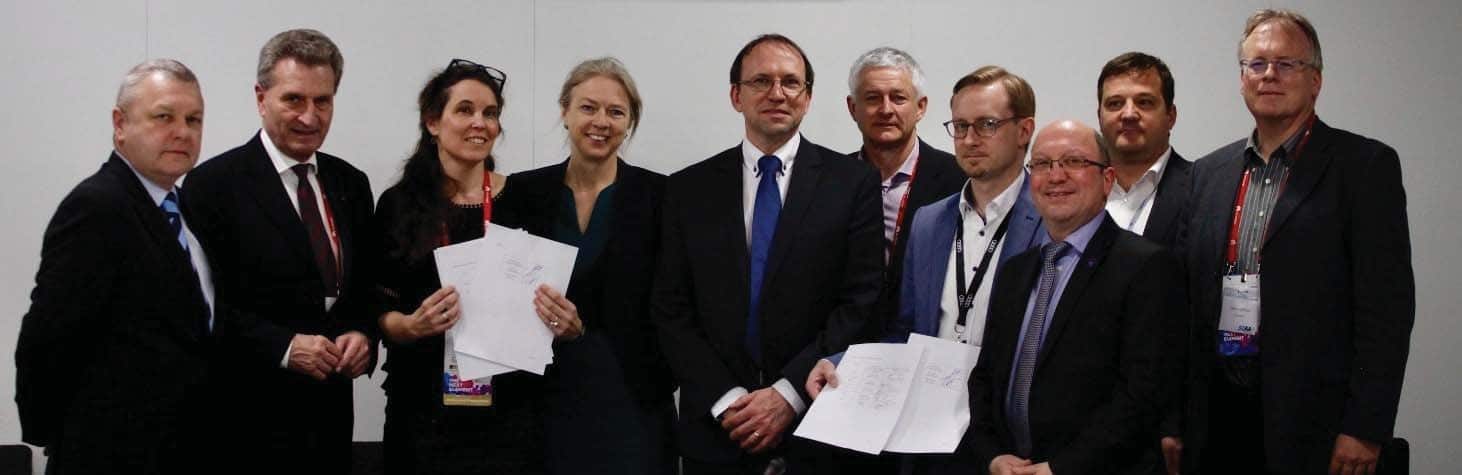
5G Automotive Association and European Automotive Telecom Alliance sign a partnership MoU
(Barcelona, February 27, 2017). The 5G Automotive Association (5GAA) and the European Automotive Telecom Alliance (EATA) have signed a Memorandum of Understanding. The aim of this partnership is to foster cooperation in the field of connected and autonomous driving solutions as well as standardisation, spectrum and related use cases.
The 5GAA and EATA are dedicated to prioritising the use cases identified by the two organisations in order to identify the technical requirements that need to be addressed, both in the short and in the long term. In order to better support standards for connected and automated driving, standardisation prioritisation for standards bodies such as ETSI, 3GPP and SAE International is necessary as well.
It’s beyond dispute that promoting spectrum-related issues (V2X), agreement on usage modalities of certain bands, security, and privacy, as well as vehicle safety requirements to be supported by both mobile network operators (MNOs) and vehicle manufacturers (OEMs) will need to be addressed jointly. Last but not least, the agreement between MNOs and OEMs is also key to developing business models and aligning the timelines of both industries.
The 5GAA includes 33 members, of which 8 are founding members (AUDI AG, BMW Group, Daimler AG, Ericsson, Huawei, Intel, Nokia and Qualcomm Incorporated). The 5GAA is a multi-industry association to develop, test and promote communications solutions, initiate their standardization and accelerate their commercial availability and global market penetration to address the societal need. Focus areas are the development, testing and promotion of communications solutions, the initiation of their standardization and the acceleration of their commercial availability and global market penetration to address society’s connected mobility and road safety needs with applications such as autonomous driving, ubiquitous access to services and integration into smart city and intelligent transportation.
EATA is comprised of six leading associations and 38 companies at present, including telecom operators, vendors, automobile manufacturers and suppliers for both cars and trucks. The main objective of the Alliance is to promote the wide deployment of hybrid connectivity for connected and automated driving in Europe. EATA’s first concrete step is the advancement of a ‘pre-deployment project’ aimed at testing the performance of hybrid communication required for automated driving under real traffic situations.
Furthermore, EATA seeks to identify and address service and technology roadmaps, safety and security
needs, as well as regulatory and business issues. The project will tackle cross-border interoperability, including digital and physical infrastructure, as well as vehicle localisation issues.
“The revolution that connected and automated driving is going to bring about at the societal level is already shaping Europe’s automotive and telecoms sectors at a rapid pace. This Memorandum of Understanding with the 5GAA not only brings the different industry partners closer together but also reinforces the European Commission’s strategy on cooperative, connected and automated mobility that was launched at the end of 2016. Car connectivity and automation will require a mix of communications technologies, but it is clear that 5G technology can become a key enabler of Europe’s digital highways. Together, EATA and 5GAA will contribute to reinventing the driving experience.”
Erik Jonnaert, Chairman of the EATA Steering Committee
“5GAA was created to connect telecom industry and vehicle manufacturers to develop end-to-end solutions for future mobility and transportation services. We look forward to working with EATA to define the requirements of C-V2X and to create a successful V2X ecosystem.”
Christoph Voigt, Chairman of the 5GAA Board

The 5GAA welcomes Elaine Chao as US Secretary of Transportation
Coincident with her confirmation, the 5GAA Board convened this week in California to support the development and deployment of cellular V2X solutions that evolve into 5G.
These solutions enable vehicle connectivity, safety services, and automated driving. The Board notes that our mission to enable safety and efficient travel meets the vision expressed by Secretary Chao. We congratulate the USDOT Secretary and are encouraged by her support of connected cars and autonomous vehicles.
5GAA was created to bridge automotive and communication industries in order to develop, test and promote connected mobility solutions, initiate their standardization and accelerate the commercial availability and global market penetration.

5GAA Response to the Draft RSPG Opinion on Spectrum Aspects of Intelligent Transportation Systems
The 5G Automotive Association (5GAA) is pleased with the opportunity to provide an industry consortium view on the RSPG’s draft opinion on spectrum aspects of ITS. Spectrum for ITS is important to 5GAA, as our association was founded on the prospect that direct communications between vehicles and the roadside units and pedestrians is critical to road safety and automated driving.
We are committed to the realisation that direct 4G and eventually 5G communications will supplement the ever-increasing coverage and capabilities of wide area cellular coverage. Consequently, with the proviso that Cellular V2X (C-V2X) technologies gain fair access to spectrum harmonised for ITS, the 5GAA is working diligently on technology, standards, and deployment models to considerably – even transformational – to enhance safety and mobility on roads and railways in Europe.
We see a great promise by integrating cellular systems in addressing the totality of transport communication requirements, fulfilling not only the important short-range ad hoc need but at the same time addressing the manifold communication links necessary for seamless multi-modal connectivity.
Read the full publication here.

LG, Ford, Verizon, Denso and Gemalto join the 5G Automotive Association
5GAA (www.5gaa.org) welcomes LG, Ford, Verizon, Denso and Gemalto as new members of the association.
“We are very pleased that LG, Ford, Verizon, Denso and Gemalto have joined the association. With their global footprint and diverse expertise across the communications and automotive ecosystems, these companies will contribute to the definition and development of next generation connected mobility and automated vehicle solutions” Dino Flore, Director General of 5GAA, said.
Kookyeon Kwak, Executive Vice President, Head of LG’s Advanced Standard R&D Lab, said, “Cellular communication will play a pivotal role to meet the requirement of safety, convenience, and infotainment for future smart cars. The trend is now being accelerated by the completion of LTE-V2X, the first cellular- based vehicle-communication standard. As a manufacturer in mobile communication and vehicle component areas, LG Electronics would like to contribute to 5GAA for connecting communication and automotive industries”.
“We are excited to work together with other automotive and technology providers to define a future that envisions new and empowering mobility services and solutions. We see the 5GAA as a key enabler to the development of a sustainable connected vehicle ecosystem.” Don Butler, Executive Director of Connected Vehicle and Services at Ford Motor Company, said.
DENSO CTO for the European region, Masato (Max) Nakagawa, commented: “Extending DENSO’s global efforts in the area of vehicular connectivity is strategically aligned to our policy ‘Protecting Lives, Preserving the Planet, and Preparing a Bright Future for Generations to Come’. Reinforcing this
direction, DENSO AUTOMOTIVE Deutschland GmbH has decided to join the 5GAA. We are proud to be accepted as 5GAA member and are looking forward to collaborating in the 5GAA. DENSO considers this engagement viable to complement our long term ongoing global support of 700MHz/5.9GHz V2X safety communication. 5GAA provides the environment for the cross-industry collaboration required to define corresponding future mobile communication systems. In collaboration with the 5GAA partners we plan to explore, define and develop multi-spectral connectivity to support future mobility demands, especially in the area of connected and automated driving.”
“Gemalto is thrilled to join 5GAA and work within this prestigious group of global leaders to enable the world of new mobility that will revolutionize the automotive sector,” says Frederic Vasnier, EVP
Embedded Software and Products. “Gemalto has demonstrated its unrivaled expertise to ensure simple, seamless and ubiquitous connectivity with robust security mechanisms inside the vehicle, between vehicles and with the connected ecosystem of devices, pedestrians, and the cloud.”
5GAA was created to bridge automotive and communication industries in order to develop, test and promote connected mobility solutions, initiate their standardization and accelerate the commercial availability and global market penetration.
Since its inception, 5GAA has been experiencing rapid expansion to include key players with a global footprint in the communication and automotive industries, including car manufacturers, tier-1 suppliers, chipset/communication system providers, mobile operators and infrastructure vendors.
To achieve its long-term goals, the association is creating five Working Groups to address the following areas of work: Use Cases and Technical Requirements; System Architecture and Solution Development; Evaluation, Testbeds and Pilots; Standard & Spectrum; Business Models and Go-To-Market Strategies. In addition, the board is planning the needed policy and advocacy efforts to join the relevant discussions in this space with different regulators, policymakers, and administrations around the world.
Telecommunications and automotive players form global cross-industry 5G Automotive Association
AUDI AG, BMW Group, Daimler AG, Ericsson, Huawei, Intel, Nokia and Qualcomm Incorporated team up to evolve, test and promote communications solutions for connected mobility.
Next generation mobile networks will help to address society’s mobility and road safety needs with applications like connected infotainment features and connected automated driving.
The association is open to further partners.
Munich, September 27, 2016 – Today AUDI AG, BMW Group, Daimler AG, Ericsson, Huawei, Intel, Nokia and Qualcomm Incorporated, announce the formation of the “5G Automotive Association”.
The association will develop, test and promote communications solutions, support standardization and accelerate commercial availability and global market penetration. The goal is to address society’s connected mobility and road safety needs with applications such as connected automated driving, ubiquitous access to services and integration into smart cities and intelligent transportation.
With next generation 5G mobile networks and continued strong LTE evolution, which includes Cellular Vehicle-to-everything (C-V2X) communication, the focus of information and communication technologies (ICT) shifts towards the Internet of Things and the digitalization of industries.
As an evolution to today’s networks, next generation mobile networks are expected to handle much more data volume, connect many more devices, significantly reduce latency and bring new levels of reliability. For example, 5G can better support mission-critical communications for safer driving and will further support enhanced vehicle-to-everything communications and connected mobility solutions.
These new solutions bring new technological and business opportunities for both the automotive and ICT industries, and the members of the association will closely collaborate to realize the full potential together. The association will address key technical and regulatory issues, leveraging next generation mobile networks and integrating vehicle platforms with connectivity, networking and computing solutions. The main activities of the association include:
- Defining and harmonizing use cases, technical requirements and implementation strategies.
- Supporting standardization and regulatory bodies, certification and approval processes.
- Addressing vehicle-to-everything technology requirements, such as wireless connectivity, security, privacy, authentication, distributed cloud architectures and more.
- Running joint innovation and development projects leading to integrated solutions, interoperability testing, large scale pilots and trial deployments.
The 5G Automotive Association is a global association and welcomes more partners who are engaged in the automotive industry, the ICT industry or the broader eco-system and value chain for vehicle and road transportation systems. Several companies have already expressed strong support for the 5GAA and declared their intent to join the Association in the near future.
Christoph Voigt is appointed Chairperson of the Board and Dino Flore is appointed Director General of the Association.
The Association will support and work in close cooperation with national and regional initiatives, such as the European Connected & Automated Driving Pre-Deployment Project.

SAE WCX 2019
WCX™ World Congress Experience is a mobility industry’ annual event taking place from 9 to 11 April 2019 for forward-thinking engineers, executives, OEMs, suppliers, decision-makers, disruptors and the entire spectrum of the mobility-engineering field. Experience three days of expert-led technical education, peer-to-peer networking, a technology-driven exhibit floor and global mobility solutions that are shifting the marketplace. From IoT, Big Data and connectivity to automated and unmanned vehicles, and from safety, blockchain and powertrain to sustainability and cybersecurity, WCX covers every corner of the industry.
The 5G Automotive Association (5GAA) will be present at SAE WCX and be involved in different sessions on Wednesday 10 April 2019:
– C2C “Cloud and Car Enabled Digital Services” panel discussion with CTO Maxime Flament – 2:10 to 3:20 pm
– Learning Lab C-V2X use on the road for safety and efficiency – Exhibition Floor, 3:30 to 3:50 pm
– Learning Lab C-V2X momentum and commercial readiness – Exhibition Floor, 4:00 to 4:20 pm
You can also find 5GAA and meet up at our lounge located in the Connect 2 Car Pavilion, n°1307 (map available here).
For more information, please contact marcom@5gaa.org