
Europe’s leadership in connected and automated driving depends on technology-neutral, innovation-oriented policies
Dear Minister,
Serious concern has arisen in the telecoms and transport industries over the restrictive content of the forthcoming Delegated Act on Cooperative Intelligent Transport Systems (C-ITS). Although it is close to completion, the text still does not lay down the technology-neutral framework urged by the CEOs of 24 members of our associations (signatories included BMW, Daimler, Deutsche Telekom, Ericsson, Ford, Groupe PSA, Nokia, Telefonica and Vodafone) in their letter to President Juncker in July 2018[1].
Despite a welcome acknowledgement of cellular technologies, the draft Delegated Act only contemplates the Cellular Vehicle-to-Everything (C-V2X) technology family in the framework of a future revision of the Act in up to three years’ time, with no guarantee to date that a level playing field will be ensured with respect to compatibility and interoperability requirements.
The current draft effectively endorses Wi-Fi based communication (known as “ITS-G5”) as the baseline technology for connected cars in the EU, at the expense of a mature and standardised alternative[1]: LTE-V2X (which is the current realisation of C-V2X). We believe this contradicts the principle of technology neutrality and will prove to be a very costly missed opportunity for Europe.
Indeed, LTE-V2X is regarded internationally as the foundation stone which will pave the way towards the most advanced safety services enabled by 5G, in particular for vulnerable road users. Only C-V2X offers such a clear evolutionary roadmap starting with LTE-V2X today and evolving into 5G-V2X tomorrow, making it the only future-proof technology.
A decision exclusively favouring Wi-Fi technology today should thus be carefully considered. It would bear negative long-term consequences for Europe, since Wi-Fi offers no prospect of compatibility with 5G. A costly migration path would be required, resulting in significant sunk costs. It would stall C-V2X roll-out and investments in 5G for automotive and alongside the road network would be adversely affected.
LTE-V2X must be allowed to succeed as the first building block en route to the full realisation of 5G potential, ensuring the competitiveness of key industry verticals such as automotive as well as the telecom sector. A wrong decision at this critical juncture would put in jeopardy Europe’s leadership and investment in 5G.
Connected vehicle and roadside infrastructure technology is evolving at a very fast pace. LTE-V2X field tests and deployment projects are under way in many EU countries as well as globally with the first market introductions foreseen in 2019, within the same timeframe as the Delegated Act publication.
Leveraging all the previous work from European standardisation organisations, C-V2X offers unique benefits as a single technology platform, combining both direct short-range (not requiring network coverage or a subscription) and long-range modes.
It will, unhindered, significantly improve road safety in Europe through direct vehicle-to-vehicle, vehicle-to-infrastructure and, vehicle-to-network communication, but also provide new vehicle-to-pedestrian applications owing to its unique smartphone integration capacity, thereby reducing vulnerable road users’ casualties (43% of EU road fatalities in 2017)[1].
C-V2X also provides the fastest way to reach large-scale penetration of C-ITS: all new vehicles are expected to feature embedded cellular connectivity by 2021-2022. Many OEMs have already deployed some Day 1 C-ITS services using existing 3G/4G networks and LTE-V2X long-range mode.
We strongly believe that Europe should capitalise on these early deployments and would gain substantial economic benefits by maximising the synergies between transport and telecom network infrastructures. Today, LTE network population coverage averages 97.9% in Europe (89.9% of rural EU households) with a rapid year-on-year increase[2], whereas ITS-G5 deployment has not yet begun.
In addition, consumer 5G is rapidly moving from trials to early commercialisation. Between 2018 and 2020, 48 countries will launch 5G mobile services across North America, Europe, the Middle East and Asia-Pacific.[3]
This is not about promoting individual companies that are about to launch their respective products. It is about creating the right framework which will support Europe to make the best technology choices in the future, to achieve our common objective: making the roads safer for all.
We encourage you to support a truly technology neutral approach to C-ITS through a Delegated Act inclusive of LTE-V2X, as it holds the promise of better safety. C-V2X is close to deployment in every world region as our entire ecosystem has stepped up its efforts to be market-ready in the upcoming months. However, it is absolutely critical for our industries that the EU regulatory framework provides sufficient legal certainty in order to pursue and accelerate current roll-out plans for C-V2X.
Afke Schaart Johannes Springer Lise Fuhr
VP and Head of Europe, Director General, 5GAA Director General, ETNO
Russia and CIS, GSMA
[1] CEO Letter to President Juncker on connected car legislation
[2] Cf. Annex to this document
[3] Road Safety in the EU – Trends, statistics and main challenges
[4] Broadband Coverage in Europe 2017, European Commission
[5] GSMA intelligence
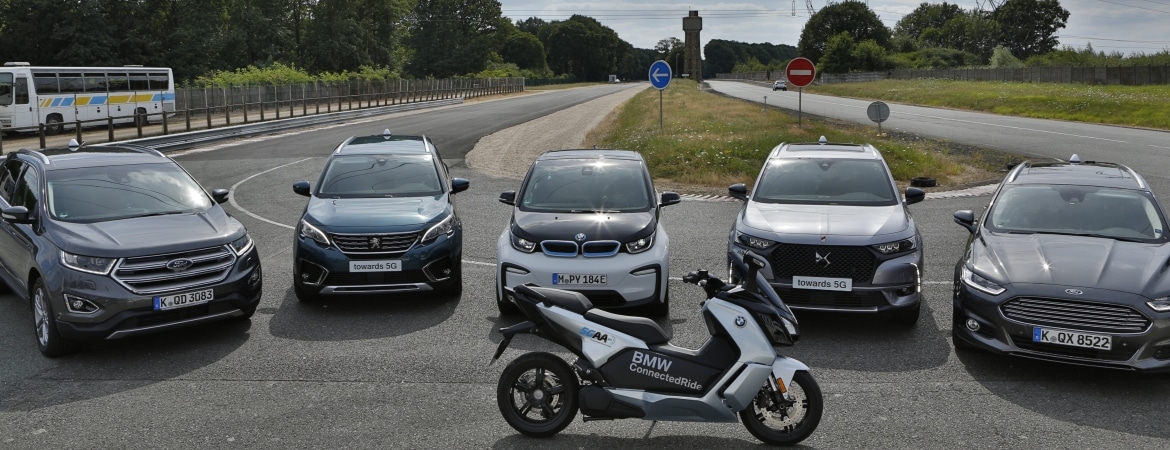
5GAA, BMW Group, Ford and Groupe PSA Exhibit First European Demonstration of C-V2X Direct Communication Interoperability Between Multiple Automakers
- Companies team up with Qualcomm and Savari to showcase C-V2X’s advanced performance for safety, traffic efficiency, and autonomy
- Exhibition includes communication between vehicles, motorcycles, and infrastructure, showing commercial readiness for industry deployments as early as 2020
Downloadable Resources |
Photos |
Infographic |
Soundbite Video Clip |
PARIS — July 11, 2018 – The 5G Automotive Association (5GAA), the BMW Group, Ford Motor Company (NYSE: F), and Groupe PSA — in association with Qualcomm Technologies, Inc., a subsidiary of Qualcomm Incorporated, and Savari, Inc. — announced today Europe’s first live demonstration of C-V2X direct communication technology operating across vehicles from multiple auto manufacturers. The live demonstration also featured a live showcase of C-V2X direct communication technology operating between passenger cars, motorcycles, and roadside infrastructure. C-V2X is a global solution for vehicle-to-everything (V2X) communication in support of improved automotive safety, automated driving and traffic efficiency.
The demonstration exhibited the road safety and traffic efficiency benefits of using C-V2X for Vehicle-to-Vehicle (V2V) collision avoidance, as well as Vehicle-to-Infrastructure (V2I) connectivity to traffic signals and Traffic Management Centers (TMC). C-V2X was operated using real-time direct communications over ITS spectrum and demonstrated its ability to work without cellular network coverage, and underscores its commercial readiness for industry deployment as early as 2020. Superior performance and cost-effectiveness compared to other V2X technologies, along with forward-compatibility with 5G, make C-V2X direct communications a preferred solution for C-ITS applications.
Six demonstrations were shown including Emergency Electronic Brake Light, Intersection Collision Warning, Across Traffic Turn Collision Risk Warning, Slow Vehicle Warning and Stationary Vehicle Warning, Signal Phase and Timing / Signal Violation Warning and Vulnerable Road User (pedestrian) Warning. The vehicles involved included two-wheel e-scooters provided by BMW Group, and automotive passenger vehicles provided by Ford, Groupe PSA, and BMW Group, all of which were equipped with C-V2X direct communication technology using the Qualcomm® 9150 C-V2X chipset solution. V2X software stack and application software, along with roadside infrastructure, were provided by industry leader, Savari.
C-V2X is globally supported by a broad automotive ecosystem, which includes the fast growing 5GAA organization. The 5GAA involves over 90 global members comprised of many leading automakers, Tier-1 suppliers, software developers, mobile operators, semiconductor companies, test equipment vendors, telecom suppliers, traffic signal suppliers and road operators.
Cellular modems will be key to the C-V2X deployment in vehicles to support telematics, eCall, connected infotainment and delivering useful driving/traffic/parking information. As C-V2X direct communication functionality is integrated into the cellular modem, C-V2X solutions are expected to be more cost-efficient and economical over competing technologies, and benefit from accelerated attach rates. C-V2X direct communication field validations are currently underway in Germany, France, Korea, China, Japan and the U.S.
C-V2X currently stands as the only V2X technology based on globally recognized 3rd Generation Partnership Project (3GPP) specifications, with ongoing evolution designed to offer forward compatibility with 5G. C-V2X also leverages and reuses the upper layer protocols defined by the automotive industry, including the European Telecommunications Standards Institute (ETSI) organization. C-V2X includes two complementary transmission modes:
- Direct communication as shown in this demonstration for V2V and V2I use cases
- V2N network communication, which leverages mobile operators for connectivity and delivers cloud-based services, including automated crash notification (ACN, as mandated by eCall), hazard warnings, weather conditions, green light optimal speed advisory (GLOSA), parking spot location, and remote tele-operation to support automated driving, to name a few.
“This demonstration builds on the successful C-V2X showcase we organised with our members Audi, Ford and Qualcomm in Washington DC in April” said Christoph Voigt, Chairman of 5GAA.
“We are excited to witness the growing momentum behind this life-saving technology and to see our members working together to deploy C-V2X, and to make it hit the road as soon as possible.”
“The BMW Group introduced the first C-ITS use cases already in 2013 with the market introduction of the BMW i3. Today most of envisaged C-ITS use-cases are already institutionalized. With the implementation of C-V2X, the BMW Group accomplishes the last set of the puzzle with a practical path to C-ITS showing quick benefits,” said Christoph Grote, Senior Vice President Electronics, BMW Group.
“With its ability to safely and securely connect vehicles, along with its evolution into 5G, C-V2X is integral to Ford’s vision for future transportation in which all cars and infrastructure talk to each other,” said Thomas Lukaszewicz, Manager Automated Driving, Ford of Europe. “We are very encouraged by preliminary test results in Europe and elsewhere which support our belief that C-V2X direct communications has superior V2X communication capabilities.”
“We’re moving forward with seamless communication between cars and their environment for enhancing road safety, as well as our customers’ safety,” said Carla Gohin, Group PSA’s Vice President for Research and Advanced Engineering. “Following the first European C-V2X direct communications demonstration we hosted with Qualcomm Technologies last March, we’re pleased to work with leading automotive and technology companies today to highlight that C-V2X interoperability is a reality.”
“This demonstration of interoperability between multiple automakers is not only another milestone achieved towards C-V2X deployment but also further validates the commercial viability and global compatibility of C-V2X direct communications for connected vehicles,” said Enrico Salvatori, senior vice president & president, Qualcomm Europe, and MEA. “We look forward in continuing to work alongside leaders in the automotive industry, like the 5GAA, BMW Group, Ford, Groupe PSA and Savari, to help advance the automotive industry’s shift towards a safer, connected and more autonomous future.”
“As one of the V2X pioneers, our company is extremely pleased to continue to help enable the next step in the V2X revolution that we helped start back in 2008,” said Ravi Puvvala, CEO of Savari. “For the last year and a half, the Savari team has worked diligently alongside the dedicated C-V2X engineers in the 5GAA partnership. The resulting string of increasingly impressive demonstrations is continuing to convince the world that C-V2X will soon be deployed around the world.”
About 5GAA
The 5G Automotive Association (5GAA) is a global cross-industry organization of companies from the automotive, technology and telecommunications industries (ICT), working together to develop end-to-end solutions for future mobility and transportation services.
Created in 2016, the Association is comprised of over 90 members whose mission is to develop, test and promote communications solutions, initiate their standardization and accelerate their commercial availability and global market penetration, to address society’s connected mobility and road safety needs with applications such as automated driving, ubiquitous access to services and integration into smart city and intelligent transportation. For more information, visit 5GAA’s website, LinkedIn and Twitter pages.
About the BMW Group
With its four brands BMW, MINI, Rolls-Royce and BMW Motorrad, the BMW Group is the world’s leading premium manufacturer of automobiles and motorcycles and also provides premium financial and mobility services. The BMW Group production network comprises 30 production and assembly facilities in 14 countries; the company has a global sales network in more than 140 countries. In 2017, the BMW Group sold over 2,463,500 passenger vehicles and more than 164,000 motorcycles worldwide. The profit before tax in the financial year 2017 was € 10.655 billion on revenues amounting to € 98.678 billion. As of 31 December 2017, the BMW Group had a workforce of 129,932 employees. The success of the BMW Group has always been based on long-term thinking and responsible action. The company has therefore established ecological and social sustainability throughout the value chain, comprehensive product responsibility and a clear commitment to conserving resources as an integral part of its strategy.
Facebook: https://www.facebook.com/BMWGroup
Twitter: https://twitter.com/BMWGroup
YouTube: https://www.youtube.com/BMWGroupview
Google+: https://googleplus.bmwgroup.com
About Ford Motor Company
Ford Motor Company is a global company based in Dearborn, Michigan. The company designs, manufactures, markets and services a full line of Ford cars, trucks, SUVs, electrified vehicles and Lincoln luxury vehicles, provides financial services through Ford Motor Credit Company and is pursuing leadership positions in electrification, autonomous vehicles and mobility solutions. Ford employs approximately 202,000 people worldwide. For more information regarding Ford, its products and Ford Motor Credit Company, please visit www.corporate.ford.com.
About Groupe PSA
Groupe PSA designs unique automotive experiences and delivers mobility solutions to meet all customer expectations. The Group has five car brands, Peugeot, Citroën, DS, Opel and Vauxhall and provides a wide array of mobility and smart services under the Free2Move brand. Its ‘Push to Pass’ strategic plan represents a first step towards the achievement of the Group’s vision to be “a global carmaker with cutting-edge efficiency and a leading mobility provider sustaining lifetime customer relationships”. An early innovator in the field of autonomous and connected cars, Groupe PSA is also involved in financing activities through Banque PSA Finance and in automotive equipment via Faurecia. Find out more at groupe-psa.com/en
Media library: medialibrary.groupe-psa.com / @GroupePSA_EN
About Qualcomm
Qualcomm invents breakthrough technologies that transform how the world connects and communicates. When we connected the phone to the Internet, the mobile revolution was born. Today, our inventions are the foundation for life-changing products, experiences, and industries. As we lead the world to 5G, we envision this next big change in cellular technology spurring a new era of intelligent, connected devices and enabling new opportunities in connected cars, remote delivery of health care services, and the IoT — including smart cities, smart homes, and wearables. Qualcomm Incorporated includes our licensing business, QTL, and the vast majority of our patent portfolio. Qualcomm Technologies, Inc., a subsidiary of Qualcomm Incorporated, operates, along with its subsidiaries, all of our engineering, research and development functions, and all of our products and services businesses, including, the QCT semiconductor business. For more information, visit Qualcomm’s website, OnQ blog, Twitter and Facebook pages.
About Savari
Savari seeks to make the world’s roadways and vehicles automated and safer by deploying advanced wireless sensor technologies and software. Savari builds software and hardware sensor solutions for automotive car manufacturers, the automotive aftermarket and smart cities. The company pioneered V2X radio technology, which is crucial for vehicles to achieve Level 4 and Level 5 of automation. The technology allows vehicles to share data with other vehicles, traffic lights and smartphones. With more than 150 man-years of V2X learning and development and 15 million-plus miles per year of public testing, Savari is a leader in V2X technology. Savari is headquartered in Santa Clara, Calif., and has offices in Detroit, Mich., Munich, Germany, Seoul, Korea and Bengaluru, India. For more information, visit savari.net.
###
Qualcomm is a trademark of Qualcomm Incorporated, registered in the United States and other countries. Other product and brand names may be trademarks or registered trademarks of their respective owners.
Qualcomm 9150 C-V2X chipset is product of Qualcomm Technologies, Inc. and/or its subsidiaries

C-ITSEU
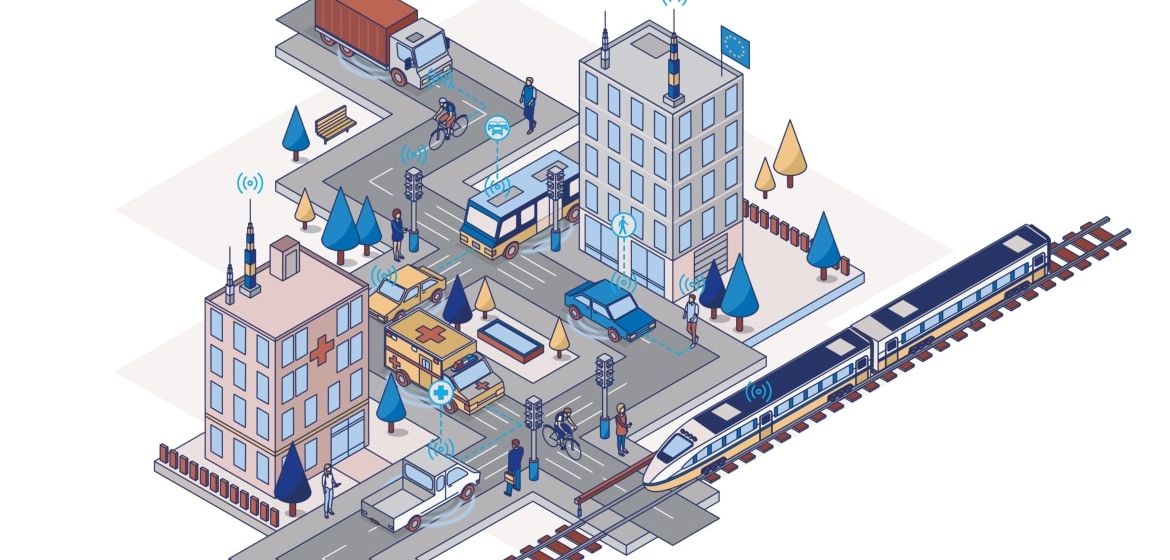
The Delegated Act currently being drafted by the European Commission will have a significant impact on the future deployment of Cooperative Connected and Automated Mobility in Europe. It will regulate the deployment of Cooperative Intelligent Transport Systems (C-ITS), which enable the communication between vehicles, infrastructure and with other road users.
5GAA is a proponent of Cellular-Vehicle-to-Everything (C-V2X), a unified technology platform for connected vehicles, including connectivity to vulnerable road users and infrastructure, encompassing LTE-V2X and 5G-V2X. C-V2X technology thus offers a direct evolution path to 5G.
As illustrated below, C-V2X includes both direct short-range communication in the 5.9 GHz ITS spectrum band (not requiring network coverage or subscription) and long-range communication in licensed spectrum allocated for 4G and 5G, into a single, cost-effective platform.

While 5GAA fully shares the European Commission’s objective to “make Europe a world leader in the deployment of connected and automated mobility”[1], 5GAA is very concerned that the Delegated Act will rule out C-V2X, the most recent technology for C-ITS.
5GAA strongly advocates for a forward-looking C-ITS regulatory framework, allowing technology neutrality and evolution. The future requirements should ensure an effective, cost-beneficial and proportionate regulatory framework, as per the Commission’s Better Regulation guidelines, ultimately improving road safety, traffic efficiency and air quality, while fostering innovation.
5GAA believes that the future Delegated Act should abide in all its dimensions by the technology neutrality principle to prevent unfair market distortion. This principle should be respected in letter and spirit: requirements, standards or specifications governing the deployment of C-ITS should be non-discriminatory, avoiding any technology lock-in.
The deployment of different connectivity solutions, including C-V2X, should be allowed and embraced by the Delegated Act, on par with any other technology.
[1] “On the road to automated mobility: An EU strategy for mobility of the future” COM(2018) 283

5GAA recommends the FHWA to rely on C-V2X to advance towards the next generation of North America’s transportation network
As Automatic Driving Systems (ADS) are increasingly being tested and introduced onto public roadways, the Federal Highway Administration (FHWA) made public its interest on hearing from transport-related stakeholders on some of the issues concerning infrastructure requirements and standards that may be necessary to enable safe and efficient ADS operations through a public Request for Information (RFI).
With the objective to contribute to this FHWA request, 5GAA has submitted a series of comments in response to the RFI which try and explain the features and benefits of Cellular-Vehicle-to-Everything technology (C-V2X). Being complementary to ADS technology, C-V2X holds tremendous potential to improve road safety by facilitating the flow of information between vehicles, pedestrians, cyclists, road infrastructure and commercial cellular mobile networks. 5GAA also believes that deployment of C-V2X technology will potentially save taxpayer money which otherwise would be used to deploy, maintain and upgrade roadside units (RSU) utilized by non-cellular technologies.
Moreover, for other benefits such as having the advantage of a higher spectrum efficiency, the capacity to support larger ranges or the fact that the use of C-V2X can make use of already available and deployed cellular networks, 5GAA urges the FHWA to consider further how it can leverage the benefits of C-V2X and synergies between commercial mobile networks and the development of connected transportation safety services.
Read the full publication here.
MWC 2018: 5GAA Gaining Speed Toward C-V2X commercialization
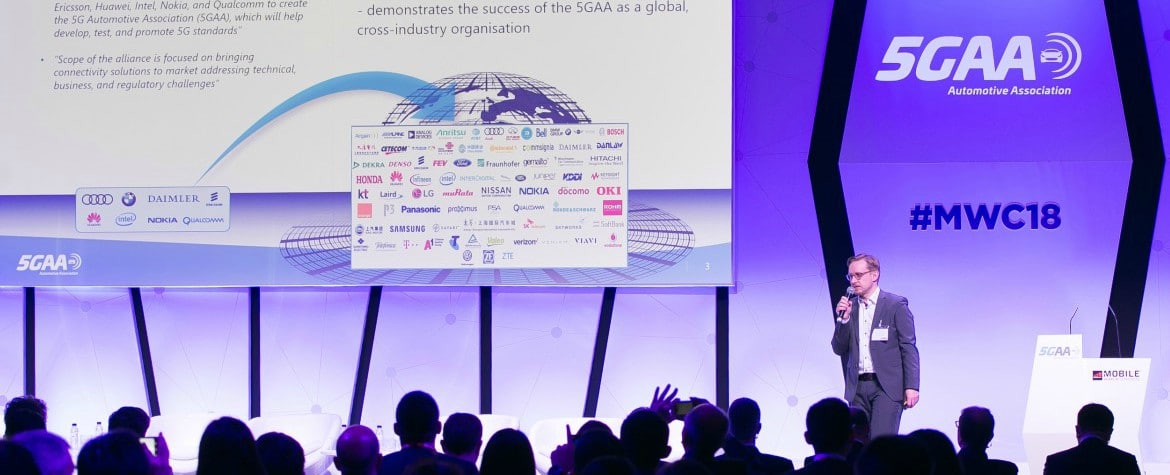
March 2nd, Barcelona, Spain – The 5G Automotive Association (5GAA) presented – during a session at the Mobile World Congress 2018 – the acceleration of C-V2X technology implementation through the widespread support of leading telecommunications and automotive companies. This advanced technology will serve as the lynchpin that will create a connected vehicle ecosystem and enable future mobility solutions. March 1st, Barcelona, Spain – The 5G Automotive Association (5GAA) presented – during a session at the Mobile World Congress 2018 – the acceleration of C-V2X technology implementation through the widespread support of leading telecommunications and automotive companies. This advanced technology will serve as the lynchpin that will create a connected vehicle ecosystem and enable future mobility solutions.
The value of C-V2X technology lies in the fact that it is a unified technology – it can provide short-range and long-range communications. C-V2X technology can, for example, alert drivers of a cyclist around the corner or a traffic jam that is 25 kilometers away.
Christoph Voigt, 5GAA Chairman and Head of R&D Connectivity at Audi announced that: “This effort is now ‘all hands on deck’, meaning that telecommunications and automotive leaders are all working hand-in-hand to deploy C-V2X and to make it hit the road as soon as possible.”
During its session, 5GAA focused on the growing support that C-V2X technology is enjoying among leading companies in the telecommunications and automotive industries and presented the importance that 5G cellular technology will play in enabling smart mobility of the future.
C-V2X gains wide ecosystem support
During the presentation, 5GAA members Qualcomm and Huawei emphasized the growing C-V2X ecosystem support and presented their integrated chipsets that will enable C-V2X commercialization. The start of C-V2X mass market series deployment is predicted to begin as early as 2019/2020.
“We see a growing appetite across the industry for the commercialization of our C-V2X chipset with automakers, Tier-1 suppliers, cellular module manufacturers, ITS providers, integrators, and automakers ready to drive change,” said Jason Ellis, Director of Automotive Business Development at Qualcomm.
Veni Shone, President of LTE product line at Huawei, highlighted that the momentum of C-V2X in China is encouraging – ministries have put their full support behind C-V2X technology on strategy and standardization. Mr. Shone also detailed Huawei’s commitment to accelerate C-V2X, specifically pointing at the releases of its LTE-V2X chipset, T-box prototype, and roadside units.
5GAA plans to support and advocate the work of this technology by speeding up the deployment of C-V2X for the automotive sector while creating a joint ecosystem and implementing key functionalities such as vehicle-to-smart-device.
5G as an enabler for life-saving solutions & new business applications
5GAA members Ericsson and Ford also highlighted exciting use cases and growing business applications for 5G technology in the automotive sector.
Don Butler, Executive Director of Connected Vehicles and Services at Ford stated that: “Creating safer and more personalized journeys through automated driving is the long-term vision of mobility’s future. We believe 5G will enable this by maximizing the in-vehicle experience thanks to high reliability, fast-paced communications. We will create new, compelling experiences and capabilities saving more lives with patient transport monitoring or teleoperated driving.”
With the advancement of 5G technology and its application to connected vehicles, the amount of data created will continue to expand exponentially.
Stefano Sorrentino, Master Researcher at Ericsson presented the fact that: “Connected & automated driving will lead to a data explosion that will definitely challenge the network capacities. This challenge could be remedied through the deployment of scalable and integrated networks and cloud architectures as well as the continuous evolution of radio technology into 5G.”
“We think of 5G as an end-to-end solution starting with the wireless connectivity but also including edge computing, the transport network, artificial intelligence and machine learning. Together they power the applications and the services for intelligent transportation and smart mobility, and ultimately, the ways humans interact with connected and self-driving cars of the future. It is an exciting area for 5GAA to work on and we invite any stakeholder to join us and contribute on this journey.” concluded Thierry Klein, Head of Disruptive Innovation Program at Nokia Bell Labs and Vice Chair of 5GAA Board.
About 5GAA
The 5G Automotive Association (5GAA) is a global cross-industry organization of companies from the automotive, technology and telecommunications industries (ICT), working together to develop end-to-end solutions for future mobility and transportation services. Created in 2016, the Association is comprised of over 75 members whose mission is to develop, test and promote communications solutions, initiate their standardisation and accelerate their commercial availability and global market penetration, to address society’s connected mobility and road safety needs with applications such as automated driving, ubiquitous access to services and integration into smart city and intelligent transportation.

5GAA Announces Deployment of LTE-V2X by 2020
The C-V2X technology tested, validated, and commercially available in vehicles in 2020
The inclusion of cellular communication technologies (V2N – Vehicle2Network) into vehicles (i.e. “Connected Cars”) has been extremely successful, and since early deployments in the last couple of decades, we continue to see an expansion of how these technologies can deliver benefits for the vehicle, the driver, and other participants in the transportation ecosystem.
At present, the automotive manufacturing members of 5GAA operate more than 20 million Connected Cars that have the ability to connect to cellular networks (V2N). This V2N connection is used for a wide variety of application domains including telematics, infotainment, traffic optimization, as well as for safety applications like the recognition of slow or stationary vehicle(s) and warnings for such events as traffic jam ahead, road works and other traffic infrastructure related information, inclement weather conditions, emergency brake light and other hazard warnings. The current understanding, also based on the European C-ITS Platform Final Report, is that the nature of these warning messages is informational and the driver is responsible at all times.
As defined in the approved 3GPP Release 14 in June 2017, cellular networks are able to take another evolutionary step in the pathway to broaden the reach and applicability of benefits.  In particular, this release addresses the challenges of delivering increased data volume, managing greater scale in connected devices, significantly reduced latency and providing higher levels of reliability. These defined attributes and an advanced architecture provide unprecedented support for the support of safety-critical communications, referred to as Cellular Vehicle to Everything (Cellular-V2X or C-V2X). In addition to such V2N enhancements, which rely on existing cellular networks, 3GPP Release-14 introduces the ability to support short-range communications between vehicles (V2V) and vehicle and road side infrastructure (V2I and I2V) without requiring any cellular network coverage.
3GPP Release 14 including C-V2X is also a key step to the next generation of cellular technology, 5G. Naturally C-V2X is already on a backwards compatible evolution path with enhancements being specified beginning with 3GPP Release 15.
The members of 5GAA are wholly committed to collaborating to ensure that the potential of the C-V2X technology is realized. This includes leading efforts to address key technical and regulatory issues, as well as integrating vehicle platforms with advanced cellular connectivity, networking and computing solutions.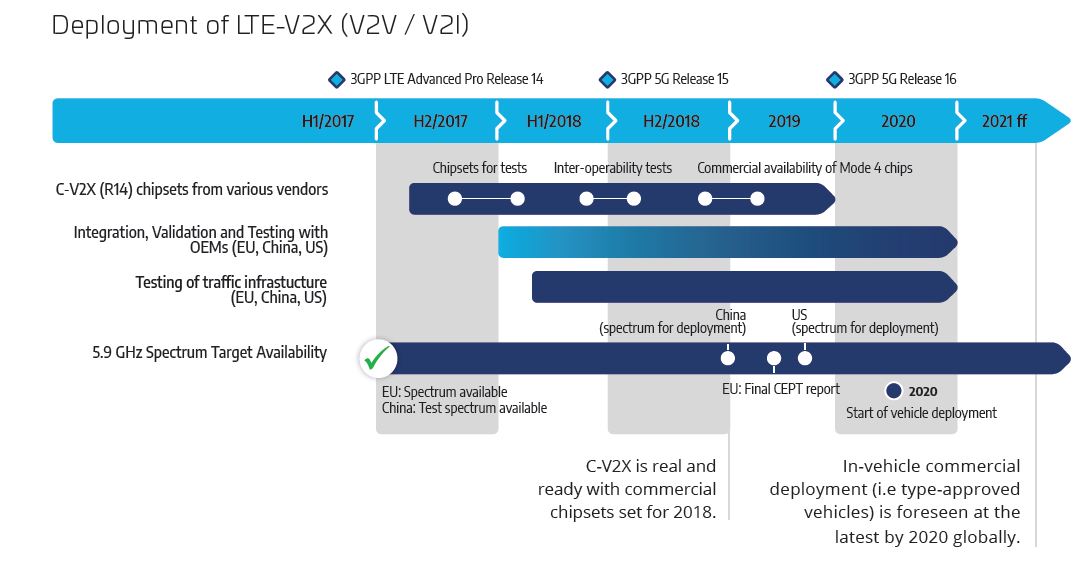
It is with this cooperation, collaboration, and commitment that 5GAA members continue to work to ensure that C-V2X technology is tested, validated, and commercially available in vehicles in 2020.

Toward fully connected vehicles: Edge computing for advanced automotive communications
Connected Vehicles and especially connected Autonomous Driving (AD) vehicles bring a whole new ecosystem with new requirements on the Cloud and the network architecture to support the new workloads and to satisfy the real-time service requirements. Such ecosystem includes the vehicles, the road infrastructure, the network infrastructure, and the Cloud.
Edge Computing based Vehicle-to-Cloud solutions enable edge cloud capabilities for different levels of autonomous driving, including Highly Autonomous Driving (HAD) and Fully Autonomous Driving (FAD) through providing different services for the driving process (e.g., High Definition real-time Maps, real-time traffic monitoring and alerts, and richer passengers experience), supporting vehicles on roads to drive co-operatively and to be aware of road hazards, and providing better user experience and trust to drivers and passengers.
This white paper provides an overview of automotive use cases and shows how Edge Computing provides compute/storage/networking capabilities at the network edge, and how it can be considered a supporting technology for multiple services for connected AD vehicles. The paper draws the attention to the value of Multi-access Edge Computing (MEC) as a standardized solution for Edge Computing, especially important from automotive stakeholders’ point of view (while also serving other vertical market segments). In particular, from a standardization perspective, some use cases targeting fully connected cars (i.e. FAD with the maximum level of automation) have challenging requirements that may be fulfilled only with the introduction of 5G networks. Finally, this paper also illustrates the opportunities that are here already today in deploying Edge Computing to support AD, using the flagship services as examples.
Read the full paper here.

5GAA Study | The cost-benefit analysis on cellular vehicle-to-everything (C-V2X) technology and its evolution to 5G-V2X
This report, authored by independent telecoms, media and technology consultants Analysys Mason together with automotive consultancy SBD Automotive, assesses the benefits of cellular vehicle to everything (C‑V2X) technology for delivery of vehicle-to-everything (V2X) communication. The report, which has a focus on the benefits of such solutions in Europe, uses qualitative evidence, and describes quantitative cost–benefit analysis that the consultants have undertaken, relating to deployment of C‑V2X.
The purpose of the study has been to examine qualitative evidence and perform quantitative analysis, regarding the net benefits of C‑V2X. Quantitative analysis is focused on the European market, where the European Commission (EC) is currently undertaking a public consultation on the deployment of cooperative intelligent transport systems (C‑ITS).
Read the full study here.
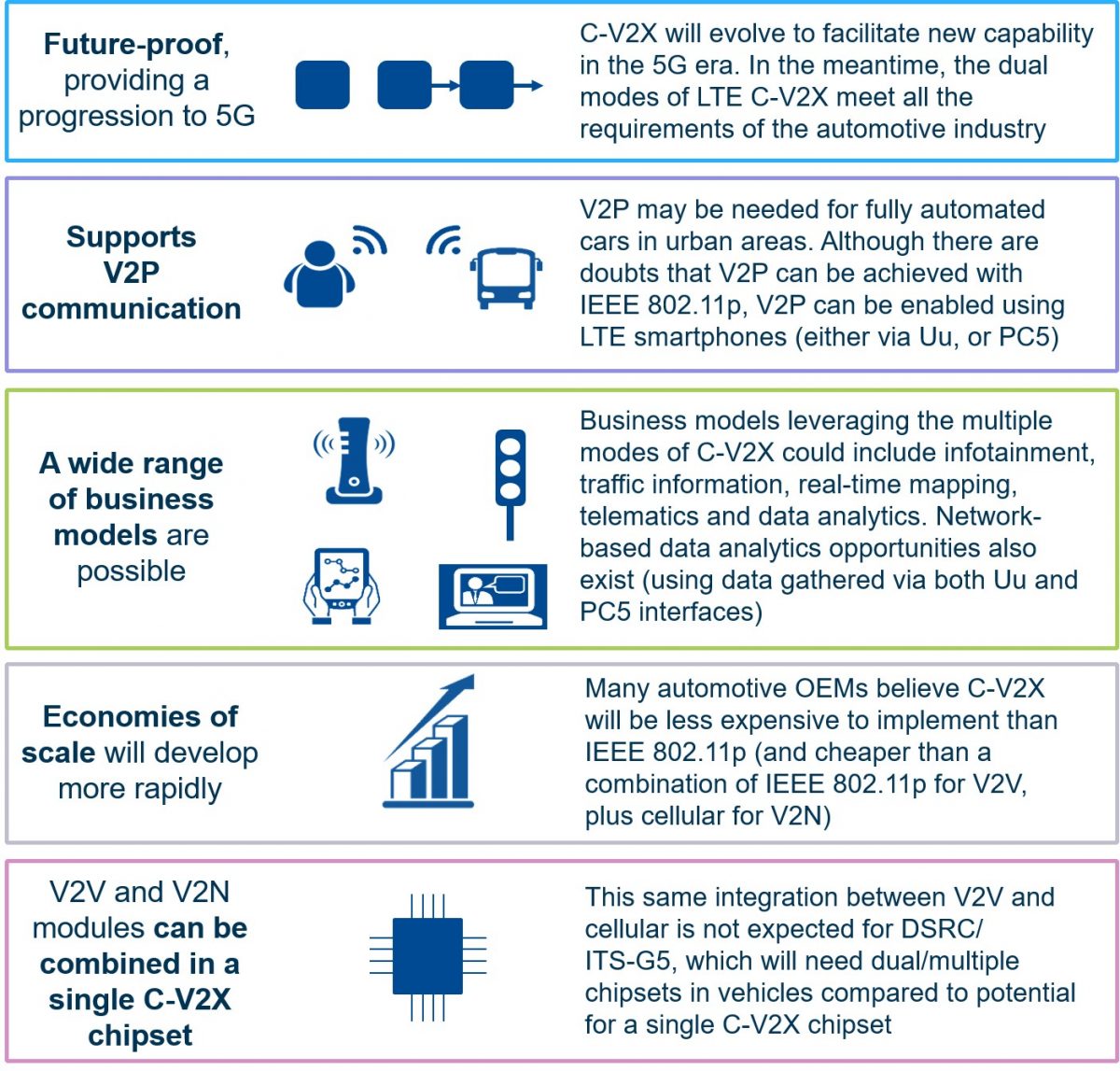
As part of this study, primary research has been conducted to elicit views from the mobile and automotive industries on the benefits of C‑V2X. One-to-one interviews with companies involved in the 5GAA were held, in order to identify several key benefits, as summarised in Figure 1.1 below.
A snippet from the report featuring the benefits of C-V2X [Source: Analysys Mason, 2017]

An assessment of LTE-V2X (PC5) and 802.11p direct communications technologies for improved road safety in the EU
This report by the 5G Automotive Alliance (5GAA) presents a quantitative analysis of the ability of Cooperative Intelligent Transport Systems using short-range ad hoc/direct communications to reduce the number of fatalities/serious injuries caused by motoring accidents in the EU. In this context, the study estimates the number of accidents avoided over time through the use of two short-range wireless technologies, 3GPP LTE-V2X (PC5) and IEEE 802.11p, examining their respective performance and projected take-up among road users. The modelling underlying this report has been peer-reviewed and validated by the technology and policy consultancy, Ricardo.
Specifically, two standardised C-ITS short-range technologies are compared for the purposes of this report, namely 3GPP LTE-V2X PC5 (also known as LTE side-link) and IEEE 802.11p (also known as DSRC or ITS-G5), both operating in the 5.9 GHz band for the provision of direct communications between road users. It should be noted that additional reductions in the number of fatalities and serious injuries are possible via longer-range C-ITS communications enabled through interactions with a LTE cellular network, but that these are not considered in this report. Hence, the analysis is limited to LTE-V2X (PC5) only, in comparison to 802.11p.
This study examines and compares two independent counter-factual scenarios: one where LTE-V2X (PC5) is the only deployed C-ITS technology, and the other where 802.11p is the only deployed C-ITS technology.
We consider, as a baseline, the existing and future projected statistics for road traffic fatalities and serious injuries in the EU. We then evaluate the reduction in the number of fatalities and serious injuries which may occur as a result of C-ITS direct communications between road users, by modelling:
- The expected take-up (penetration) of LTE-V2X (PC5) and 802.11p among road users in the EU over time (including vehicles, motorcycles, bicycles and pedestrians), and
- the radio link performance of LTE-V2X (PC5) and 802.11p in successfully delivering actionable warning messages between road users in a number of collision scenarios.
We identify the following conclusions and recommendations from the results of this report:
- The study indicates that LTE-V2X (PC5) outperforms 802.11p in reducing fatalities and serious injuries on the EU’s roads. This is due to a combination of the superior performance of LTE-V2X (PC5) at the radio link level for ad hoc/direct communications between road users, and the market led conditions which better favour the deployment of LTE-V2X in vehicles and in smartphones, and include a clear evolutionary path towards 5G-V2X. For these reasons, it is essential that EU regulations remain technology neutral and do not hinder the deployment of LTE-V2X (PC5) in favour of 802.11p for the provision of direct communications among vehicles and between vehicles and vulnerable road users.
- An absence of interoperability at radio link level between LTE-V2X (PC5) and 802.11p is unlikely to present a substantive barrier to the reduction of road accidents in the EU in the short to medium term. The relatively low penetration of C-ITS technologies in vehicles in the first half of the next decade (and perhaps even later) means that a vehicle equipped with LTE-V2X (PC5) or 802.11p is far more likely to collide with a vehicle that is not equipped with C-ITS technologies at all – indeed it is not until the middle of the next decade that penetration rates are expected to reach a level which results in significant impacts on accident rates. Any regulations which mandate LTE-V2X (PC5) to be backward interoperable with 802.11p will therefore have only a limited effect in the early years of deployment pre-2025. Such regulations may run the risk of unnecessarily distorting the market in favour of 802.11p, thereby obstructing the adoption of LTE-V2X (PC5) and resulting in greater road fatalities and injuries in the longer term.
Read the full study here.
Co-operating to build a better Mobility Ecosystem: 5GAA and IMT2020 Present their Partnership
The 5G Automotive Association (5GAA) is delighted to announce that it is embarking on a new partnership with the IMT-2020 (5G) Promotion Group.
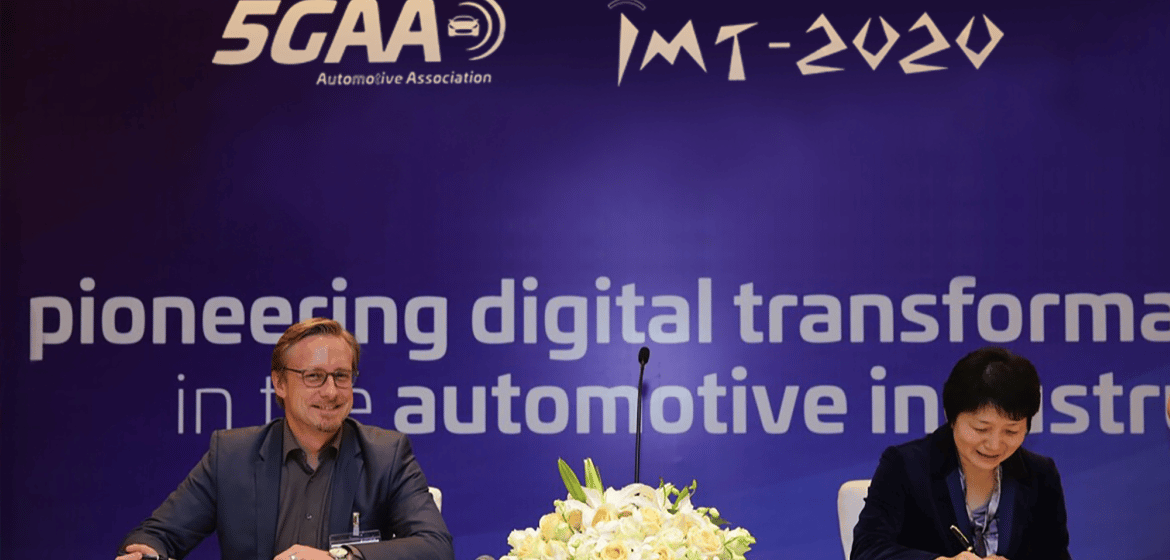
On 16 November 2017, in Shanghai, both parties have signed a Memorandum of Understanding in order to foster cooperation in the field of connected and autonomous driving solutions. This exciting journey of collaboration will also be a unique opportunity to pool resources in technology research and related use cases on a global scale.
Both organisations are advocates for the accelerated development of enhanced mobile communication systems between all road users and vehicles. The focus technologies for both associations are LTE-V2X and 5G-V2X. The 5GAA and IMT-2020 (5G) Promotion Group will harness their joint expertise on a range of projects, such as:
- Further conducting technical research on LTE-V2X and 5G-V2X
- Ensuring the promotion of the applications of 5G based V2X solutions
Since its launch in September 2016, 5GAA has grown exponentially worldwide. Over 60 industry leaders from the automotive, technology and telecommunications industries have teamed up to accelerate C-V2X technology development and its evolution to 5G-V2X for enhanced safety, automated driving and connected mobility. Together, 5GAA members are building a safer, more sustainable and connected transport ecosystem.
The Chairman of 5GAA, Christoph Voigt, is confident that both organisations’ hold a bright future of collaboration together: “5GAA was created to connect the telecom industry and vehicle manufacturers to develop 360-degree solutions for safer and more sustainable mobility systems. We look forward to working with IMT-2020 to define the requirements of C-V2X and to create a successful V2X ecosystem”.
IMT-2020 was established in February 2013. It is the major platform for 5G technology innovation, industry promotion and international cooperation in China. IMT-2020 C-V2X Working Group is established by IMT-2020 Expert Committee in April 2017, who conduct technical research on LTE-V2X and 5G-V2X innovation. Its members include leading operators, vendors, universities and research institutes in the telecommunication and automotive industries.
Wang Zhiqin, Chairman of IMT-2020 welcomed the signature of the Memorandum of Understanding between both organisations: ”IMT-2020 is the major platform for 5G technology innovation, industry promotion and international cooperation in China, and IMT-2020 C-V2X Working Group is responsible for industry integration among ICT, automobile, transportation and etc.. IMT-2020 and 5GAA have a number of partners and working interests in common, we are glad to cooperate with 5GAA together to ensure the successful development and commercialization of C-V2X and future 5G automotive services”.