

5GAA participates in Testbed Visit in Shanghai
Shanghai, China – 16 November 2017 – following the 5G Automotive Association General Assembly Meeting, 5GAA leadership, delegates as well as representatives from Chinese and South Korean government participated in a testbed visit. This practice case was then followed by eight use-cases, demonstrating the success of the LTE-V2X advances. Both of these actions took place at the purpose-built Shanghai district – Testbed F-zone and T-Zone – where the latest developments in vehicle technology are assessed.
1. Realizing LTE-V2X’s capacity: Visit to F-Zone
Huawei LTE-V leader for Research & Development, Mr. Yangyongchao, opened the visit by showcasing LTE-V2X testing reports as well as running a live test result. This series of LTE-V2X performance tests were measured in terms of the technology’s capacity to manage two variables (link level and system level). This analysis was managed by the partnership of China Mobile (CMCC), SIAC and SAIC Motor.
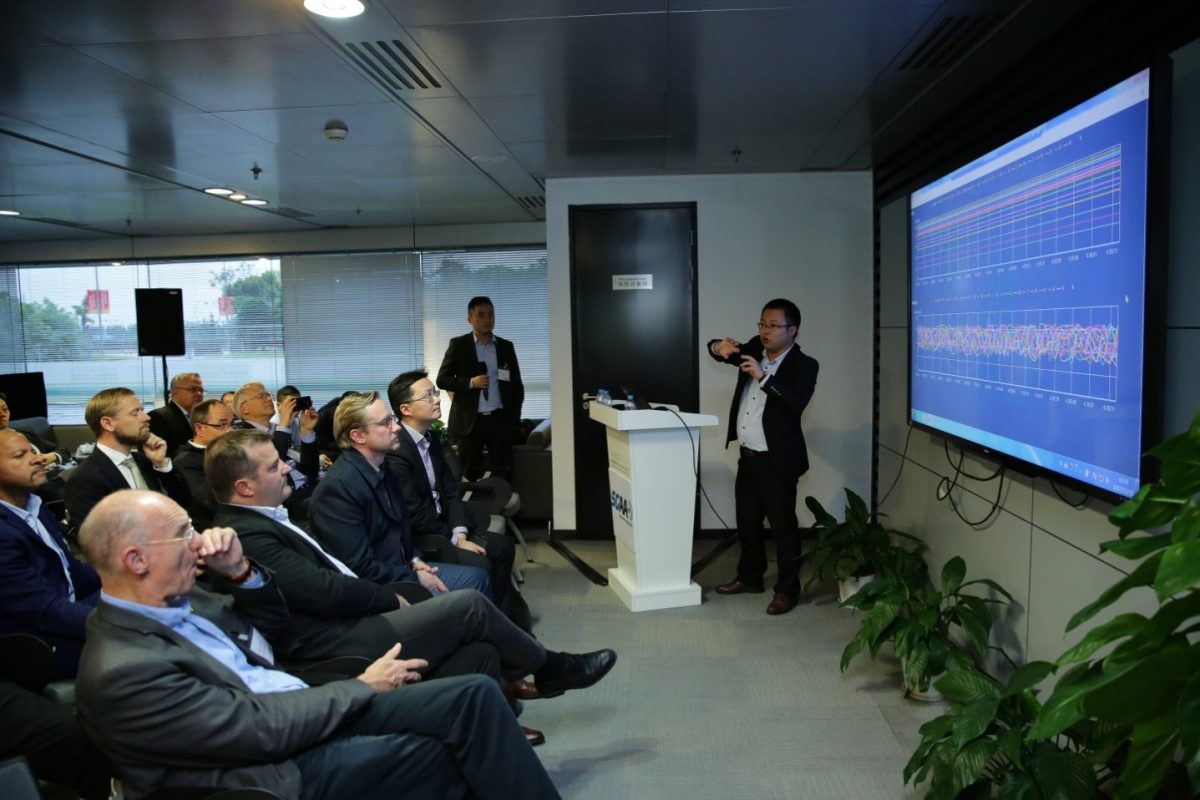
- Link Level Testing: LTE-V2X can support relative vehicle speeds of up to 500km/h, even with correction for timing and frequency errors. LTE-V2X shows excellent link performance with different packet size. The maximum RSU coverage range reaches more than 1km from the test vehicle.
- System Level Testing: 400 vehicles were analysed in this trial environment. Based on this, the capacity and of Vehicle-to-Vehicle and Vehicle- to-Infrastructure is smaller is functional in a range of 20 metres. Messages were transmitted at a success rate of 90% within the demanded communication range in high-density scenarios.
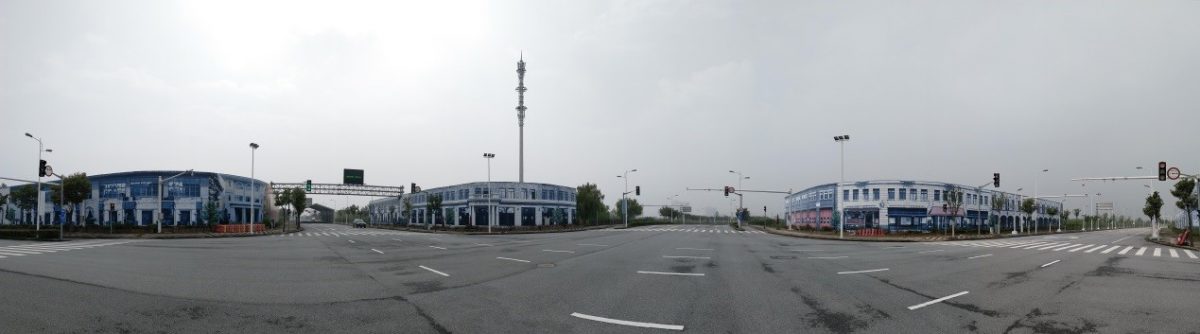
Right after this presentation, SIAC led the delegates to visit the site of F-Zone. Mr. Lilin, director of SIAC explained that F-zone is an enclosed area conducting different scenarios such as parks, urban roads with intersections, simulated highway and related road facilities. Additionally, F-zone is the national level Intelligent and Connected Vehicles test zone equipped with background vehicles, positioning capability and telecommunication infrastructure, including LTE-V2X based RSU, base stations that support both LTE and LTE-V2X, and assisted by operation system.
2. T-Zone visit
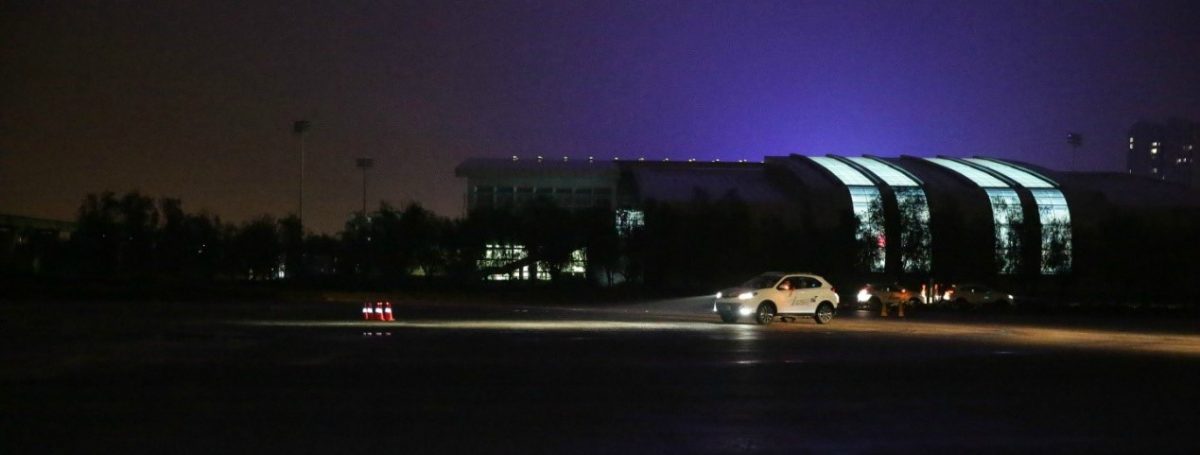
After the inspection of F-Zone, delegates visited C-V2X demonstration in T-Zone and observed eight cases in SAIC Motor’s intelligent connected vehicle operated with China Mobile and Huawei. The technology showcased was powered by 5G-V2X. This opened the vehicle up to possibilities such as Tele-Operated Driving, LTE-V2X based Platooning, Forward collision warning, Traffic light speed advisory and Vulnerable Road user warning. Dr. Liu Fen, also explained that with the abundant communications environment in T-zone and more C-V2X functionality can be realised in the future.
Christoph Voigt, Chairman of 5GAA, views these advances with optimism: “Today’s opportunity to see the fantastic progress from SIAC, SAIC Motor, China Mobile and Huawei is a demonstration of the unlimited possibilities that investing in 5G and LTE -V2X technologies hold. We know that C-V2X technology has the capacity for high-speed, high-density communication between vehicles, infrastructure, and pedestrians. Following further research and collaboration with our members and policy makers in governments around the world, 5GAA is looking forward to introducing this technology globally.”
Dino Flore, Director General of 5GAA is proud of the extensive partnerships that the association has fostered: “5GAA’s aim is to act as a bridge between the automotive and telecommunications industries. I would like to thank our hosts today in Shanghai for their hospitality and proudly showcasing the possibilities promised by C-V2X and 5G. Our organisation is focused on accelerating research and delivering solutions to society to build safer and more sustainable transport for our citizens. Today’s demonstrations are proof of what future holds.”
About the 5GAA
The 5G Automotive Association (5GAA) is a global cross-industry organisation of companies from the automotive, technology and telecommunications industries (ICT), working together to develop end-to-end solutions for future mobility and transportation services. Created in 2016, the Association is comprised of over 67 members which mission is to develop, test and promote communications solutions, initiate their standardization and accelerate their commercial availability and global market penetration to address societal need.
5GAA: cellular technology is key enabler for smart mobility of the future
Industry association calls on European Commission to allow stakeholders to work collaboratively towards an agreement on the technology catalyzing the mobility of the future and warns against a “premature and cumbersome legislative decision”.
The 5G Automotive Association (5GAA) encourages the automotive, technology, and telecommunications industries and the European Commission to be ambitious when evaluating technologies for connected, autonomous vehicles. 5GAA is confident that cellular communication technology (C-V2X) has the most benefits when applied to connected, self-driving cars. It has provided its views to the Commission in a workshop and a letter with recommendations. Since its launch one year ago, over 50 industry leaders from the automotive, technology and telecommunications industries have teamed up in 5GAA to accelerate C-V2X technology development and its evolution to 5G-V2X for enhanced safety, automated driving and connected mobility.
Christoph Voigt, Chairman of 5GAA said, “5GAA is confident that cellular technology (including direct vehicle-to-vehicle communication at 5.9 GHz) has the potential to lead to the best outcomes in the long run. We are strongly relying on the European institutional support to put in place a regulatory framework allowing for an industry-driven and swift deployment of this technology. It is crucial to consider how the 5.9 GHz band, the “life blood” of wireless vehicle communication, can be used efficiently in the context of 5G technology evolution, road safety, and economic scalability. The automotive and transportation sectors, both public and private, are making significant investment commitments. Therefore, we are urging the European Commission to allow the ITS-G5 and C-V2X stakeholders to work together towards an agreement on the future of connected and automated cars, without a premature and cumbersome legislative decision.”
5GAA has recently provided its views to the Commission in a workshop and a letter with recommendations.
Christoph Voigt: “We should aim high enough when selecting the solutions to make connected, self-driving vehicles a reality. These are a catalyst to improving the quality of life globally through safer traffic, improved mobility, cleaner air in cities, and a better experience overall for drivers.”
Dino Flore, Director General of 5GAA adds, “Saving lives through improved road safety is obviously the primary positive outcome of deploying communication technology solutions. In addition, we should take into account other aspects when evaluating alternatives. We’re not only talking about reducing congestion and pollution but also optimizing the driving experience. It is our view that cellular technology, including direct vehicle-to-vehicle communication at 5.9 GHz, has the most upward potential in the long run.”
Helping vehicles “understand the environment they are navigating”
Launched in September 2016 by 8 founding members the 5GAA has in less than a year grown to include over 50 leaders from the automotive, technology and telecom industries who collaborate cross-industry on the future of transport. 5GAA’s mission is to develop, test, and promote communications solutions, initiate their standardization and accelerate their commercial availability and global market penetration. The objective is to address society’s connected mobility and road safety needs with applications such as autonomous driving, ubiquitous access to services and integration into smart city and intelligent transportation.
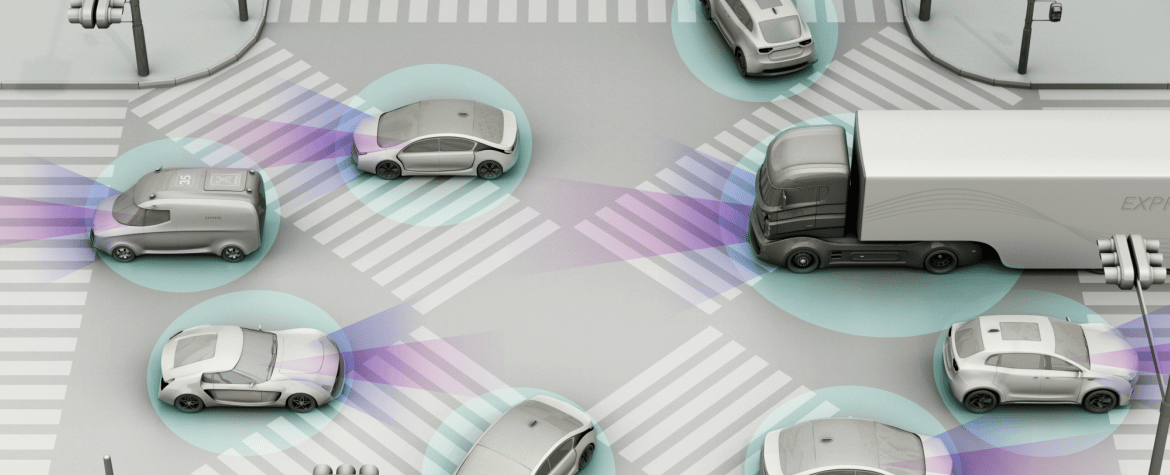
Connected vehicles use communication technology to not only communicate with other vehicles but also with road infrastructure, other road users such as pedestrians, and the Internet – e.g. to provide traffic updates and parking guidance. Use cases include collision warnings, “traffic jam ahead” warnings, green light optimal speed advisory, parking guidance, and assisting drivers in tackling treacherous traffic situations (e.g. turning left at a crossroads). Connected vehicles will eventually reduce pollution, and make traffic more efficient, reducing congestion in cities and improving the flow of goods and people.
Christoph Voigt explains, “Equipping cars with sensors and cameras is one thing, but imagine what is possible when cars use cellular technology to communicate with their entire ecosystem: other vehicles, road users, infrastructure, and central services that give real-time information.”
“It’s the difference between a car that is capable of seeing what is happening in its immediate surroundings and one that can use all available information to allow for a safer and more comfortable driving experience. After all, as drivers we do more than purely react to what’s in front of us. We listen to traffic info, we are aware of the area we’re navigating, and we are alert to traffic jams in rush hour. We use context to guide our driving.”
“This is exactly what cellular connectivity can enable vehicles to make easier, or even take over from us in the case of self-driving vehicles. Except that it will be faster and more accurate,” concludes Christoph Voigt.
-Ends
About 5GAA
The 5G Automotive Association (5GAA) is a global cross-industry organisation of companies from the automotive, technology and telecommunications industries (ICT), working together to develop end-to-end solutions for future mobility and transportation services. Created in 2016, the Association is comprised of over 50 members which mission
is to develop, test and promote communications solutions, initiate their standardization and accelerate their commercial availability and global market penetration to address societal need. For more information please visit 5gaa.org
Contacts
Robbe Libbrecht
FINN PR
robbe.libbrecht@finnpr.com
M +32 497 23 30 38
5GAA Marketing & Communications
marcom@5GAA.org

5GAA welcomes AT&T, Jaguar Land Rover, NTT DOCOMO and Samsung Electronics as elected Board members
The 5G Automotive Association announced today the election of its new Board members following the General Assembly held on May 11, 2017. Continuing members AUDI AG, BMW Group, China Mobile, Daimler AG, Ericsson, Ford, Huawei, Intel, Nokia, SAIC Motor, Vodafone Group and Qualcomm Incorporated will be joined by AT&T, Jaguar Land Rover, NTT DOCOMO and Samsung Electronics.
The election of AT&T, Jaguar Land Rover, NTT DOCOMO and Samsung Electronics as Board members will strengthen the position of 5GAA as a global, cross-industry association of automotive, technology and telecommunications companies. It reflects the diversity of 5GAA’s membership, both in terms of geographical spread and expertise.
The Chairperson is Christoph Voigt (Audi) and the Vice Chairperson is Thierry Klein (Nokia), both elected to their second term. The Board of the Association renewed the mandate of the outgoing Executive Committee: Dino Flore (Qualcomm) will continue to serve as Director General, Markus Dillinger (Huawei) as Secretary, and Fathi Arafat Husein El-Dwaik (BMW) as Treasurer. The Board also confirmed the appointment of elected Working Groups Chairs and Vice-Chairs.
“We are very pleased that AT&T, Jaguar Land Rover, NTT DOCOMO and Samsung Electronics have joined the 5GAA Board,” said Christoph Voigt, Chairman of the 5GAA Board. “With their global footprint and diverse expertise, they will contribute to further connect communication and the automotive industry to develop end-to-end solutions for future mobility and transportation services.”
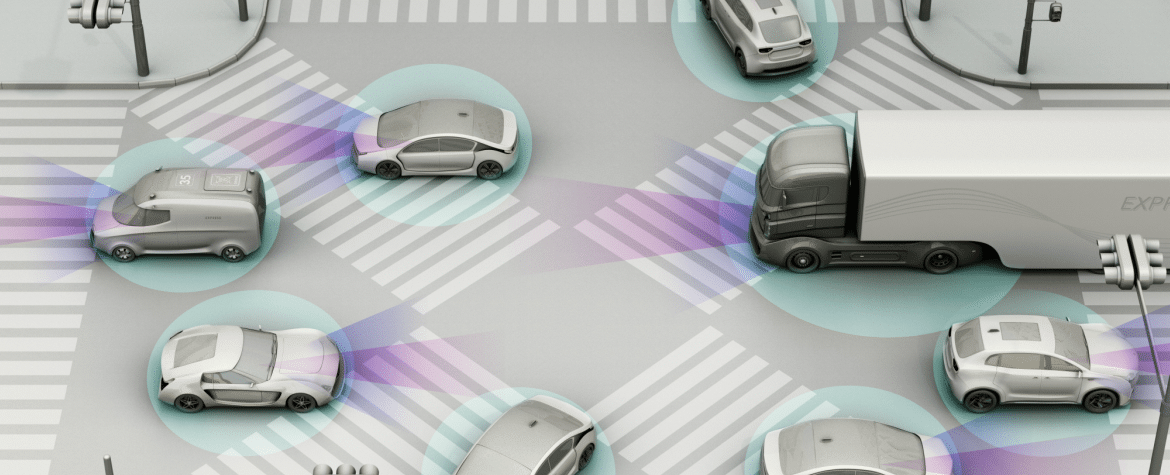
5GAA submitted comments to the National Highway Traffic Safety Administration
The 5G Automotive Association (5GAA) submitted comments to the National Highway Traffic Safety Administration (NHTSA) notice of proposed rulemaking (NPRM), “Federal Motor Vehicle Safety Standards; V2V Communications.” The proposed rule is to mandate new light-duty vehicles to be equipped with dedicated short range communications (DSRC).
The 5GAA is a new global cross-industry association of automotive, technology and telecommunications companies and includes 42 members, of which 8 are founding members (AUDI AG, BMW Group, Daimler AG, Ericsson, Huawei, Intel, Nokia, Qualcomm). Our mission is to enable communications solutions that address society’s connected mobility and road safety needs.
In our submission, 5GAA applauds the concept behind the rule, as V2V safety is important to our technology deployment mission. 5GAA urges NHTSA to not consider just the best technology of today, but also to consider the best technologies of tomorrow. Such an approach will promote innovation and competitive market-based outcomes, ensuring that American drivers and passengers benefit from the best and most advanced safety solutions available as technology evolves. Rigid technology mandates such as specifying DSRC, whether direct or de facto, freeze technology solutions to a past point in time. NS will significantly impede the innovation and evolution path for Vehicle-to-Vehicle (V2V) safety, and positions the US to lag behind the rest of the world in V2V communications specifically as well as V2X broadly. 5GAA elaborates on the following points:
Similar to DSRC, Cellular-V2X technology for V2V safety can transmit BSM in an ad hoc manner without cellular network coverage.
Cellular-V2X technology for V2V safety communications can operate without a SIM card and offers the tools to adopt, evolve or innovate any privacy-preserving security management system including SCRM.
Cellular-V2X technology for V2V safety benefits from a significantly larger link budget than DSRC (e.g., 8 dB at high speeds), corresponding to twice the range of DSRC and higher reliability.
Cellular-V2X technology for V2V safety can support up to 50 messages per second with less than 20 msec latency.
Cellular-V2X enables V2V, and for that matter Vehicle-to-Infrastructure (V2I), Vehicle-to-Pedestrian (V2P) and Vehicle-to-Network (V2N), safety applications to take advantage of the widespread cellular network coverage in the US.
5GAA notes also that the impending launch of 5G will only widen the performance gap between Cellular- V2X and DSRC.
5GAA believes that Rather than moving forward with the proposed regulation, NHTSA should instead undertake an updated, comprehensive technology neutral analysis of V2V solutions, including DSRC and Cellular-V2X, against the performance requirements in the NPRM. If this review indicates that regulatory action is necessary, the U.S. Department of Transportation should move forward with a technology neutral regulation that sets forth minimum V2V safety performance requirements only.
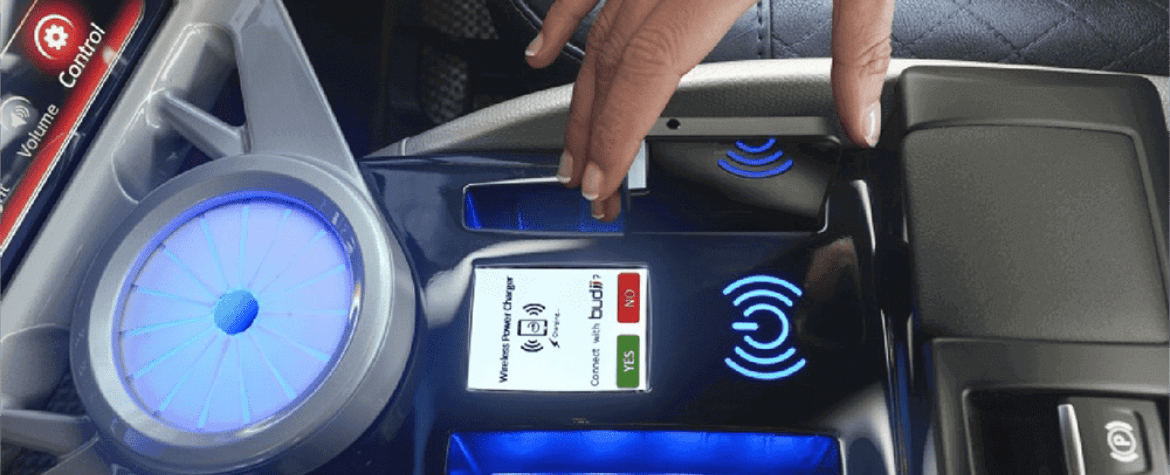
Ficosa, CMCC, Viavi, SAIC, Samsung, Rohde & Schwarz, ZTE, NTT DOCOMO, Continental, Danlaw join the 5G Automotive Association
5GAA welcomes Ficosa, CMCC, Viavi, SAIC, Samsung, Rohde & Schwarz, ZTE, NTT DOCOMO, Continental and Danlaw as new members of the association.
The new members significantly grow 5GAA membership base and diversity, both in term of geography and expertise. This will allow 5GAA to further connect communication and the automotive industry to develop end-to-end solutions for future mobility and transportation services.

LG, Ford, Verizon, Denso and Gemalto join the 5G Automotive Association
5GAA (www.5gaa.org) welcomes LG, Ford, Verizon, Denso and Gemalto as new members of the association.
“We are very pleased that LG, Ford, Verizon, Denso and Gemalto have joined the association. With their global footprint and diverse expertise across the communications and automotive ecosystems, these companies will contribute to the definition and development of next generation connected mobility and automated vehicle solutions” Dino Flore, Director General of 5GAA, said.
Kookyeon Kwak, Executive Vice President, Head of LG’s Advanced Standard R&D Lab, said, “Cellular communication will play a pivotal role to meet the requirement of safety, convenience, and infotainment for future smart cars. The trend is now being accelerated by the completion of LTE-V2X, the first cellular- based vehicle-communication standard. As a manufacturer in mobile communication and vehicle component areas, LG Electronics would like to contribute to 5GAA for connecting communication and automotive industries”.
“We are excited to work together with other automotive and technology providers to define a future that envisions new and empowering mobility services and solutions. We see the 5GAA as a key enabler to the development of a sustainable connected vehicle ecosystem.” Don Butler, Executive Director of Connected Vehicle and Services at Ford Motor Company, said.
DENSO CTO for the European region, Masato (Max) Nakagawa, commented: “Extending DENSO’s global efforts in the area of vehicular connectivity is strategically aligned to our policy ‘Protecting Lives, Preserving the Planet, and Preparing a Bright Future for Generations to Come’. Reinforcing this
direction, DENSO AUTOMOTIVE Deutschland GmbH has decided to join the 5GAA. We are proud to be accepted as 5GAA member and are looking forward to collaborating in the 5GAA. DENSO considers this engagement viable to complement our long term ongoing global support of 700MHz/5.9GHz V2X safety communication. 5GAA provides the environment for the cross-industry collaboration required to define corresponding future mobile communication systems. In collaboration with the 5GAA partners we plan to explore, define and develop multi-spectral connectivity to support future mobility demands, especially in the area of connected and automated driving.”
“Gemalto is thrilled to join 5GAA and work within this prestigious group of global leaders to enable the world of new mobility that will revolutionize the automotive sector,” says Frederic Vasnier, EVP
Embedded Software and Products. “Gemalto has demonstrated its unrivaled expertise to ensure simple, seamless and ubiquitous connectivity with robust security mechanisms inside the vehicle, between vehicles and with the connected ecosystem of devices, pedestrians, and the cloud.”
5GAA was created to bridge automotive and communication industries in order to develop, test and promote connected mobility solutions, initiate their standardization and accelerate the commercial availability and global market penetration.
Since its inception, 5GAA has been experiencing rapid expansion to include key players with a global footprint in the communication and automotive industries, including car manufacturers, tier-1 suppliers, chipset/communication system providers, mobile operators and infrastructure vendors.
To achieve its long-term goals, the association is creating five Working Groups to address the following areas of work: Use Cases and Technical Requirements; System Architecture and Solution Development; Evaluation, Testbeds and Pilots; Standard & Spectrum; Business Models and Go-To-Market Strategies. In addition, the board is planning the needed policy and advocacy efforts to join the relevant discussions in this space with different regulators, policymakers, and administrations around the world.
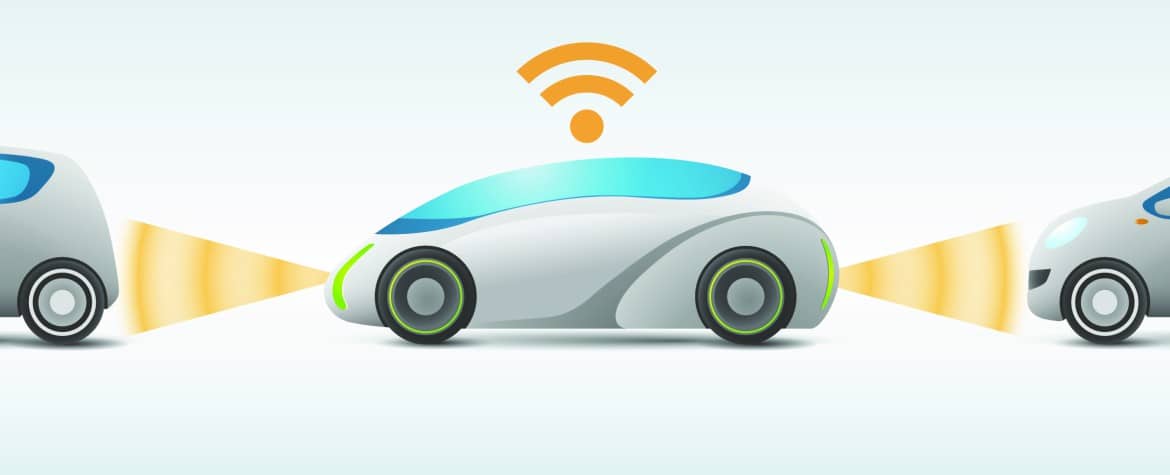
Deutsche Telekom, Valeo and SK Telecom join the 5G Automotive Association
5GAA welcomes Deutsche Telekom, Valeo and SK Telecom as new members of the association
“We are very pleased that Deutsche Telekom, Valeo and SK Telecom have joined the association.
With their important expertise, they will contribute to the definition and development of next-generation connected mobility solutions”, Dino Flore, Director General of 5GAA, said.
Dr. Bruno Jacobfeuerborn, CTO, Deutsche Telekom AG, said: “Getting the connected car successfully on the road requires a common worldwide standard for 5G. Fragmentation and proprietary systems are obstacles to avoid on our way. Deutsche Telekom has been actively engaged with our partners in the automotive industry to trial and advanced communications solutions for intelligent mobility. We now look forward to broadening this collaboration within the cross-industry 5GAA setup”.
“Valeo being already a player in the autonomous driving field wants to extend this also to the connected car field. Therefore we are proud to be a member of the new 5GAA Alliance to help create new automotive standards for the 5G network and the connected car environment“, Marc Vrecko, Business Group President, Valeo Comfort & Driving Assistance Systems, said.
Alex Jinsung Choi, CTO & Head of Corporate R&D Center at SK Telecom, said: “We are designing 5G to inherently support connected cars and autonomous driving. 5G brings several outstanding values to automotive industries: augmented autonomous driving, worry-free car management, and rich in-car services. I believe that 5GAA will play a key role in bringing new business possibility and opportunity for both the automotive and mobile communications industries.”

Vodafone Group to join 5G Automotive Association
Vodafone Group has become the first telecommunications operator to join the 5G Automotive Association (5GAA), a new global cross-industry association of companies from telecommunications and automotive industries.
Vodafone has already started testing cellular vehicle to everything connectivity (C-V2X, which includes LTE-V2X) and will continue that work as part of the 5GAA. Vodafone is recognised as the world leader in Internet of Things connectivity and provides more connected car services, for more vehicle models, from more manufacturers, in more countries than any other company.
Vodafone has become a Platinum member of the 5GAA and Luke Ibbetson, Vodafone’s Group Head of Research & Development and Technology Strategy, will join the Board of the Association.
The 5GAA was established on 27 September 2016 and its founding members are AUDI AG, BMW Group, Daimler AG, Ericsson, Huawei, Intel, Nokia and Qualcomm Incorporated.
The Association will progress the development of connected and automated driving and the creation of intelligent transport systems.
5GAA activities will be organized along five working groups developing various aspects of the end-to-end ecosystem: use cases and technical requirements; system architecture and solution development; business models and go-to-market strategies; evaluation testbeds and pilots; and standards, policy, certification and regulatory aspects.
Luke Ibbetson, said: “The communication between vehicles, infrastructure, and pedestrians using C-V2X will be fundamental to the creation of intelligent transport systems. The technology that the 5GAA develops can lead to major improvements in driving and road safety.”
Dino Flore, Director General of the 5GAA, added: “Vodafone’s industry leadership and cellular network operator’s perspective is an important addition to the 5GAA, and it will significantly contribute to the successful development of the connected mobility ecosystem.”
Telecommunications and automotive players form global cross-industry 5G Automotive Association
AUDI AG, BMW Group, Daimler AG, Ericsson, Huawei, Intel, Nokia and Qualcomm Incorporated team up to evolve, test and promote communications solutions for connected mobility.
Next generation mobile networks will help to address society’s mobility and road safety needs with applications like connected infotainment features and connected automated driving.
The association is open to further partners.
Munich, September 27, 2016 – Today AUDI AG, BMW Group, Daimler AG, Ericsson, Huawei, Intel, Nokia and Qualcomm Incorporated, announce the formation of the “5G Automotive Association”.
The association will develop, test and promote communications solutions, support standardization and accelerate commercial availability and global market penetration. The goal is to address society’s connected mobility and road safety needs with applications such as connected automated driving, ubiquitous access to services and integration into smart cities and intelligent transportation.
With next generation 5G mobile networks and continued strong LTE evolution, which includes Cellular Vehicle-to-everything (C-V2X) communication, the focus of information and communication technologies (ICT) shifts towards the Internet of Things and the digitalization of industries.
As an evolution to today’s networks, next generation mobile networks are expected to handle much more data volume, connect many more devices, significantly reduce latency and bring new levels of reliability. For example, 5G can better support mission-critical communications for safer driving and will further support enhanced vehicle-to-everything communications and connected mobility solutions.
These new solutions bring new technological and business opportunities for both the automotive and ICT industries, and the members of the association will closely collaborate to realize the full potential together. The association will address key technical and regulatory issues, leveraging next generation mobile networks and integrating vehicle platforms with connectivity, networking and computing solutions. The main activities of the association include:
- Defining and harmonizing use cases, technical requirements and implementation strategies.
- Supporting standardization and regulatory bodies, certification and approval processes.
- Addressing vehicle-to-everything technology requirements, such as wireless connectivity, security, privacy, authentication, distributed cloud architectures and more.
- Running joint innovation and development projects leading to integrated solutions, interoperability testing, large scale pilots and trial deployments.
The 5G Automotive Association is a global association and welcomes more partners who are engaged in the automotive industry, the ICT industry or the broader eco-system and value chain for vehicle and road transportation systems. Several companies have already expressed strong support for the 5GAA and declared their intent to join the Association in the near future.
Christoph Voigt is appointed Chairperson of the Board and Dino Flore is appointed Director General of the Association.
The Association will support and work in close cooperation with national and regional initiatives, such as the European Connected & Automated Driving Pre-Deployment Project.

9th WG Meeting Seoul 2019
5GAA will be organizing its next Working Group Meeting in Seoul from Jan 28 – 31, 2019.
Community Building Session
As the community building meeting was a big success in Tokyo and received very good feedback from you, there will be a similar format in Seoul. All speakers need to register until Dec 12, 2018.
Format: “Slam Presentation” focusing on C-V2X or other 5GAA relevant topic of maximum 5 minutes each, with 3 Minutes Q&Ao Should relate to a recent C-V2X or cellular technology development/advancement for ITS (e.g. innovation or deployment, test & trials, R&D project, etc.) and be of general relevance for 5GAAo No commercial/brand promotion (company information can be provided but only for background information purposes)
Date, Time, Location: Tuesday, Jan 29 and Wednesday, Jan 30, 201908:00 – 08:50. Seoul Dragon City Hotel, room Baekje 2-4 (4th floor)
The application process for presentations:
1)Registration as a speaker until Dec 12, 2018. https://www.surveymonkey.co.uk/r/Community_Building_Seoul
2))Submit your presentation with 2 slides only, format 16:9, use the 5GAA template attached. Deadline: Jan 14,2019 EOB CET.Mail to secretariat@5GAA.org with the subject header: “Presentation for 5GAA Community Building Session”
3)Together with these 2 slides, we need one slide (to be distributed up front)
-with a short bio of presenter plus
-image of the presenter (high resolution picture)
-indication which 5GAA working group presenter is focusing on / contributing to Please also use the attached template for this slide.
Selection criteria: In case we will receive more than 8 applications the Executive Committee together with the CTO and WG Chairs will make a selection based on novelty of the contribution, subject variety and with a focus on the region where the meeting takes place (this time Korea and Asia) The committee’s choice will be announced by Jan 18, 2019 EOB CET.
Registration: There is limited seating in the room, so please help us planning by registering via this link: https://www.surveymonkey.co.uk/r/Community_Building_Seoul